Chesser Timothy J S, Javaid Muhammad Kassim, Mohsin Zaineb, Pari Carlotta, Belluati Alberto, Contini Achille, Caiaffa Vincenzo, Chana-Rodríguez Francisco, Gómez-Vallejo Jesus, Sánchez-Pérez Coral, Dailiana Zoe H, Stefanou Nikolaos, Tosounidis Theodoros, Laurent Michaël, Putzeys Guy, Poeze Martijn, Ponsen Kees Jan
Department of Trauma and Orthopaedic Surgery, North Bristol NHS Trust, Bristol.
Nuffield Department of Orthopaedics, Rheumatology and Musculoskeletal Sciences, University of Oxford, Oxford, UK.
OTA Int. 2022 Jun 9;5(3 Suppl):e198. doi: 10.1097/OI9.0000000000000198. eCollection 2022 Jun.
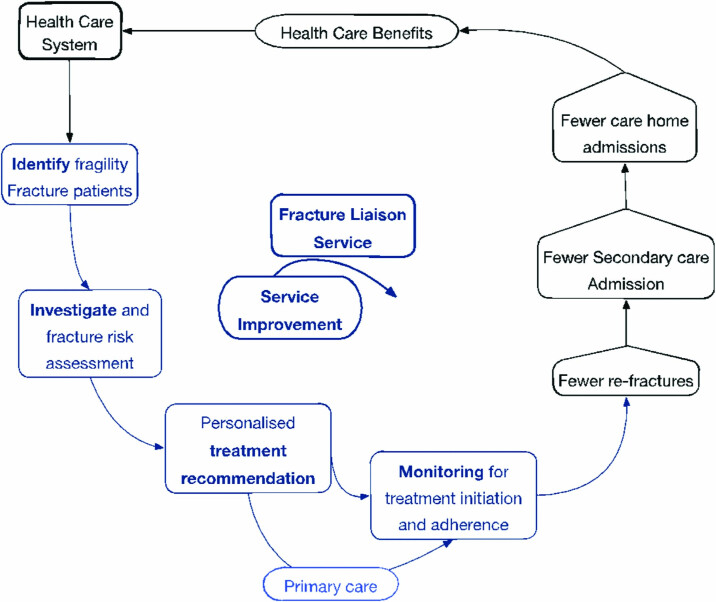
Fragility fractures represent a growing global problem, including in the United Kingdom and European countries. Reports demonstrate the benefits of national guidance and organized fragility fracture programs through fracture liaison services to deliver care to patients who sustain these injuries. The challenge of assembling multidisciplinary teams, providing routine screening of appropriate patients, and monitoring therapies where there is a known compliance problem, remains an obstacle to the success of fragility fracture treatment programs to all. Efforts should continue to introduce and maintain fracture liaison services through coordinated national approaches and advanced systems.
脆性骨折是一个日益严重的全球性问题,在英国和欧洲国家亦是如此。报告显示,通过骨折联络服务提供国家指导和组织脆性骨折项目,为遭受此类损伤的患者提供护理具有诸多益处。组建多学科团队、对合适患者进行常规筛查以及在存在已知依从性问题的情况下监测治疗,这些挑战仍然是脆性骨折治疗项目全面成功的障碍。应继续通过协调一致的国家方法和先进系统来引入并维持骨折联络服务。