• 文献检索
  • 文档翻译
  • 深度研究
  • 学术资讯
  • Suppr Zotero 插件Zotero 插件
  • 邀请有礼
  • 套餐&价格
  • 历史记录
应用&插件
Suppr Zotero 插件Zotero 插件浏览器插件Mac 客户端Windows 客户端微信小程序
定价
高级版会员购买积分包购买API积分包
服务
文献检索文档翻译深度研究API 文档MCP 服务
关于我们
关于 Suppr公司介绍联系我们用户协议隐私条款
关注我们

Suppr 超能文献

核心技术专利:CN118964589B侵权必究
粤ICP备2023148730 号-1Suppr @ 2026

文献检索

告别复杂PubMed语法,用中文像聊天一样搜索,搜遍4000万医学文献。AI智能推荐,让科研检索更轻松。

立即免费搜索

文件翻译

保留排版,准确专业,支持PDF/Word/PPT等文件格式,支持 12+语言互译。

免费翻译文档

深度研究

AI帮你快速写综述,25分钟生成高质量综述,智能提取关键信息,辅助科研写作。

立即免费体验

评估 MRI 诊断对未筛查人群中新诊断前列腺癌患者的治疗前疾病分类和预后模型性能的影响。

Assessing the impact of MRI based diagnostics on pre-treatment disease classification and prognostic model performance in men diagnosed with new prostate cancer from an unscreened population.

机构信息

Division of Population Health, Health Services Research & Primary Care Centre, University of Manchester, Manchester, UK.

Department of Urology, Cambridge University Hospitals NHS Foundation Trust, Cambridge, UK.

出版信息

BMC Cancer. 2022 Aug 11;22(1):878. doi: 10.1186/s12885-022-09955-w.

DOI:10.1186/s12885-022-09955-w
PMID:35953766
原文链接:https://pmc.ncbi.nlm.nih.gov/articles/PMC9367076/
Abstract

INTRODUCTION

Pre-treatment risk and prognostic groups are the cornerstone for deciding management in non-metastatic prostate cancer. All however, were developed in the pre-MRI era. Here we compared categorisation of cancers using either only clinical parameters or with MRI enhanced information in men referred for suspected prostate cancer from an unscreened population.

PATIENT AND METHODS

Data from men referred from primary care to our diagnostic service and with both clinical (digital rectal examination [DRE] and systematic biopsies) and MRI enhanced attributes (MRI stage and combined systematic/targeted biopsies) were used for this study. Clinical vs MRI data were contrasted for clinico-pathological and risk group re-distribution using the European Association of Urology (EAU), American Urological Association (AUA) and UK National Institute for Health Care Excellence (NICE) Cambridge Prognostic Group (CPG) models. Differences were retrofitted to a population cohort with long-term prostate cancer mortality (PCM) outcomes to simulate impact on model performance. We further contrasted individualised overall survival (OS) predictions using the Predict Prostate algorithm.

RESULTS

Data from 370 men were included (median age 66y). Pre-biopsy MRI stage reassignments occurred in 7.8% (versus DRE). Image-guided biopsies increased Grade Group 2 and ≥ Grade Group 3 assignments in 2.7% and 2.9% respectively. The main change in risk groups was more high-risk cancers (6.2% increase in the EAU and AUA system, 4.3% increase in CPG4 and 1.9% CPG5). When extrapolated to a historical population-based cohort (n = 10,139) the redistribution resulted in generally lower concordance indices for PCM. The 5-tier NICE-CPG system outperformed the 4-tier AUA and 3-tier EAU models (C Index 0.70 versus 0.65 and 0.64). Using an individualised prognostic model, changes in predicted OS were small (median difference 1% and 2% at 10- and 15-years' respectively). Similarly, estimated treatment survival benefit changes were minimal (1% at both 10- and 15-years' time frame).

CONCLUSION

MRI guided diagnostics does change pre-treatment risk groups assignments but the overall prognostic impact appears modest in men referred from unscreened populations. Particularly, when using more granular tiers or individualised prognostic models. Existing risk and prognostic models can continue to be used to counsel men about treatment option until long term survival outcomes are available.

摘要

简介

在非转移性前列腺癌中,治疗前风险和预后分组是决定管理方案的基石。然而,所有这些分组都是在 MRI 出现之前制定的。在这里,我们比较了在未筛查人群中,仅使用临床参数或使用 MRI 增强信息对前列腺癌患者进行分类的情况。

患者和方法

本研究使用了从初级保健机构转介到我们诊断服务机构的男性的数据,这些数据包括临床(直肠指检 [DRE] 和系统活检)和 MRI 增强特征(MRI 分期和系统/靶向活检组合)。使用欧洲泌尿外科学会 (EAU)、美国泌尿外科学会 (AUA) 和英国国家卫生与保健卓越研究所 (NICE) 剑桥预后分组 (CPG) 模型,比较了临床与 MRI 数据在临床病理和风险组再分配方面的差异。将差异回退到具有长期前列腺癌死亡率 (PCM) 结果的人群队列中,以模拟对模型性能的影响。我们还使用 PredictProstate 算法进一步比较了个体总生存 (OS) 预测。

结果

本研究纳入了 370 名男性的数据(中位年龄 66 岁)。术前 MRI 分期重新分配的发生率为 7.8%(与 DRE 相比)。图像引导活检分别使 2.7%和 2.9%的分级组 2 和≥分级组 3 分配增加。风险组的主要变化是更多的高危癌症(EAU 和 AUA 系统增加 6.2%,CPG4 增加 4.3%,CPG5 增加 1.9%)。当外推到基于人群的历史队列(n=10139)时,再分配导致 PCM 的一致性指数普遍降低。5 级 NICE-CPG 系统优于 4 级 AUA 和 3 级 EAU 模型(C 指数分别为 0.70、0.65 和 0.64)。使用个体化预后模型,预测 OS 的变化很小(10 年和 15 年的中位数差异分别为 1%和 2%)。同样,估计的治疗生存获益变化也很小(10 年和 15 年的时间框架均为 1%)。

结论

MRI 引导的诊断确实改变了治疗前的风险组分配,但在未筛查人群中,总体预后影响似乎不大。特别是当使用更细粒度的分层或个体化预后模型时。在获得长期生存结果之前,可以继续使用现有的风险和预后模型来为男性提供关于治疗选择的咨询。
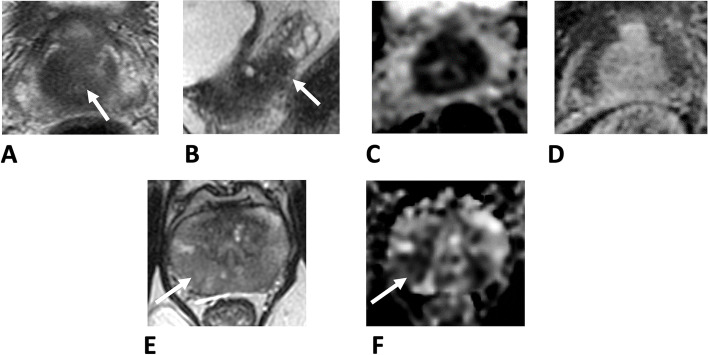
https://cdn.ncbi.nlm.nih.gov/pmc/blobs/c527/9367076/ca429d8c6475/12885_2022_9955_Fig2_HTML.jpg
https://cdn.ncbi.nlm.nih.gov/pmc/blobs/c527/9367076/0d23ffdeb964/12885_2022_9955_Fig1_HTML.jpg
https://cdn.ncbi.nlm.nih.gov/pmc/blobs/c527/9367076/ca429d8c6475/12885_2022_9955_Fig2_HTML.jpg
https://cdn.ncbi.nlm.nih.gov/pmc/blobs/c527/9367076/0d23ffdeb964/12885_2022_9955_Fig1_HTML.jpg
https://cdn.ncbi.nlm.nih.gov/pmc/blobs/c527/9367076/ca429d8c6475/12885_2022_9955_Fig2_HTML.jpg

相似文献

1
Assessing the impact of MRI based diagnostics on pre-treatment disease classification and prognostic model performance in men diagnosed with new prostate cancer from an unscreened population.评估 MRI 诊断对未筛查人群中新诊断前列腺癌患者的治疗前疾病分类和预后模型性能的影响。
BMC Cancer. 2022 Aug 11;22(1):878. doi: 10.1186/s12885-022-09955-w.
2
The Cambridge Prognostic Groups for improved prediction of disease mortality at diagnosis in primary non-metastatic prostate cancer: a validation study.剑桥预后分组可改善原发性非转移性前列腺癌诊断时疾病死亡率的预测:验证性研究。
BMC Med. 2018 Feb 28;16(1):31. doi: 10.1186/s12916-018-1019-5.
3
Improving Clinical Risk Stratification at Diagnosis in Primary Prostate Cancer: A Prognostic Modelling Study.改善原发性前列腺癌诊断时的临床风险分层:一项预后建模研究。
PLoS Med. 2016 Aug 2;13(8):e1002063. doi: 10.1371/journal.pmed.1002063. eCollection 2016 Aug.
4
Application of a novel machine learning framework for predicting non-metastatic prostate cancer-specific mortality in men using the Surveillance, Epidemiology, and End Results (SEER) database.应用新型机器学习框架,利用监测、流行病学和最终结果(SEER)数据库预测男性非转移性前列腺癌特异性死亡率。
Lancet Digit Health. 2021 Mar;3(3):e158-e165. doi: 10.1016/S2589-7500(20)30314-9. Epub 2021 Feb 3.
5
Decreased accuracy of the prostate cancer EAU risk group classification in the era of imaging-guided diagnostic pathway: proposal for a new classification based on MRI-targeted biopsies and early oncologic outcomes after surgery.在影像学引导的诊断路径时代,前列腺癌 EAU 风险组分类的准确性降低:基于 MRI 靶向活检和手术后早期肿瘤学结果的新分类建议。
World J Urol. 2020 Oct;38(10):2493-2500. doi: 10.1007/s00345-019-03053-6. Epub 2019 Dec 14.
6
Predicting Prostate Cancer Death with Different Pretreatment Risk Stratification Tools: A Head-to-head Comparison in a Nationwide Cohort Study.不同预处理风险分层工具预测前列腺癌死亡:全国队列研究中的头对头比较。
Eur Urol. 2020 Feb;77(2):180-188. doi: 10.1016/j.eururo.2019.09.027. Epub 2019 Oct 9.
7
Analysis of Magnetic Resonance Imaging-directed Biopsy Strategies for Changing the Paradigm of Prostate Cancer Diagnosis.磁共振成像引导下的活检策略分析:改变前列腺癌诊断模式。
Eur Urol Oncol. 2020 Feb;3(1):32-41. doi: 10.1016/j.euo.2019.10.001. Epub 2019 Nov 7.
8
Multiparametric MRI to improve detection of prostate cancer compared with transrectal ultrasound-guided prostate biopsy alone: the PROMIS study.多参数 MRI 提高经直肠超声引导前列腺活检单独诊断前列腺癌的检出率:PROMIS 研究。
Health Technol Assess. 2018 Jul;22(39):1-176. doi: 10.3310/hta22390.
9
Individualised non-contrast MRI-based risk estimation and shared decision-making in men with a suspicion of prostate cancer: protocol for multicentre randomised controlled trial (multi-IMPROD V.2.0).基于个体的非对比 MRI 风险评估和疑似前列腺癌男性的共享决策:多中心随机对照试验协议 (multi-IMPROD V.2.0)。
BMJ Open. 2022 Apr 15;12(4):e053118. doi: 10.1136/bmjopen-2021-053118.
10
Prostate cancer screening using a combination of risk-prediction, MRI, and targeted prostate biopsies (STHLM3-MRI): a prospective, population-based, randomised, open-label, non-inferiority trial.使用风险预测、MRI 和靶向前列腺活检的组合进行前列腺癌筛查(STHLM3-MRI):一项前瞻性、基于人群、随机、开放标签、非劣效性试验。
Lancet Oncol. 2021 Sep;22(9):1240-1249. doi: 10.1016/S1470-2045(21)00348-X. Epub 2021 Aug 13.

引用本文的文献

1
Optimizing clinical risk stratification of localized prostate cancer.优化局限性前列腺癌的临床风险分层
Curr Opin Urol. 2025 Jul 1;35(4):426-431. doi: 10.1097/MOU.0000000000001294. Epub 2025 May 2.
2
The impact of pre-biopsy MRI and additional testing on prostate cancer screening outcomes: A rapid review.活检前MRI及额外检测对前列腺癌筛查结果的影响:一项快速综述。
BJUI Compass. 2024 Jan 31;5(4):426-438. doi: 10.1002/bco2.321. eCollection 2024 Apr.

本文引用的文献

1
Comparative performance of fully-automated and semi-automated artificial intelligence methods for the detection of clinically significant prostate cancer on MRI: a systematic review.用于在MRI上检测具有临床意义的前列腺癌的全自动和半自动人工智能方法的比较性能:一项系统评价
Insights Imaging. 2022 Mar 28;13(1):59. doi: 10.1186/s13244-022-01199-3.
2
Prostate MRI quality: clinical impact of the PI-QUAL score in prostate cancer diagnostic work-up.前列腺 MRI 质量:PI-QUAL 评分在前列腺癌诊断中的临床影响。
Br J Radiol. 2022 May 1;95(1133):20211372. doi: 10.1259/bjr.20211372. Epub 2022 Feb 18.
3
Prostate cancer screening using a combination of risk-prediction, MRI, and targeted prostate biopsies (STHLM3-MRI): a prospective, population-based, randomised, open-label, non-inferiority trial.
使用风险预测、MRI 和靶向前列腺活检的组合进行前列腺癌筛查(STHLM3-MRI):一项前瞻性、基于人群、随机、开放标签、非劣效性试验。
Lancet Oncol. 2021 Sep;22(9):1240-1249. doi: 10.1016/S1470-2045(21)00348-X. Epub 2021 Aug 13.
4
Economic Evaluation of Urine-Based or Magnetic Resonance Imaging Reflex Tests in Men With Intermediate Prostate-Specific Antigen Levels in the United States.美国基于尿液或磁共振成像(MRI)的前列腺特异性抗原(PSA)水平中间值的反射性检测的经济学评价。
Value Health. 2021 Aug;24(8):1111-1117. doi: 10.1016/j.jval.2021.02.009. Epub 2021 Apr 22.
5
Effects of Magnetic Resonance Imaging Targeting on Overdiagnosis and Overtreatment of Prostate Cancer.磁共振成像引导对前列腺癌过度诊断和过度治疗的影响。
Eur Urol. 2021 Nov;80(5):567-572. doi: 10.1016/j.eururo.2021.06.026. Epub 2021 Jul 20.
6
Comparative performance of MRI-derived PRECISE scores and delta-radiomics models for the prediction of prostate cancer progression in patients on active surveillance.基于 MRI 的 PRECISE 评分和 delta 放射组学模型对主动监测患者前列腺癌进展预测的比较性能。
Eur Radiol. 2022 Jan;32(1):680-689. doi: 10.1007/s00330-021-08151-x. Epub 2021 Jul 13.
7
Correlation of MRI-Lesion Targeted Biopsy vs. Systematic Biopsy Gleason Score with Final Pathological Gleason Score after Radical Prostatectomy.前列腺癌根治术后MRI靶向病变活检与系统活检Gleason评分与最终病理Gleason评分的相关性
Diagnostics (Basel). 2021 May 15;11(5):882. doi: 10.3390/diagnostics11050882.
8
Application of a novel machine learning framework for predicting non-metastatic prostate cancer-specific mortality in men using the Surveillance, Epidemiology, and End Results (SEER) database.应用新型机器学习框架,利用监测、流行病学和最终结果(SEER)数据库预测男性非转移性前列腺癌特异性死亡率。
Lancet Digit Health. 2021 Mar;3(3):e158-e165. doi: 10.1016/S2589-7500(20)30314-9. Epub 2021 Feb 3.
9
Association Between Multiparametric Magnetic Resonance Imaging of the Prostate and Oncological Outcomes after Primary Treatment for Prostate Cancer: A Systematic Review and Meta-analysis.前列腺多参数磁共振成像与前列腺癌初次治疗后肿瘤学结局的关系:系统评价和荟萃分析。
Eur Urol Oncol. 2021 Aug;4(4):519-528. doi: 10.1016/j.euo.2020.11.008. Epub 2020 Dec 28.
10
Oncologic Outcomes after Localized Prostate Cancer Treatment: Associations with Pretreatment Prostate Magnetic Resonance Imaging Findings.局限性前列腺癌治疗后的肿瘤学结果:与治疗前前列腺磁共振成像结果的关系。
J Urol. 2021 Apr;205(4):1055-1062. doi: 10.1097/JU.0000000000001474. Epub 2020 Nov 18.