• 文献检索
  • 文档翻译
  • 深度研究
  • 学术资讯
  • Suppr Zotero 插件Zotero 插件
  • 邀请有礼
  • 套餐&价格
  • 历史记录
应用&插件
Suppr Zotero 插件Zotero 插件浏览器插件Mac 客户端Windows 客户端微信小程序
定价
高级版会员购买积分包购买API积分包
服务
文献检索文档翻译深度研究API 文档MCP 服务
关于我们
关于 Suppr公司介绍联系我们用户协议隐私条款
关注我们

Suppr 超能文献

核心技术专利:CN118964589B侵权必究
粤ICP备2023148730 号-1Suppr @ 2026

文献检索

告别复杂PubMed语法,用中文像聊天一样搜索,搜遍4000万医学文献。AI智能推荐,让科研检索更轻松。

立即免费搜索

文件翻译

保留排版,准确专业,支持PDF/Word/PPT等文件格式,支持 12+语言互译。

免费翻译文档

深度研究

AI帮你快速写综述,25分钟生成高质量综述,智能提取关键信息,辅助科研写作。

立即免费体验

基于速度的训练(VBT)在提高训练有素个体的运动表现中的作用:对照试验的荟萃分析。

The Role of Velocity-Based Training (VBT) in Enhancing Athletic Performance in Trained Individuals: A Meta-Analysis of Controlled Trials.

机构信息

Institute of Sports Science, College of Physical Education, Southwest University, Chongqing 400715, China.

Laboratory of Genetics, University of Wisconsin-Madison, Madison, WI 53706, USA.

出版信息

Int J Environ Res Public Health. 2022 Jul 28;19(15):9252. doi: 10.3390/ijerph19159252.

DOI:10.3390/ijerph19159252
PMID:35954603
原文链接:https://pmc.ncbi.nlm.nih.gov/articles/PMC9368129/
Abstract

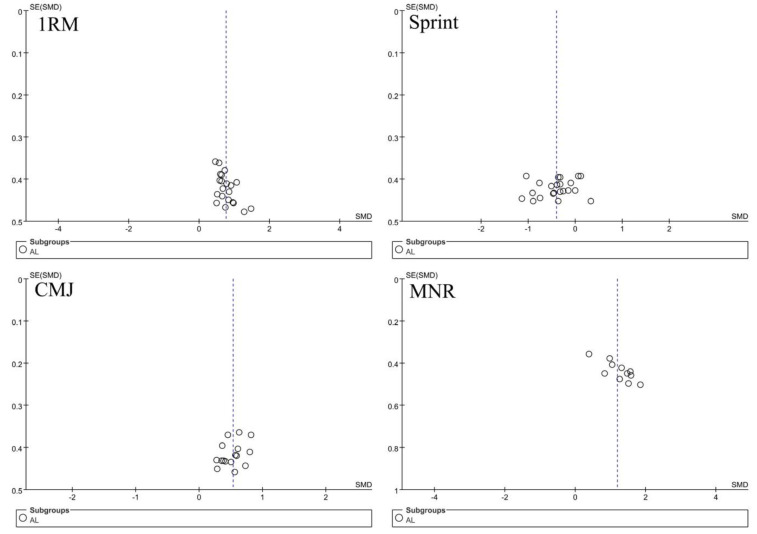
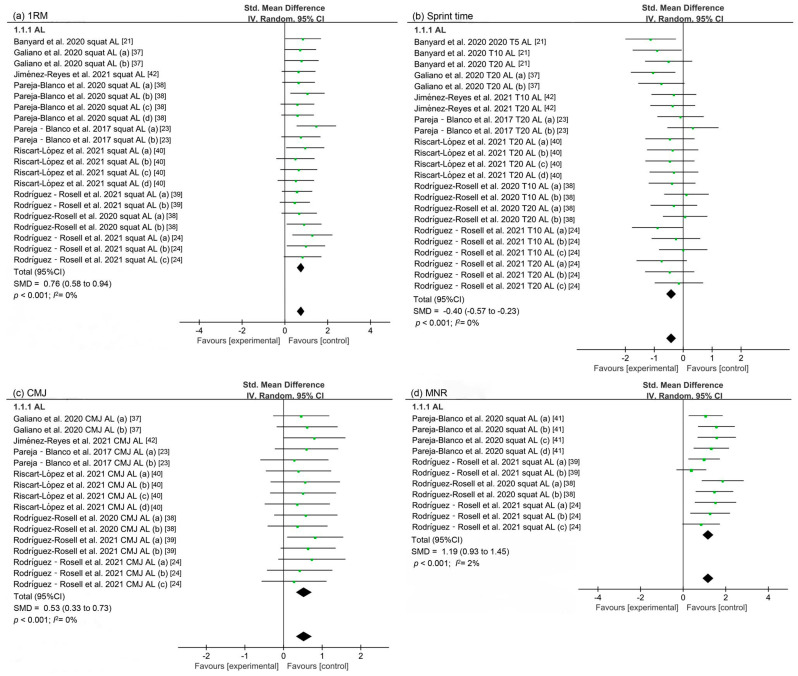
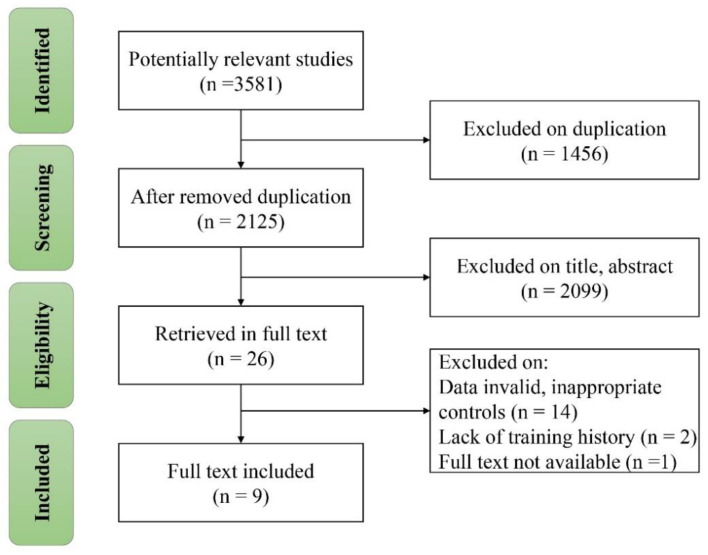
Velocity-based training (VBT) is a rising auto-regulation method that dynamically regulates training loads to promote resistance training. However, the role of VBT in improving various athletic performances is still unclear. Hence, the presented study aimed to examine the role of VBT in improving lower limbs’ maximum strength, strength endurance, jump, and sprint performance among trained individuals. A systematic literature search was performed to identify studies on VBT for lower limb strength training via databases, including PubMed, Web of Science, Embase, EBSCO, Cochrane, CNKI (in Chinese), and Wanfang Database (in Chinese). Controlled trials that deployed VBT only without extra training content were considered. Eventually, nine studies with a total of 253 trained males (at least one year of training experience) were included in the meta-analysis. The pooled results suggest that VBT may effectively enhance lower limbs’ maximum strength (SMD = 0.76; p < 0.001; I2 = 0%), strength endurance (SMD = 1.19; p < 0.001; I2 = 2%), countermovement jump (SMD = 0.53; p < 0.001; I2 = 0%), and sprint ability (SMD of sprint time = −0.40; p < 0.001; I2 = 0%). These findings indicate the positive role of VBT in serving athletic training. Future research is warranted to focus on the effect of velocity loss of VBT on athletic performance.

摘要

基于速度的训练(VBT)是一种新兴的自调节方法,可动态调节训练负荷以促进抗阻训练。然而,VBT 在提高各种运动表现中的作用尚不清楚。因此,本研究旨在探讨 VBT 在提高训练者下肢最大力量、力量耐力、跳跃和短跑表现中的作用。通过数据库(包括 PubMed、Web of Science、Embase、EBSCO、Cochrane、CNKI(中文)和万方数据库(中文))对仅使用 VBT 进行下肢力量训练的研究进行了系统的文献检索。只考虑了没有额外训练内容的 VBT 控制试验。最终,共有 9 项研究,总计 253 名男性(至少有一年的训练经验)被纳入荟萃分析。汇总结果表明,VBT 可能有效增强下肢最大力量(SMD=0.76;p<0.001;I2=0%)、力量耐力(SMD=1.19;p<0.001;I2=2%)、反向跳(SMD=0.53;p<0.001;I2=0%)和短跑能力(短跑时间 SMD=-0.40;p<0.001;I2=0%)。这些发现表明 VBT 在运动训练中具有积极作用。未来的研究需要关注 VBT 速度损失对运动表现的影响。
https://cdn.ncbi.nlm.nih.gov/pmc/blobs/625a/9368129/8884572dc3c0/ijerph-19-09252-g003.jpg
https://cdn.ncbi.nlm.nih.gov/pmc/blobs/625a/9368129/779c2ac55d6c/ijerph-19-09252-g001.jpg
https://cdn.ncbi.nlm.nih.gov/pmc/blobs/625a/9368129/dd723ebeec9d/ijerph-19-09252-g002.jpg
https://cdn.ncbi.nlm.nih.gov/pmc/blobs/625a/9368129/8884572dc3c0/ijerph-19-09252-g003.jpg
https://cdn.ncbi.nlm.nih.gov/pmc/blobs/625a/9368129/779c2ac55d6c/ijerph-19-09252-g001.jpg
https://cdn.ncbi.nlm.nih.gov/pmc/blobs/625a/9368129/dd723ebeec9d/ijerph-19-09252-g002.jpg
https://cdn.ncbi.nlm.nih.gov/pmc/blobs/625a/9368129/8884572dc3c0/ijerph-19-09252-g003.jpg

相似文献

1
The Role of Velocity-Based Training (VBT) in Enhancing Athletic Performance in Trained Individuals: A Meta-Analysis of Controlled Trials.基于速度的训练(VBT)在提高训练有素个体的运动表现中的作用:对照试验的荟萃分析。
Int J Environ Res Public Health. 2022 Jul 28;19(15):9252. doi: 10.3390/ijerph19159252.
2
Effects of velocity based training vs. traditional 1RM percentage-based training on improving strength, jump, linear sprint and change of direction speed performance: A Systematic review with meta-analysis.基于速度的训练与传统的 1RM 百分比训练对提高力量、跳跃、线性冲刺和变向速度表现的影响:系统评价与荟萃分析。
PLoS One. 2021 Nov 18;16(11):e0259790. doi: 10.1371/journal.pone.0259790. eCollection 2021.
3
Superior Changes in Jump, Sprint, and Change-of-Direction Performance but Not Maximal Strength Following 6 Weeks of Velocity-Based Training Compared With 1-Repetition-Maximum Percentage-Based Training.与基于 1 次最大重复百分比的训练相比,6 周基于速度的训练后,跳跃、短跑和变向能力的提升更为显著,但最大力量没有变化。
Int J Sports Physiol Perform. 2021 Feb 1;16(2):232-242. doi: 10.1123/ijspp.2019-0999. Epub 2020 Sep 1.
4
The effectiveness of traditional vs. velocity-based strength training on explosive and maximal strength performance: A network meta-analysis.传统力量训练与基于速度的力量训练对爆发力和最大力量表现的有效性:一项网状Meta分析。
Front Physiol. 2022 Aug 10;13:926972. doi: 10.3389/fphys.2022.926972. eCollection 2022.
5
Effects of strength training on physical fitness and sport-specific performance in recreational, sub-elite, and elite rowers: A systematic review with meta-analysis.力量训练对业余、次精英和精英赛艇运动员身体素质和专项运动表现的影响:系统评价和荟萃分析。
J Sports Sci. 2020 May;38(10):1186-1195. doi: 10.1080/02640414.2020.1745502. Epub 2020 Mar 27.
6
The Effects of Trunk Muscle Training on Physical Fitness and Sport-Specific Performance in Young and Adult Athletes: A Systematic Review and Meta-Analysis.躯干肌肉训练对青少年和成年运动员体能和运动专项表现的影响:系统评价和荟萃分析。
Sports Med. 2022 Jul;52(7):1599-1622. doi: 10.1007/s40279-021-01637-0. Epub 2022 Jan 21.
7
Effects of Four Different Velocity-Based Training Programming Models on Strength Gains and Physical Performance.四种不同基于速度的训练编程模型对力量增益和身体表现的影响。
J Strength Cond Res. 2021 Mar 1;35(3):596-603. doi: 10.1519/JSC.0000000000003934.
8
Comparison of Velocity-Based and Traditional Percentage-Based Loading Methods on Maximal Strength and Power Adaptations.基于速度的和传统基于百分比的加载方法对最大力量和功率适应的比较。
J Strength Cond Res. 2020 Jan;34(1):46-53. doi: 10.1519/JSC.0000000000003089.
9
The Effect of Velocity Loss on Strength Development and Related Training Efficiency: A Dose-Response Meta-Analysis.速度损失对力量发展及相关训练效率的影响:一项剂量反应荟萃分析。
Healthcare (Basel). 2023 Jan 23;11(3):337. doi: 10.3390/healthcare11030337.
10
Effects of 8-week in-season upper and lower limb heavy resistance training on the peak power, throwing velocity, and sprint performance of elite male handball players.8 周赛季内上下肢大强度抗阻训练对优秀男子手球运动员峰值功率、投掷速度和冲刺性能的影响。
J Strength Cond Res. 2011 Sep;25(9):2424-33. doi: 10.1519/JSC.0b013e3182030edb.

引用本文的文献

1
Autoregulated resistance training for maximal strength enhancement: A systematic review and network meta-analysis.用于最大力量增强的自动调节阻力训练:一项系统评价和网状荟萃分析。
J Exerc Sci Fit. 2025 Oct;23(4):360-369. doi: 10.1016/j.jesf.2025.07.006. Epub 2025 Jul 26.
2
How Does Load Selection and Sex Influence 1RM Prediction Using the Minimal Velocity Threshold During Free-Weight Back Squat?在自由重量后深蹲中,负荷选择和性别如何通过最小速度阈值影响1RM预测?
Sports (Basel). 2025 Jul 8;13(7):224. doi: 10.3390/sports13070224.
3
From Monitoring to Prediction: Velocity-Based Strength Training in Female Floorball Athletes.

本文引用的文献

1
Comparison of the effects of velocity-based vs. traditional resistance training methods on adaptations in strength, power, and sprint speed: A systematic review, meta-analysis, and quality of evidence appraisal.速度训练与传统抗阻训练方法对力量、功率和冲刺速度适应性影响的比较:系统评价、荟萃分析和证据质量评估。
J Sports Sci. 2022 Jun;40(11):1220-1234. doi: 10.1080/02640414.2022.2059320. Epub 2022 Apr 5.
2
Effects of velocity based training vs. traditional 1RM percentage-based training on improving strength, jump, linear sprint and change of direction speed performance: A Systematic review with meta-analysis.基于速度的训练与传统的 1RM 百分比训练对提高力量、跳跃、线性冲刺和变向速度表现的影响:系统评价与荟萃分析。
PLoS One. 2021 Nov 18;16(11):e0259790. doi: 10.1371/journal.pone.0259790. eCollection 2021.
3
从监测到预测:女子地板球运动员基于速度的力量训练
Sports (Basel). 2025 May 31;13(6):175. doi: 10.3390/sports13060175.
4
Manipulating Resistance Exercise Variables to Improve Jumps, Sprints, and Changes of Direction in Soccer: What We Know and What We Don't Know.操控抗阻训练变量以提高足球运动中的跳跃、冲刺及变向能力:我们已知与未知的情况
J Funct Morphol Kinesiol. 2025 Apr 26;10(2):145. doi: 10.3390/jfmk10020145.
5
Acute Effect of Fixed vs. Self-Selected Rest Interval Between Sets on Physiological and Performance-Related Responses.每组之间固定休息间隔与自行选择休息间隔对生理及与运动表现相关反应的急性影响。
J Funct Morphol Kinesiol. 2024 Oct 21;9(4):200. doi: 10.3390/jfmk9040200.
6
Gait signature changes with walking speed are similar among able-bodied young adults despite persistent individual-specific differences.尽管存在个体特异性差异,但在身体健全的年轻人中,步态特征随步行速度的变化是相似的。
bioRxiv. 2024 May 3:2024.05.01.591976. doi: 10.1101/2024.05.01.591976.
7
Comparison of 10% vs. 30% Velocity Loss during Squat Training with Low Loads on Strength and Sport-Specific Performance in Young Soccer Players.年轻足球运动员低负荷深蹲训练中10%与30%速度损失对力量和专项运动表现的比较
Sports (Basel). 2024 Jan 30;12(2):43. doi: 10.3390/sports12020043.
8
Resistance Training Practices of Brazilian Olympic Sprint and Jump Coaches: Toward a Deeper Understanding of Their Choices and Insights (Part III).巴西奥运会短跑和跳远教练的阻力训练实践:深入了解他们的选择与见解(第三部分)
J Hum Kinet. 2024 Feb 2;90:183-214. doi: 10.5114/jhk/182888. eCollection 2024 Jan.
9
The effectiveness of adjusting resistance training loads through velocity-based techniques in experienced sprinters: a case series study.通过基于速度的技术调整经验丰富的短跑运动员的阻力训练负荷的有效性:一项病例系列研究。
Front Physiol. 2023 Jul 26;14:1241459. doi: 10.3389/fphys.2023.1241459. eCollection 2023.
10
The Effect of Velocity Loss on Strength Development and Related Training Efficiency: A Dose-Response Meta-Analysis.速度损失对力量发展及相关训练效率的影响:一项剂量反应荟萃分析。
Healthcare (Basel). 2023 Jan 23;11(3):337. doi: 10.3390/healthcare11030337.
Training for Muscular Strength: Methods for Monitoring and Adjusting Training Intensity.肌肉力量训练:监测和调整训练强度的方法。
Sports Med. 2021 Oct;51(10):2051-2066. doi: 10.1007/s40279-021-01488-9. Epub 2021 Jun 8.
4
Resistance Training With Different Velocity Loss Thresholds Induce Similar Changes in Strength and Hypertrophy.不同速度损失阈值的抗阻训练引起力量和肥大的相似变化。
J Strength Cond Res. 2024 Mar 1;38(3):e135-e142. doi: 10.1519/JSC.0000000000004067. Epub 2024 Jan 31.
5
Effects of Velocity-Based Training on Strength and Power in Elite Athletes-A Systematic Review.基于速度的训练对精英运动员力量和爆发力的影响——系统综述。
Int J Environ Res Public Health. 2021 May 14;18(10):5257. doi: 10.3390/ijerph18105257.
6
Effect of velocity loss during squat training on neuromuscular performance.蹲训过程中速度损失对神经肌肉表现的影响。
Scand J Med Sci Sports. 2021 Aug;31(8):1621-1635. doi: 10.1111/sms.13967. Epub 2021 May 14.
7
Differences between adjusted vs. non-adjusted loads in velocity-based training: consequences for strength training control and programming.基于速度的训练中调整负荷与未调整负荷之间的差异:对力量训练控制和计划的影响。
PeerJ. 2021 Mar 23;9:e10942. doi: 10.7717/peerj.10942. eCollection 2021.
8
Auto-Regulation Method vs. Fixed-Loading Method in Maximum Strength Training for Athletes: A Systematic Review and Meta-Analysis.运动员最大力量训练中自动调节方法与固定负荷方法的比较:系统评价与荟萃分析
Front Physiol. 2021 Mar 12;12:651112. doi: 10.3389/fphys.2021.651112. eCollection 2021.
9
Optimal Training Sequences to Develop Lower Body Force, Velocity, Power, and Jump Height: A Systematic Review with Meta-Analysis.最佳下肢力量、速度、功率和跳跃高度训练序列的发展:系统评价与荟萃分析。
Sports Med. 2021 Jun;51(6):1245-1271. doi: 10.1007/s40279-021-01430-z. Epub 2021 Mar 5.
10
Improved Strength and Recovery After Velocity-Based Training: A Randomized Controlled Trial.基于速度训练后力量增强及恢复情况:一项随机对照试验
Int J Sports Physiol Perform. 2021 Aug 1;16(8):1185–1193. doi: 10.1123/ijspp.2020-0451. Epub 2021 Feb 4.