Central for High-Performance Computing, Shenzhen Institute of Advanced Technology, Chinese Academy of Sciences, Shenzhen 518055, China.
Division of Biomedical Engineering, University of Saskatchewan, Saskatoon, SK S7N 5A9, Canada.
Cells. 2024 Oct 4;13(19):1653. doi: 10.3390/cells13191653.
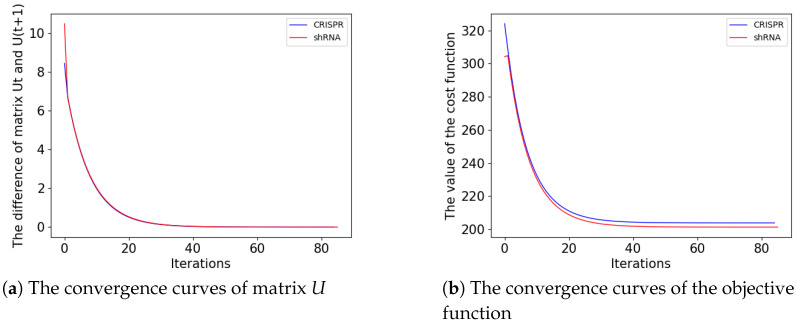
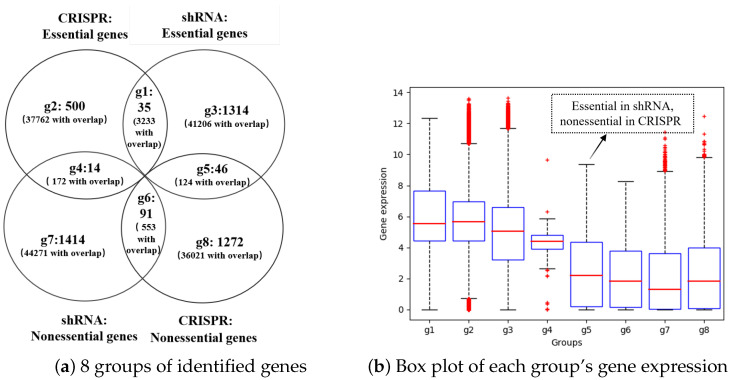
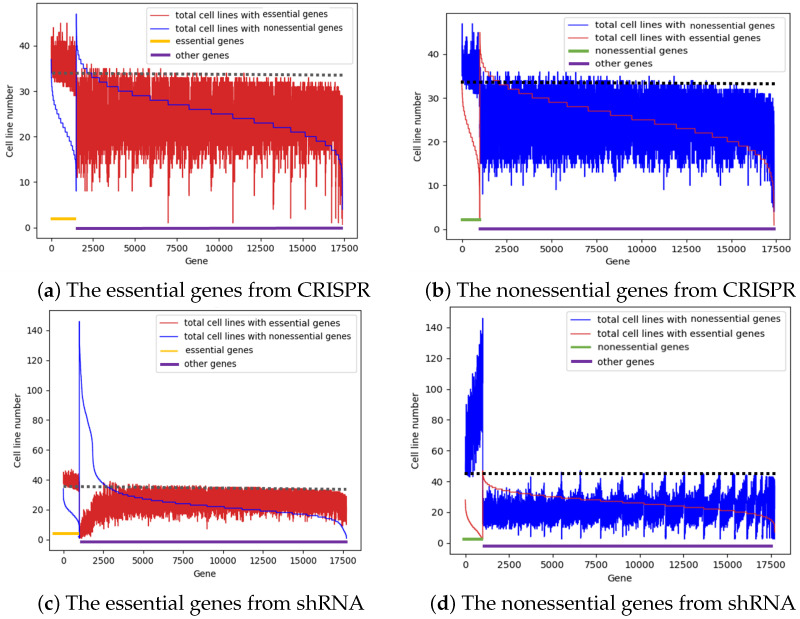
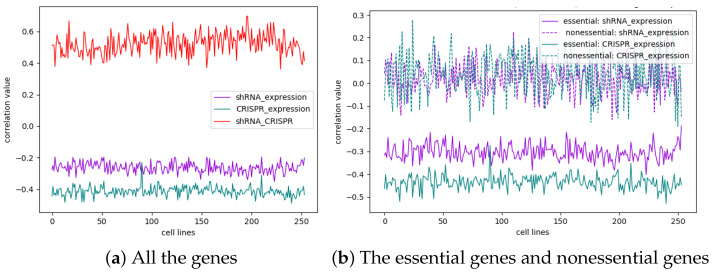
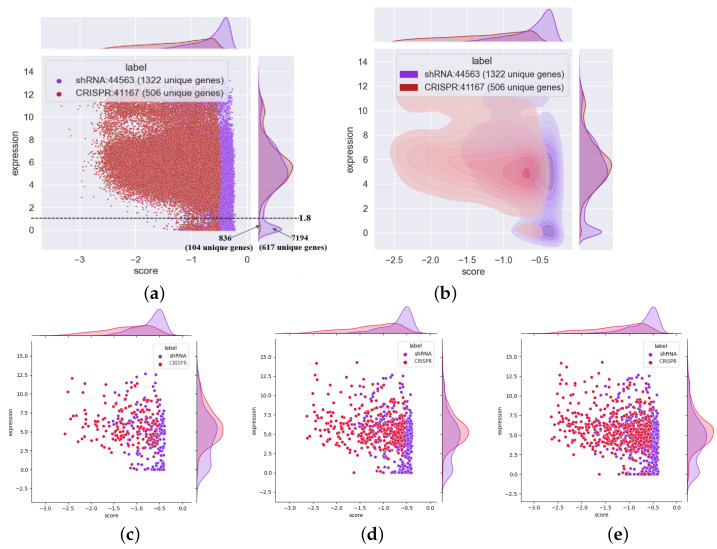
Generally, essential genes identified using shRNA and CRISPR are not always the same, raising questions about the choice between these two screening platforms. To address this, we systematically compared the performance of CRISPR and shRNA to identify essential genes across different gene expression levels in 254 cell lines. As both platforms have a notable false positive rate, to correct this confounding factor, we first developed a graph-based unsupervised machine learning model to predict common essential genes. Furthermore, to maintain the unique characteristics of individual cell lines, we intersect essential genes derived from the biological experiment with the predicted common essential genes. Finally, we employed statistical methods to compare the ability of these two screening platforms to identify essential genes that exhibit differential expression across various cell lines. Our analysis yielded several noteworthy findings: (1) shRNA outperforms CRISPR in the identification of lowly expressed essential genes; (2) both screening methodologies demonstrate strong performance in identifying highly expressed essential genes but with limited overlap, so we suggest using a combination of these two platforms for highly expressed essential genes; (3) notably, we did not observe a single gene that becomes universally essential across all cancer cell lines.
通常情况下,使用 shRNA 和 CRISPR 鉴定的必需基因并不总是相同的,这就引发了对这两种筛选平台之间的选择的质疑。为了解决这个问题,我们系统地比较了 CRISPR 和 shRNA 在 254 种细胞系中不同基因表达水平下识别必需基因的性能。由于这两种平台都有显著的假阳性率,为了纠正这个混杂因素,我们首先开发了一种基于图的无监督机器学习模型来预测常见的必需基因。此外,为了保持单个细胞系的独特特征,我们将从生物学实验中得出的必需基因与预测的常见必需基因进行交叉。最后,我们采用统计方法比较了这两种筛选平台识别在不同细胞系中表达差异的必需基因的能力。我们的分析得出了几个值得注意的发现:(1)shRNA 在识别低表达必需基因方面优于 CRISPR;(2)两种筛选方法在识别高表达必需基因方面都表现出了很强的性能,但重叠有限,因此我们建议将这两种平台结合起来用于高表达必需基因;(3)值得注意的是,我们没有观察到一个在所有癌细胞系中普遍必需的基因。