Institute for Information Transmission Problems, Russian Academy of Sciences, 127994 Moscow, Russia.
Laboratory of Neuromotor Physiology, IRCCS Santa Lucia Foundation, 00179 Rome, Italy.
Sensors (Basel). 2022 Jul 30;22(15):5708. doi: 10.3390/s22155708.
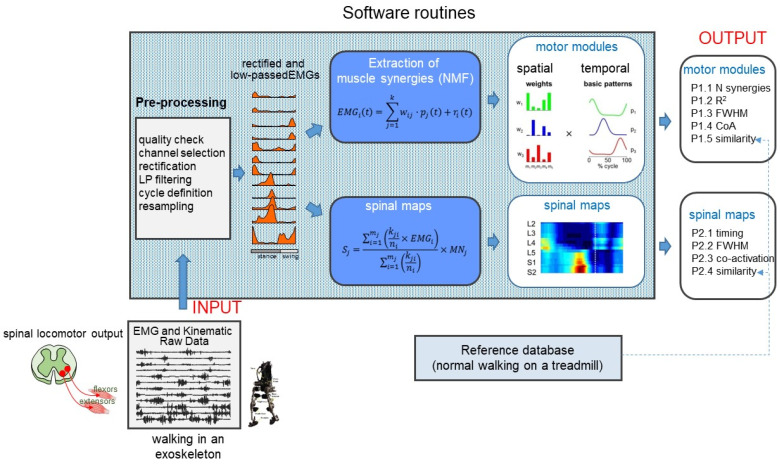
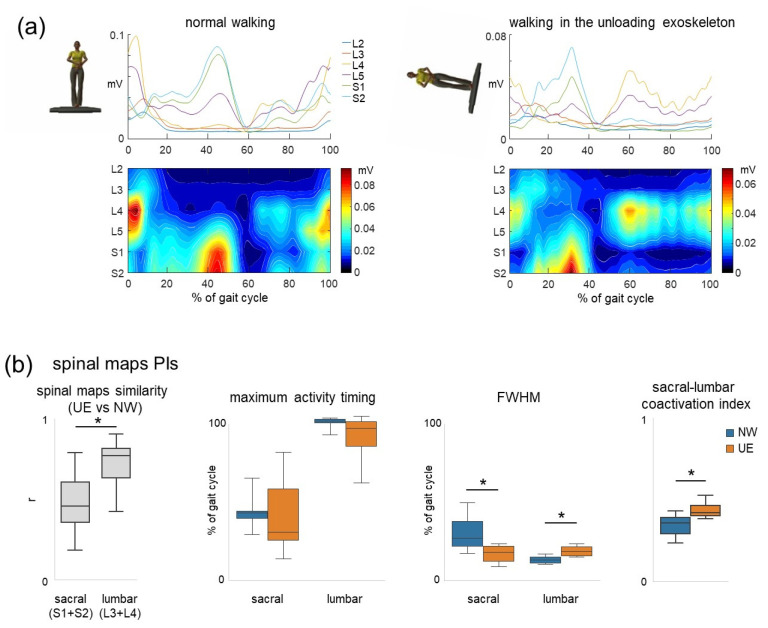
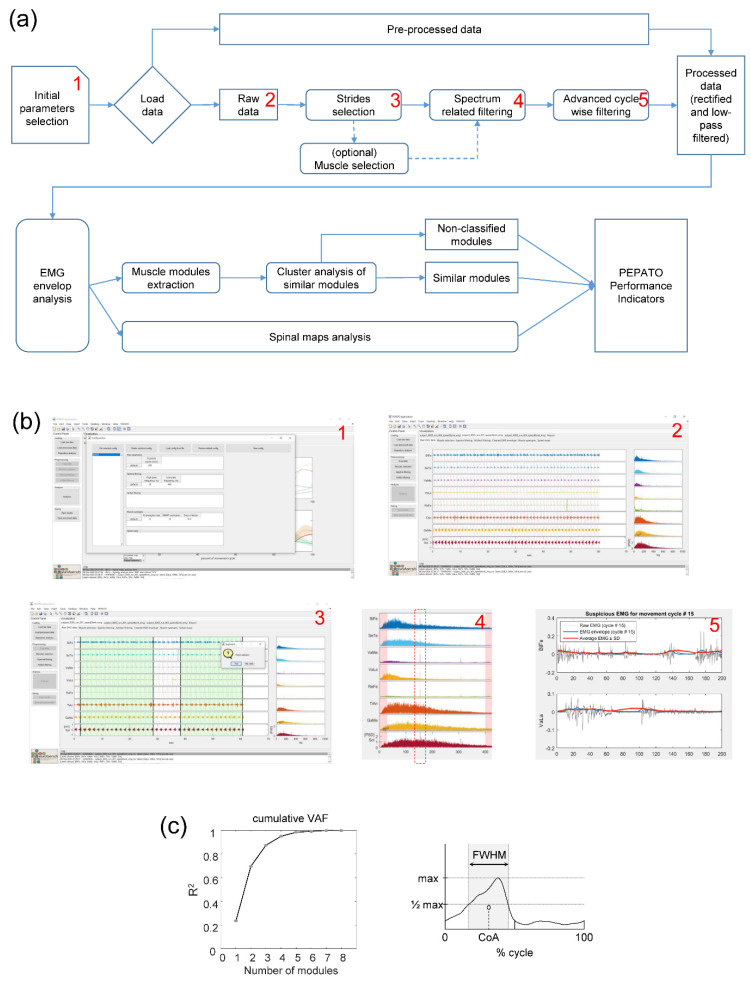
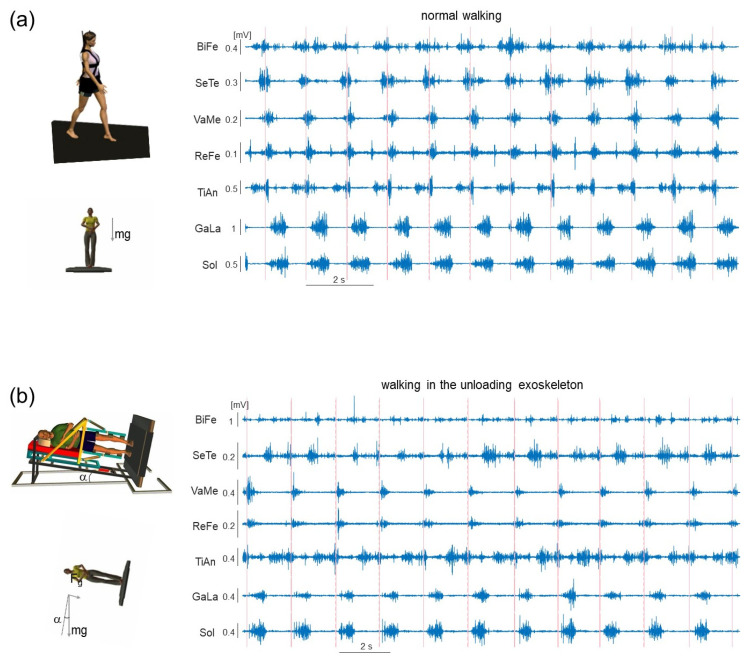
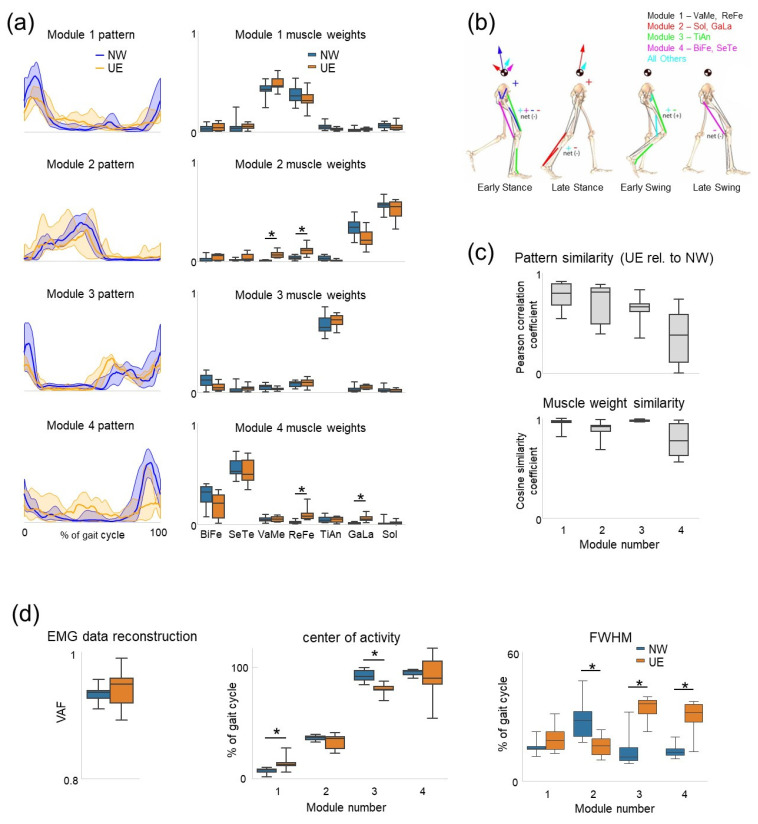
Recent advances in the performance and evaluation of walking in exoskeletons use various assessments based on kinematic/kinetic measurements. While such variables provide general characteristics of gait performance, only limited conclusions can be made about the neural control strategies. Moreover, some kinematic or kinetic parameters are a consequence of the control implemented on the exoskeleton. Therefore, standard indicators based on kinematic variables have limitations and need to be complemented by performance measures of muscle coordination and control strategy. Knowledge about what happens at the spinal cord output level might also be critical for rehabilitation since an abnormal spatiotemporal integration of activity in specific spinal segments may result in a risk for abnormalities in gait recovery. Here we present the PEPATO software, which is a benchmarking solution to assess changes in the spinal locomotor output during walking in the exoskeleton with respect to reference data on normal walking. In particular, functional and structural changes at the spinal cord level can be mapped into muscle synergies and spinal maps of motoneuron activity. A user-friendly software interface guides the user through several data processing steps leading to a set of performance indicators as output. We present an example of the usage of this software for evaluating walking in an unloading exoskeleton that allows a person to step in simulated reduced (the Moon's) gravity. By analyzing the EMG activity from lower limb muscles, the algorithms detected several performance indicators demonstrating differential adaptation (shifts in the center of activity, prolonged activation) of specific muscle activation modules and spinal motor pools and increased coactivation of lumbar and sacral segments. The software is integrated at EUROBENCH facilities to benchmark the performance of walking in the exoskeleton from the point of view of changes in the spinal locomotor output.
近年来,外骨骼行走性能和评估的进展采用了基于运动学/动力学测量的各种评估方法。虽然这些变量提供了步态性能的一般特征,但只能对神经控制策略做出有限的结论。此外,一些运动学或动力学参数是外骨骼上实施控制的结果。因此,基于运动学变量的标准指标具有局限性,需要用肌肉协调和控制策略的性能指标来补充。了解脊髓输出水平发生的情况对于康复也可能至关重要,因为特定脊髓节段的活动在时空上的异常整合可能导致步态恢复异常的风险。在这里,我们提出了 PEPATO 软件,它是一种评估外骨骼行走时脊髓运动输出变化的基准解决方案,可与正常行走的参考数据进行比较。特别是,脊髓水平的功能和结构变化可以映射到肌肉协同作用和运动神经元活动的脊髓图谱中。一个用户友好的软件界面引导用户完成几个数据处理步骤,最终输出一组性能指标。我们展示了一个使用该软件评估在允许人在模拟的低重力(月球)环境中行走的减载外骨骼中行走的示例。通过分析下肢肌肉的肌电图活动,算法检测到几个性能指标,这些指标显示出特定肌肉激活模块和脊髓运动池的活动中心(转移)和激活延长的差异适应,以及腰椎和骶骨节段的协同激活增加。该软件集成在 EUROBENCH 设施中,从脊髓运动输出变化的角度来基准评估外骨骼行走的性能。