School of Computer Science, University of Nottingham Ningbo China, Ningbo 315100, China.
University of Hertfordshire, Hatfield AL10 9AB, UK.
Sensors (Basel). 2022 Aug 3;22(15):5803. doi: 10.3390/s22155803.
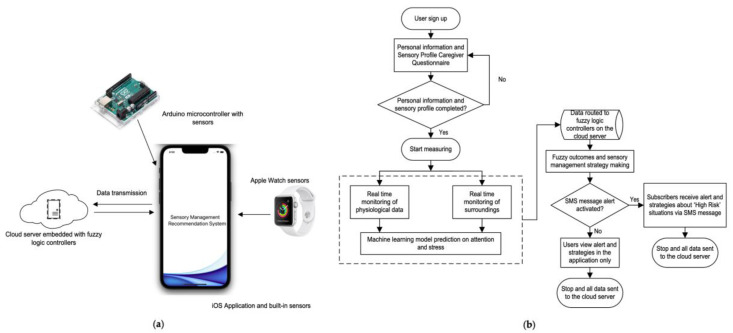
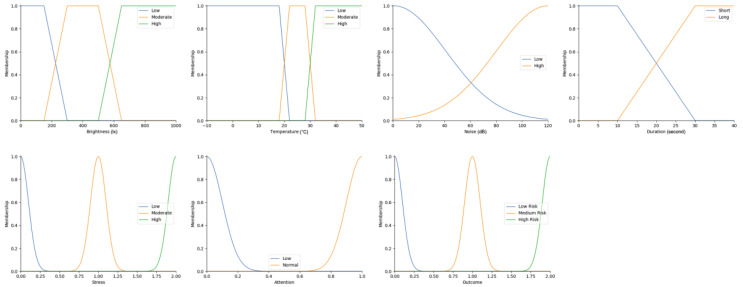
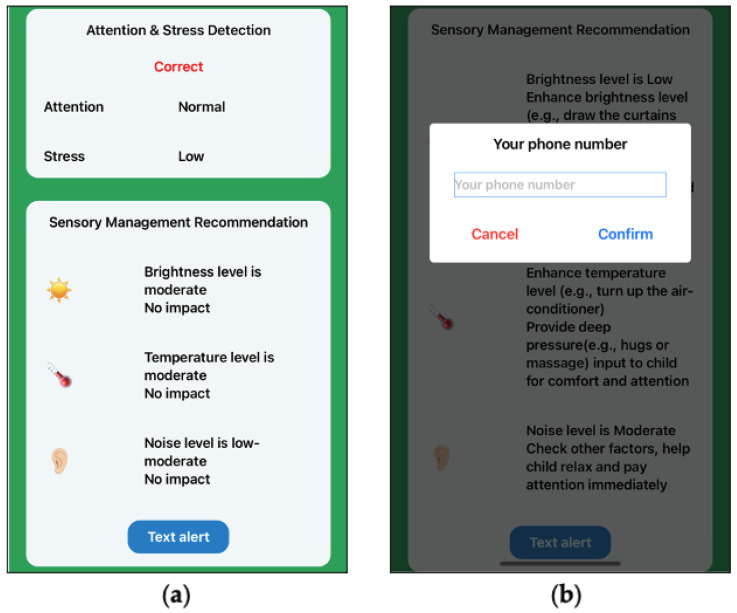
Sensory processing issues are one of the most common issues observed in autism spectrum disorders (ASD). Technologies that could address the issue serve a more and more important role in interventions for ASD individuals nowadays. In this study, a sensory management recommendation system was developed and tested to help ASD children deal with atypical sensory responses in class. The system employed sensor fusion and machine learning techniques to identify distractions, anxious situations, and the potential causes of these in the surroundings. Another novelty of the system included a sensory management strategy making a module based on fuzzy logic, which generated alerts to inform teachers and caregivers about children's states and risky environmental factors. Sensory management strategies were recommended to help improve children's attention or calm children down. The evaluation results suggested that the use of the system had a positive impact on children's performance and its design was user-friendly. The sensory management recommendation system could work as an intelligent companion for ASD children that helps with their in-class performance by recommending management strategies in relation to the real-time information about the children's environment.
感觉处理问题是自闭症谱系障碍(ASD)中最常见的问题之一。如今,能够解决该问题的技术在 ASD 个体的干预措施中发挥着越来越重要的作用。在这项研究中,开发并测试了一种感觉管理推荐系统,以帮助 ASD 儿童在课堂上应对非典型的感觉反应。该系统采用传感器融合和机器学习技术来识别周围环境中的干扰、焦虑情况及其潜在原因。该系统的另一个新颖之处在于,它包含了一个基于模糊逻辑的感觉管理策略生成模块,该模块会发出警报,告知教师和护理人员有关儿童状态和危险环境因素的信息。建议使用感觉管理策略来帮助提高孩子的注意力或使孩子平静下来。评估结果表明,该系统的使用对孩子的表现产生了积极影响,其设计也很用户友好。感觉管理推荐系统可以作为 ASD 儿童的智能伴侣,通过推荐与儿童环境实时信息相关的管理策略,帮助他们在课堂上的表现。