Marzagalli Monica, Pelizzoni Giorgia, Fedi Arianna, Vitale Chiara, Fontana Fabrizio, Bruno Silvia, Poggi Alessandro, Dondero Alessandra, Aiello Maurizio, Castriconi Roberta, Bottino Cristina, Scaglione Silvia
React4life S.r.l, Genoa, Italy.
Department of Biotechnology and Bioscience, University of Milano-Bicocca, Piazza Della Scienza, Milan, Italy.
Front Bioeng Biotechnol. 2022 Jul 25;10:945149. doi: 10.3389/fbioe.2022.945149. eCollection 2022.
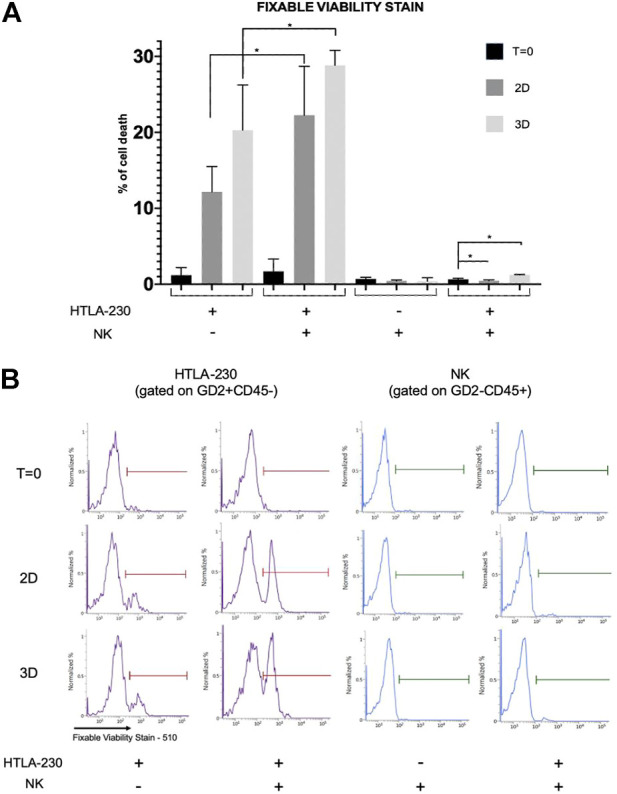
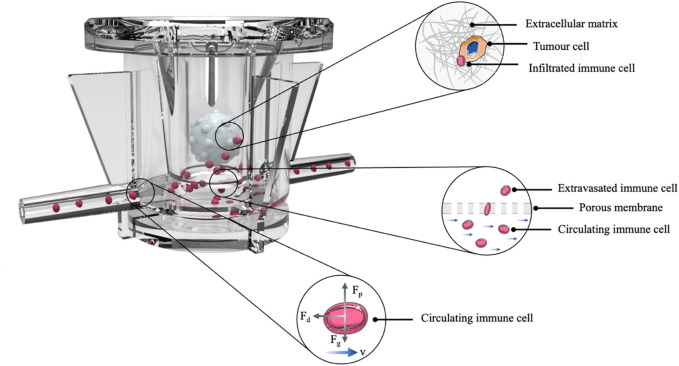
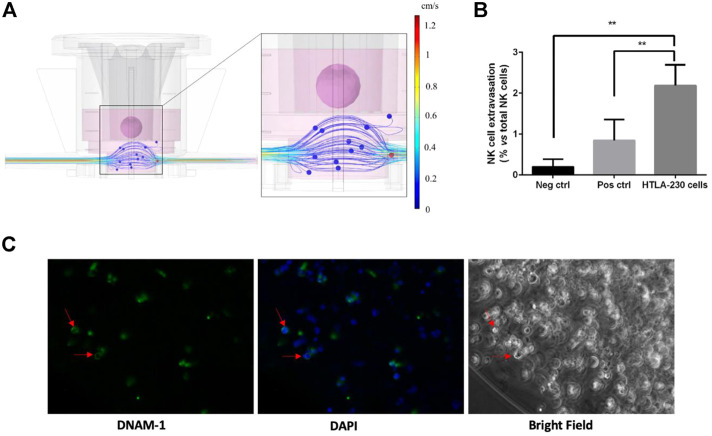
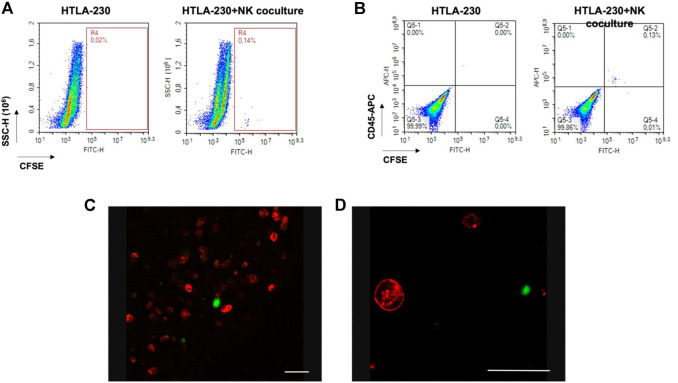
The success of immunotherapeutic approaches strictly depends on the immune cells interaction with cancer cells. While conventional cell cultures under-represent the complexity and dynamic crosstalk of the tumor microenvironment, animal models do not allow deciphering the anti-tumor activity of the human immune system. Therefore, the development of reliable and predictive preclinical models has become crucial for the screening of immune-therapeutic approaches. We here present an organ-on-chip organ on chips (OOC)-based approach for recapitulating the immune cell Natural Killer (NK) migration under physiological fluid flow, infiltration within a 3D tumor matrix, and activation against neuroblastoma cancer cells in a humanized, fluid-dynamic environment. Circulating NK cells actively initiate a spontaneous "extravasation" process toward the physically separated tumor niche, retaining their ability to interact with matrix-embedded tumor cells, and to display a cytotoxic effect (tumor cell apoptosis). Since NK cells infiltration and phenotype is correlated with prognosis and response to immunotherapy, their phenotype is also investigated: most importantly, a clear decrease in CD16-positive NK cells within the migrated and infiltrated population is observed. The proposed immune-tumor OOC-based model represents a promising approach for faithfully recapitulating the human pathology and efficiently employing the immunotherapies testing, eventually in a personalized perspective. An immune-organ on chip to recapitulate the tumor-mediated infiltration of circulating immune cells within 3D tumor model.
免疫治疗方法的成功严格依赖于免疫细胞与癌细胞的相互作用。传统的细胞培养无法充分体现肿瘤微环境的复杂性和动态串扰,而动物模型则无法解析人类免疫系统的抗肿瘤活性。因此,开发可靠且具有预测性的临床前模型对于免疫治疗方法的筛选至关重要。我们在此提出一种基于芯片器官(OOC)的方法,用于在生理流体流动、三维肿瘤基质内浸润以及在人源化流体动力学环境中针对神经母细胞瘤癌细胞激活的条件下,重现免疫细胞自然杀伤(NK)细胞的迁移。循环NK细胞积极启动朝向物理分离的肿瘤微环境的自发“外渗”过程,保持其与基质包埋的肿瘤细胞相互作用并发挥细胞毒性作用(肿瘤细胞凋亡)的能力。由于NK细胞浸润和表型与预后及免疫治疗反应相关,因此也对其表型进行了研究:最重要的是,观察到迁移和浸润群体中CD16阳性NK细胞明显减少。所提出的基于OOC的免疫肿瘤模型是一种很有前景的方法,可忠实地重现人类病理情况并有效地用于免疫治疗测试,最终实现个性化。一种芯片免疫器官,用于在三维肿瘤模型中重现肿瘤介导的循环免疫细胞浸润。