Wysoczański Bartłomiej, Świątek Marcin, Wójcik-Gładysz Anna
Department of Animal Physiology, The Kielanowski Institute of Animal Physiology and Nutrition, Polish Academy of Sciences, Instytucka 3, 05-110 Jablonna, Poland.
Department of Animal Breeding, Institute of Animal Sciences, Warsaw University of Life Sciences, Ciszewskiego 8, 02-786 Warsaw, Poland.
Biomolecules. 2024 Dec 9;14(12):1569. doi: 10.3390/biom14121569.
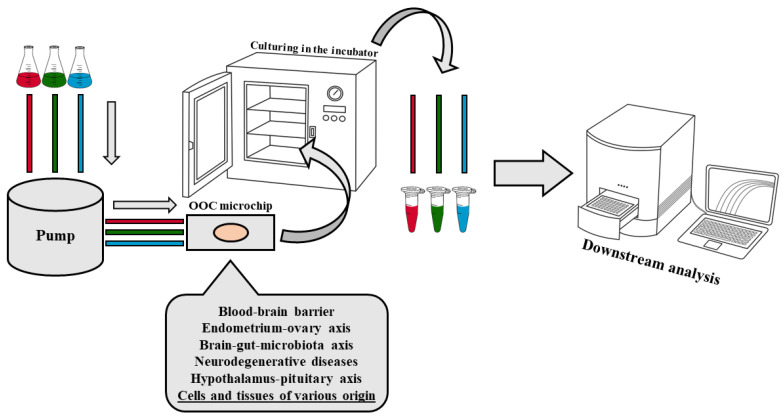
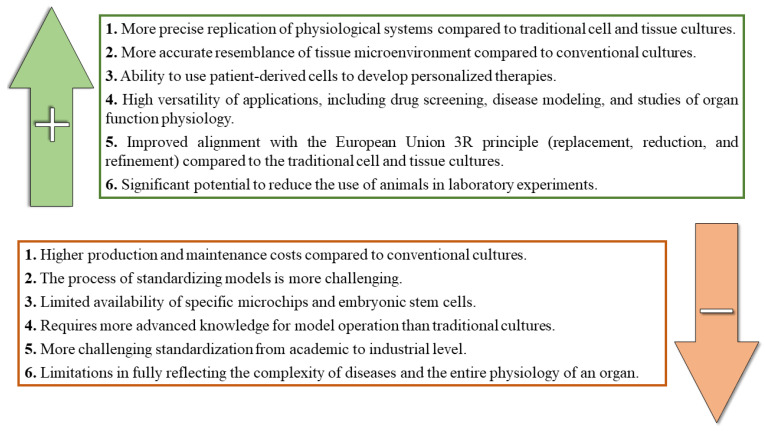
'Organ-on-a-chip' technology is a promising and rapidly evolving model in biological research. This innovative microfluidic cell culture device was created using a microchip with continuously perfused chambers, populated by living cells arranged to replicate physiological processes at the tissue and organ levels. By consolidating multicellular structures, tissue-tissue interfaces, and physicochemical microenvironments, these microchips can replicate key organ functions. They also enable the high-resolution, real-time imaging and analysis of the biochemical, genetic, and metabolic activities of living cells in the functional tissue and organ contexts. This technology can accelerate research into tissue development, organ physiology and disease etiology, therapeutic approaches, and drug testing. It enables the replication of entire organ functions (e.g., liver-on-a-chip, hypothalamus-pituitary-on-a-chip) or the creation of disease models (e.g., amyotrophic lateral sclerosis-on-a-chip, Parkinson's disease-on-a-chip) using specialized microchips and combining them into an integrated functional system. This technology allows for a significant reduction in the number of animals used in experiments, high reproducibility of results, and the possibility of simultaneous use of multiple cell types in a single model. However, its application requires specialized equipment, advanced expertise, and currently incurs high costs. Additionally, achieving the level of standardization needed for commercialization remains a challenge at this stage of development.
“芯片器官”技术是生物研究中一种很有前景且发展迅速的模型。这种创新的微流控细胞培养装置是利用带有连续灌注腔室的微芯片制造的,腔室内填充有活细胞,这些细胞的排列方式可在组织和器官层面复制生理过程。通过整合多细胞结构、组织 - 组织界面和物理化学微环境,这些微芯片能够复制关键器官功能。它们还能在功能性组织和器官环境中对活细胞的生化、遗传和代谢活动进行高分辨率实时成像与分析。这项技术可以加速对组织发育、器官生理学、疾病病因学、治疗方法和药物测试的研究。它能够使用专门的微芯片复制整个器官功能(例如,芯片上的肝脏、芯片上的下丘脑 - 垂体),或创建疾病模型(例如,芯片上的肌萎缩侧索硬化症、芯片上的帕金森病),并将它们组合成一个集成的功能系统。这项技术能够大幅减少实验中使用的动物数量,实现结果的高重现性,并且有可能在单个模型中同时使用多种细胞类型。然而,其应用需要专门的设备、先进的专业知识,目前成本也很高。此外,在现阶段的发展中,实现商业化所需的标准化水平仍然是一项挑战。