Ceccato Riccardo, Baldassa Andrea, Rossi Riccardo, Gastaldi Massimiliano
Department of Civil, Architectural and Environmental Engineering, University of Padova, Via Marzolo, 9, 35131 Padova, Italy.
Department of General Psychology, University of Padova, Via Venezia, 8, 35131 Padova, Italy.
Transp Res D Transp Environ. 2022 Aug;109:103401. doi: 10.1016/j.trd.2022.103401. Epub 2022 Jul 21.
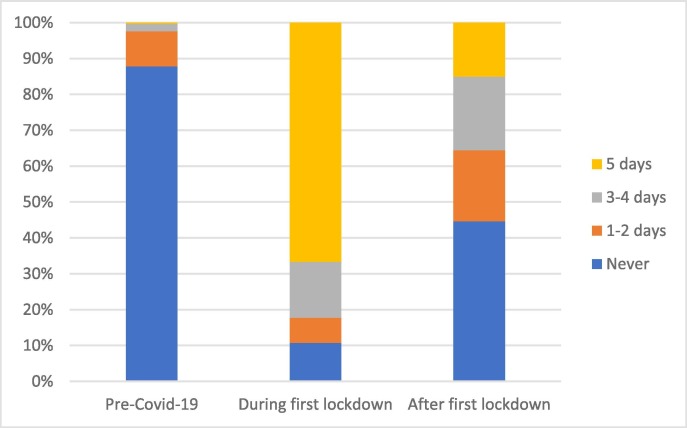
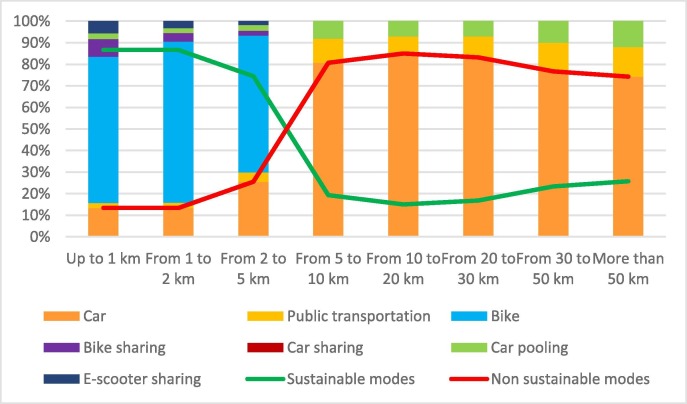
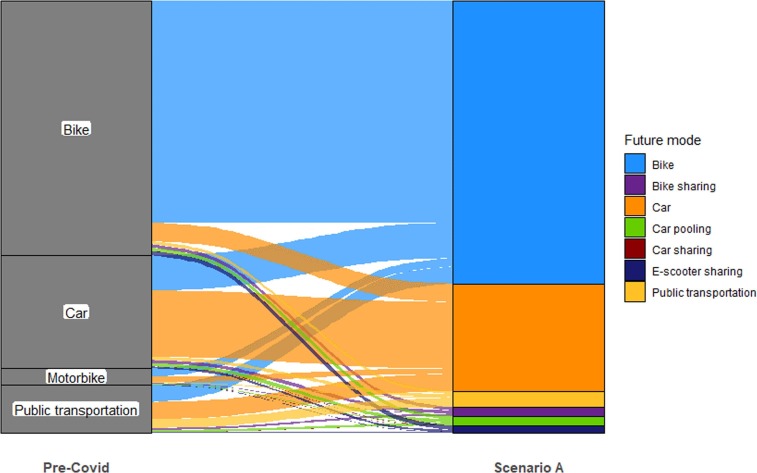
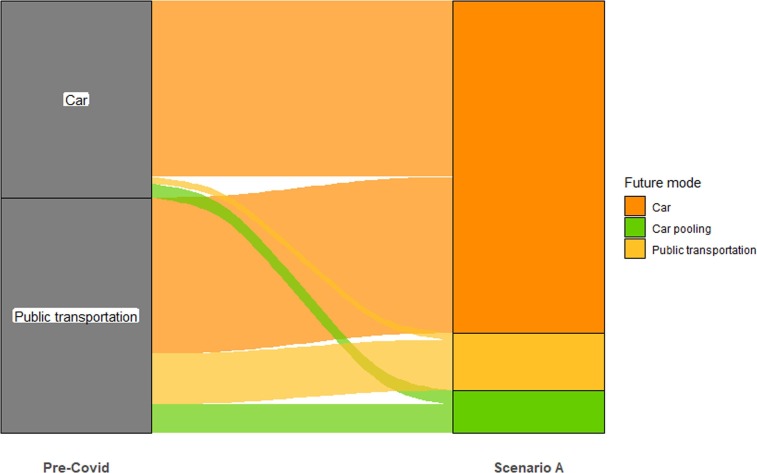
To contain the sudden spread of SARS-CoV-2, many governments encouraged people to work from home, generating an unprecedented diffusion of this activity. Furthermore, Covid-19 has induced drastic changes in everyday life and travel habits, which might persist in the future. This paper aims to understand and estimate the potential long-term impacts of telework on the environment due to the pandemic, by analyzing factors affecting the frequency of telecommuting, the mode choice for traveling to work, and pollutant emissions generated by these trips. Data from a mobility survey administered in Padova (Italy) was used. Results indicate that Covid-19 could cause a rebound effect reversing the positive impacts of working from home, since, even if the number of trips could be reduced, many shifts towards non-sustainable travel modes could occur. The promotion of telework should be combined with measures fostering sustainable travel habits to pave the way towards a future green mobility.
为遏制严重急性呼吸综合征冠状病毒2(SARS-CoV-2)的突然传播,许多政府鼓励人们居家办公,使这种工作方式以前所未有的速度普及开来。此外,2019冠状病毒病(Covid-19)引发了日常生活和出行习惯的巨大变化,这些变化可能会在未来持续存在。本文旨在通过分析影响远程办公频率、上班出行方式选择以及这些出行产生的污染物排放的因素,来了解和估计疫情期间远程办公对环境的潜在长期影响。研究使用了在意大利帕多瓦进行的一项出行调查数据。结果表明,Covid-19可能会导致一种反弹效应,扭转居家办公的积极影响,因为即使出行次数可能减少,但许多人可能会转向不可持续的出行方式。推广远程办公应与培养可持续出行习惯的措施相结合,为未来的绿色出行铺平道路。