Department of Pulmonary Diseases, Yancheng Traditional Chinese Medicine Hospital, Yancheng, China.
Department of Gastroenterology, Yancheng Third People's Hospital, Yancheng, China.
Front Public Health. 2022 Jul 25;10:954721. doi: 10.3389/fpubh.2022.954721. eCollection 2022.
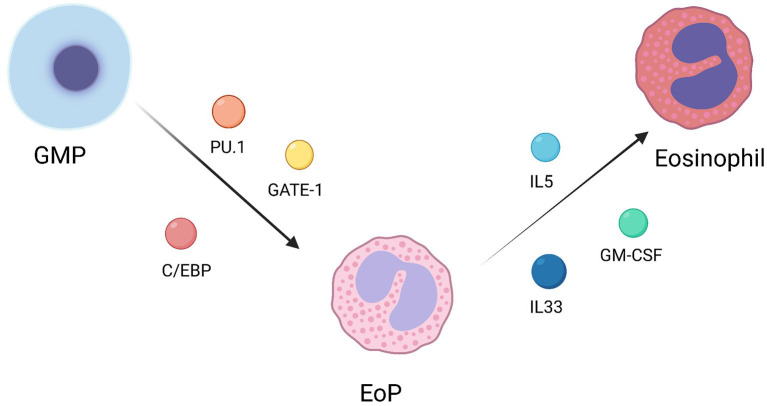
Eosinophils are differentiated by bone marrow multipotent progenitor cells and are further released into peripheral blood after maturation. Human eosinophils can exhibit unique multi-leaf nuclear morphology, which are filled with cytoplasmic granules that contain cytotoxicity and immune regulatory proteins. In recent years, many studies focused on the origin, differentiation and development process of eosinophils. It has been discovered that the eosinophils have the regulatory functions of innate and adaptive immunity, and can also function in several diseases, including asthma, chronic obstructive pulmonary diseases, acute respiratory distress syndrome, malignant tumors and so on. Hence, the role and effects of eosinophils in various diseases are emphasized. In this review, we comprehensively summarized the development and differentiation process of eosinophils, the research progress of their related cytokines, diseases and current clinical treatment options, and discussed the potential drug target, aiming to provide a theoretical and practical basis for the clinical prevention and treatment of eosinophil-related diseases, especially respiratory diseases. To conclude, the guiding significance of future disease treatment is proposed based on the recent updated understandings into the cell functions of eosinophils.
嗜酸性粒细胞由骨髓多能祖细胞分化而来,成熟后释放到外周血中。人类嗜酸性粒细胞可表现出独特的多叶核形态,其细胞质颗粒中充满了细胞毒性和免疫调节蛋白。近年来,许多研究集中在嗜酸性粒细胞的起源、分化和发育过程上。现已发现,嗜酸性粒细胞具有先天和适应性免疫的调节功能,并且在包括哮喘、慢性阻塞性肺疾病、急性呼吸窘迫综合征、恶性肿瘤等多种疾病中发挥作用。因此,强调了嗜酸性粒细胞在各种疾病中的作用和影响。在这篇综述中,我们全面总结了嗜酸性粒细胞的发育和分化过程,以及其相关细胞因子、疾病和当前临床治疗选择的研究进展,并讨论了潜在的药物靶点,旨在为嗜酸性粒细胞相关疾病的临床预防和治疗,特别是呼吸系统疾病,提供理论和实践基础。总之,根据最近对嗜酸性粒细胞细胞功能的更新认识,提出了未来疾病治疗的指导意义。