Gu Bei, Zhu Shiyang, Ding Xuesong, Deng Yan, Ma Xiao, Gan Jingwen, Wang Yanfang, Sun Aijun
Department of Obstetrics and Gynecology, Beijing Shijitan Hospital, Capital Medical University, the Ninth Clinical Medical College of Peking University, Beijing, People's Republic of China.
National Clinical Research Center for Obstetric & Gynecologic Diseases, Department of Obstetrics and Gynecology, Peking Union Medical College Hospital, Chinese Academy of Medical Sciences & Peking Union Medical College, Beijing, People's Republic of China.
Int J Womens Health. 2022 Aug 4;14:1029-1036. doi: 10.2147/IJWH.S367051. eCollection 2022.
Primary dysmenorrhea (PD) is one of the most common complaints in women of childbearing age. Therefore, this trial aimed to assess the efficacy and safety of low-power visible-light-activated photodynamic therapy (PDT) in the treatment of primary dysmenorrhea (PD), and to further investigate their possible mechanisms of action.
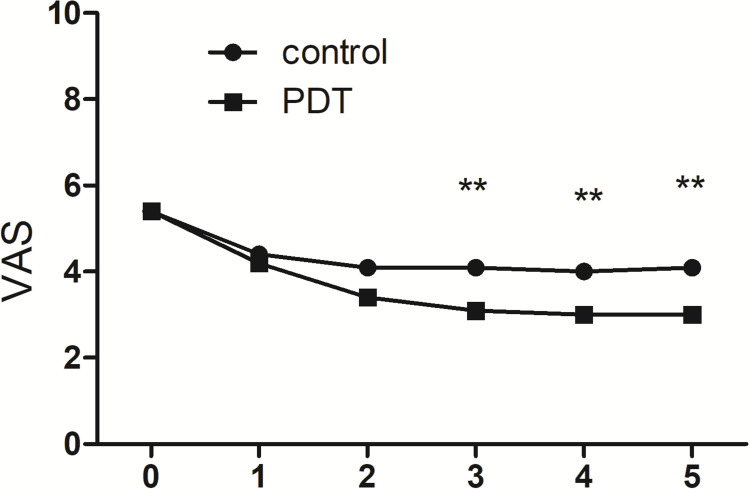
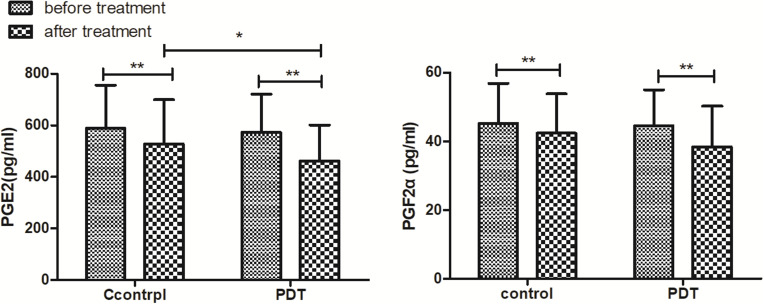
This study was conducted by using a multicenter, randomized, open, parallel control design. Qualified subjects are randomly assigned to two groups: Group A (low-power visible-light-activated PDT group), Group B (placebo group) and are treated with corresponding protocols for three consecutive menstrual cycles. Baseline data are collected during the trial period. Changes in the scores of VAS scales and the fluctuation of pain factors (PGE2, PGF2α) are recorded before and after the treatment for each group. A comparison of effectiveness in pain control and symptom control is made among the two groups.
After treatment, for the PDT group, the scores of VAS scales decline compared with the scores before treatment. The level of pain factors including PGE2 and PGF2α also drops significantly (P < 0.05). There are no serious adverse events during the study.
Low-power visible-light-activated PDT is a new type of treatment for primary dysmenorrhea which is safe, effective and does not affect normal pregnancy preparation. It may exert its therapeutic effect by adjusting downward the level of PGE2, PGF2α in the body. These factors can be used not only to study the treatment mechanism for primary dysmenorrhea, but also to serve as quantitative indicators for objective assessment of whether dysmenorrhea is relieved.
原发性痛经(PD)是育龄期女性最常见的主诉之一。因此,本试验旨在评估低功率可见光激活光动力疗法(PDT)治疗原发性痛经(PD)的疗效和安全性,并进一步探讨其可能的作用机制。
本研究采用多中心、随机、开放、平行对照设计。符合条件的受试者被随机分为两组:A组(低功率可见光激活PDT组)、B组(安慰剂组),并连续三个月经周期采用相应方案进行治疗。在试验期间收集基线数据。记录每组治疗前后视觉模拟评分(VAS)量表评分的变化以及疼痛因子(PGE2、PGF2α)的波动情况。对两组在疼痛控制和症状控制方面的有效性进行比较。
治疗后,PDT组的VAS量表评分较治疗前下降。包括PGE2和PGF2α在内的疼痛因子水平也显著下降(P<0.05)。研究期间未出现严重不良事件。
低功率可见光激活PDT是一种治疗原发性痛经的新型疗法,安全、有效且不影响正常备孕。它可能通过下调体内PGE2、PGF2α的水平发挥治疗作用。这些因子不仅可用于研究原发性痛经的治疗机制,还可作为客观评估痛经是否缓解的量化指标。