Klinik für Neurochirurgie, UniversitätsSpital Zürich, Universität Zürich, Zurich, Switzerland.
Département des neurosciences fondamentales, Faculté de médecine, Université de Genève, Genève, Switzerland.
Elife. 2022 Aug 12;11:e78677. doi: 10.7554/eLife.78677.
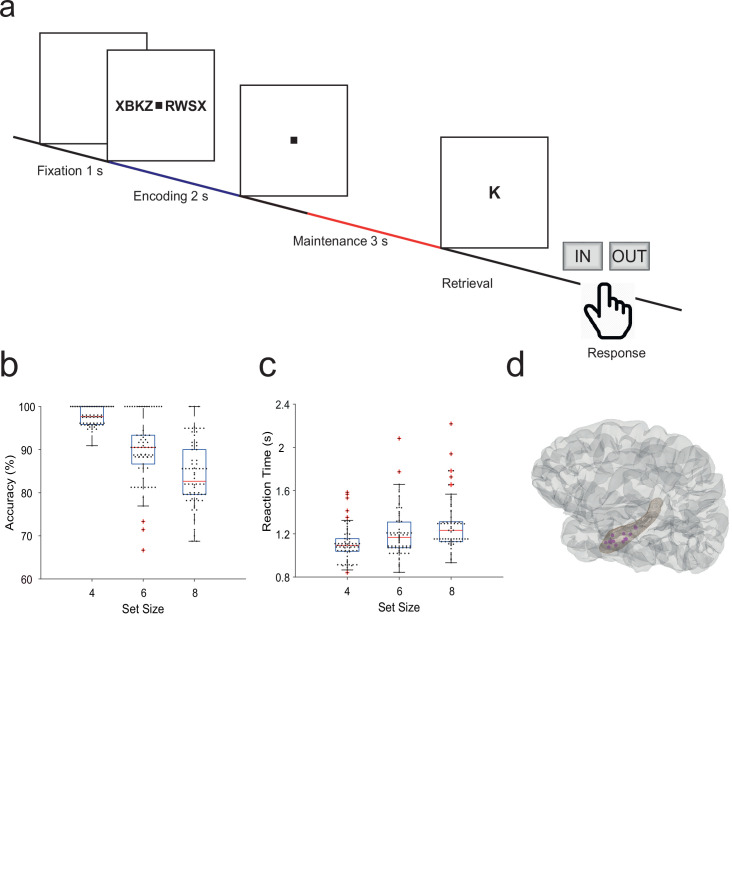
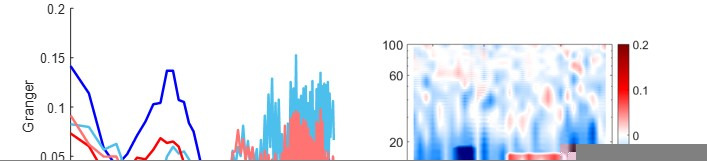
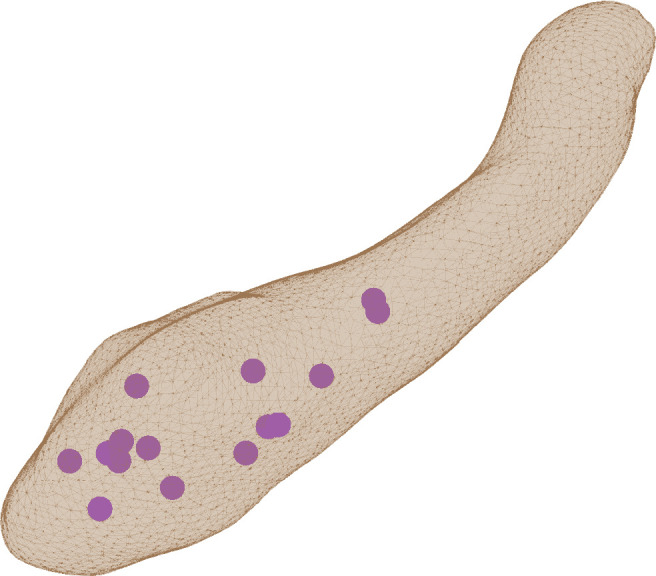
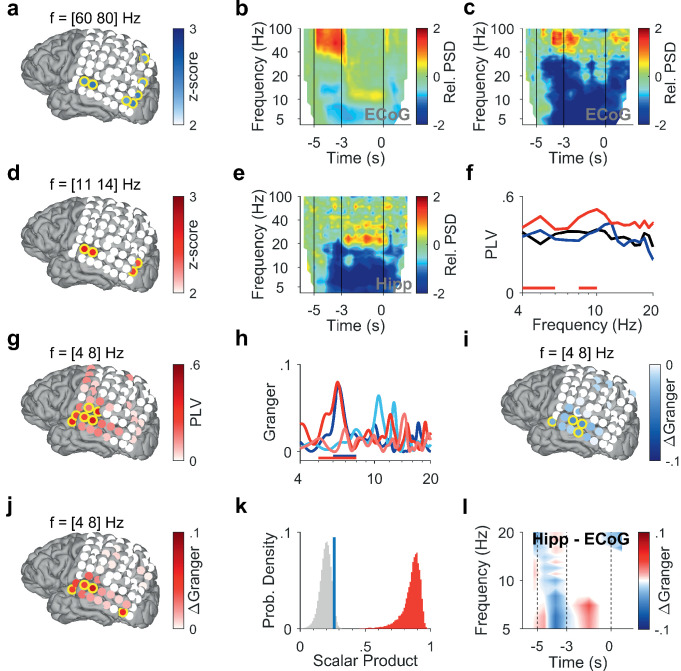
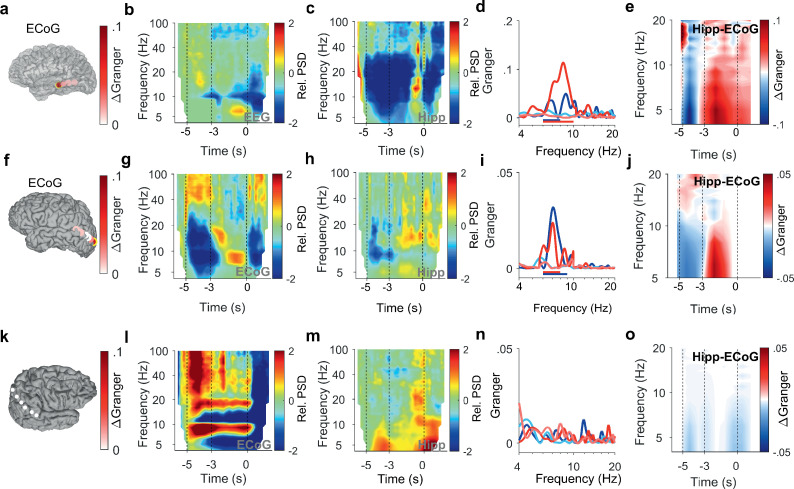
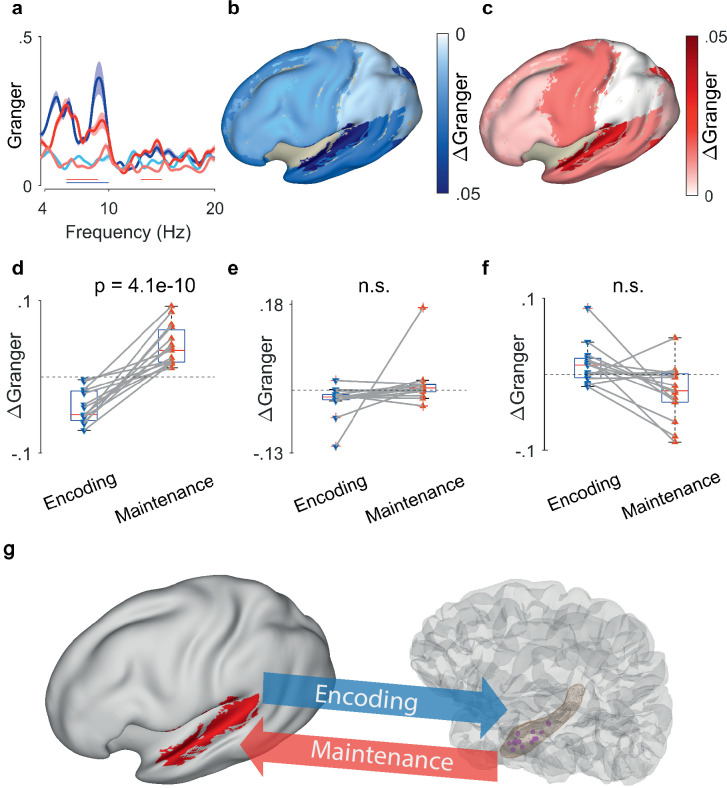
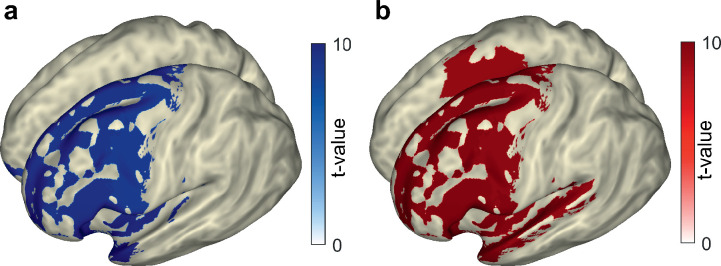
The maintenance of items in working memory (WM) relies on a widespread network of cortical areas and hippocampus where synchronization between electrophysiological recordings reflects functional coupling. We investigated the direction of information flow between auditory cortex and hippocampus while participants heard and then mentally replayed strings of letters in WM by activating their phonological loop. We recorded local field potentials from the hippocampus, reconstructed beamforming sources of scalp EEG and - additionally in four participants - recorded from subdural cortical electrodes. When analyzing Granger causality, the information flow was from auditory cortex to hippocampus with a peak in the [4 8] Hz range while participants heard the letters. This flow was subsequently reversed during maintenance while participants maintained the letters in memory. The functional interaction between hippocampus and the cortex and the reversal of information flow provide a physiological basis for the encoding of memory items and their active replay during maintenance.
工作记忆(WM)中的项目维护依赖于广泛的皮质区域和海马体网络,其中电生理记录之间的同步反映了功能耦合。当参与者通过激活语音回路来听并在 WM 中心理回放字母串时,我们研究了听觉皮层和海马体之间的信息流方向。我们记录了来自海马体的局部场电位,重建了头皮 EEG 的波束形成源,并且 - 在四个参与者中 - 还记录了硬膜下皮质电极的信号。当分析格兰杰因果关系时,当参与者听到字母时,信息流从听觉皮层到海马体,峰值在[4-8]Hz 范围内。在参与者将字母保持在记忆中的维持期间,这种流随后被反转。海马体和皮层之间的功能相互作用以及信息流的反转为记忆项目的编码及其在维持期间的主动回放提供了生理基础。