Discipline of Occupational Therapy, School of Health Sciences, University of KwaZulu Natal, Private Bag x54001, Durban, 4000, South Africa.
Discipline of Public Health Medicine, School of Nursing and Public Health, University of KwaZulu Natal, Private Bag x54001, Durban, 4000, South Africa.
Subst Abuse Treat Prev Policy. 2022 Aug 12;17(1):60. doi: 10.1186/s13011-022-00471-5.
Provision of aftercare services for persons with substance use disorders (PWSUD) within a rural context is typically met with various intersecting challenges, including unclear policy implications and lack of resources. In the South African context, service providers are expected to provide aftercare services that should successfully reintegrate persons with PWSUD into society, the workforce, family and community life as mandated by Act No. 70 of 2008, despite population diversity. Little has been established on the provision of aftercare services in South Africa and specifically within a rural context. This article explores service providers' perspectives in aftercare service provision for PWSUD in a rural district.
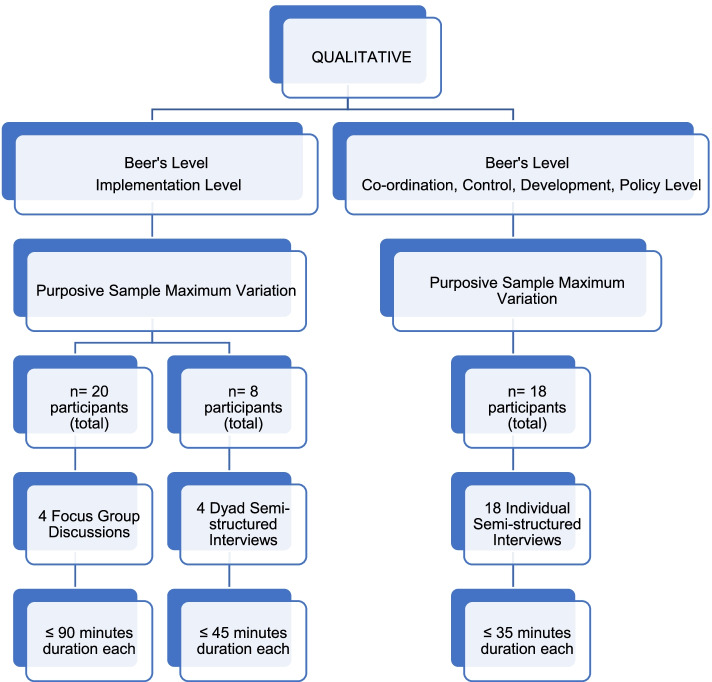
A qualitative exploratory study design was conducted in a rural district in South Africa using semi-structured interviews and focus group discussions with forty-six service providers from governmental and non-governmental institutions, ranging from implementation to policy level of service provision. Data were analyzed thematically using a deductive approach. Codes were predetermined from the questions and the aims and objectives of the study used Beer's Viable Systems Model as a theoretical framework. NVivo Pro 12 qualitative data analysis software guided the organization and further analysis of the data.
Four themes emanated from the data sets. Theme 1 on reflections of the interactional state of aftercare services and program content identified the successes and inadequacies of aftercare interventions including relevant recommendations for aftercare services. Themes 2, 3, and 4 demonstrate reflections of service provision from implementation to policy level, namely, identifying existing barriers to aftercare service provision, situating systemic enablers to aftercare service provision, and associated aftercare system recommendations.
The intersecting systemic complexities of providing aftercare services in a rural context in South Africa was evident. There existed minimal enablers for service provision in this rural district. Service providers are confronted with numerous systemic barriers at all levels of service provision. To strengthen the aftercare system, policies with enforcement of aftercare services are required. Moreover, a model of aftercare that is integrated into the existing services, family centered, sensitive to the rural context and one that encourages the collaboration of stakeholders could also strengthen and sustain the aftercare system and service provision.
在农村背景下,为物质使用障碍(PWSUD)患者提供康复服务通常会遇到各种交叉挑战,包括政策含义不明确和资源匮乏。在南非,根据 2008 年第 70 号法案的规定,服务提供者应提供康复服务,成功地将 PWSUD 患者重新融入社会、劳动力、家庭和社区生活,尽管人口多样化。在南非,特别是在农村地区,很少有关于康复服务提供的信息。本文探讨了农村地区服务提供者对 PWSUD 康复服务提供的看法。
采用定性探索性研究设计,在南非一个农村地区,对来自政府和非政府机构的 46 名服务提供者进行了半结构化访谈和焦点小组讨论,这些服务提供者的服务提供范围从实施到政策层面。使用 Beer 的可行系统模型作为理论框架,采用演绎法对数据进行主题分析。从问题和研究的目的和目标中预先确定了代码。使用 NVivo Pro 12 定性数据分析软件对数据进行组织和进一步分析。
从数据集得出了四个主题。主题 1 反映了康复服务和计划内容的交互状态,确定了康复干预的成功和不足,包括对康复服务的相关建议。主题 2、3 和 4 展示了从实施到政策层面的服务提供情况,即确定康复服务提供的现有障碍、确定康复服务提供的系统促进因素以及相关的康复系统建议。
在南非农村背景下提供康复服务的交叉系统复杂性显而易见。在这个农村地区,提供服务的促进因素很少。服务提供者在服务提供的所有层面都面临着许多系统障碍。为了加强康复系统,需要制定执行康复服务的政策。此外,一种将康复服务纳入现有服务、以家庭为中心、对农村背景敏感并鼓励利益相关者合作的康复模式,也可以加强和维持康复系统和服务提供。