Centre de recherche de l'Institut universitaire de gériatrie de Montréal, Montréal, QC, Canada; Department of Psychology, Université de Montréal, Montréal, QC, Canada.
Memory and Aging Center, Department of Neurology, University of California, San Francisco, CA, United States; Department of Neurology, Dyslexia Center, University of California, San Francisco, CA, United States.
Handb Clin Neurol. 2022;187:429-448. doi: 10.1016/B978-0-12-823493-8.00011-0.
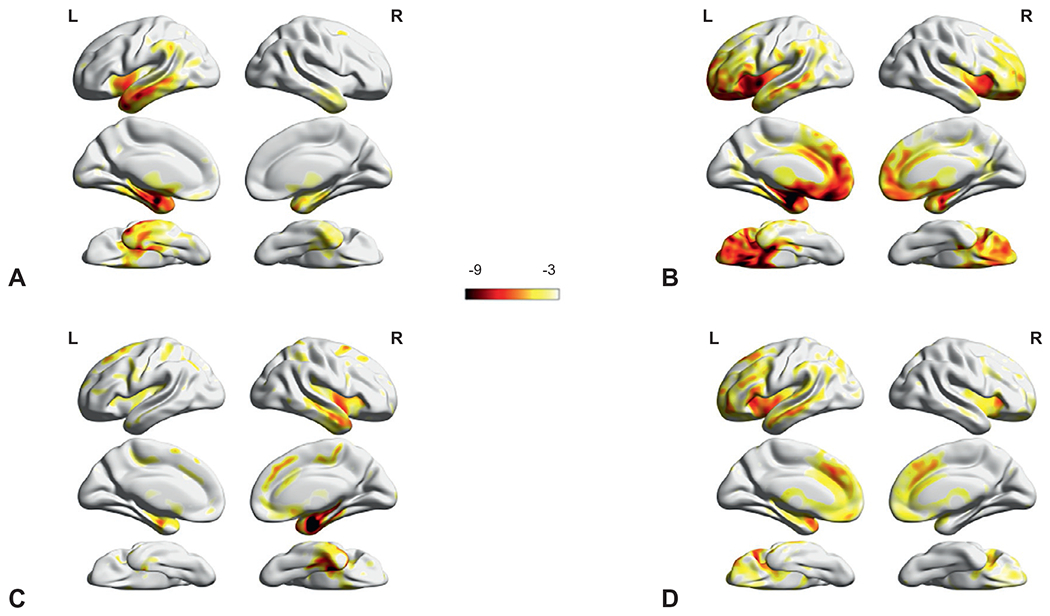
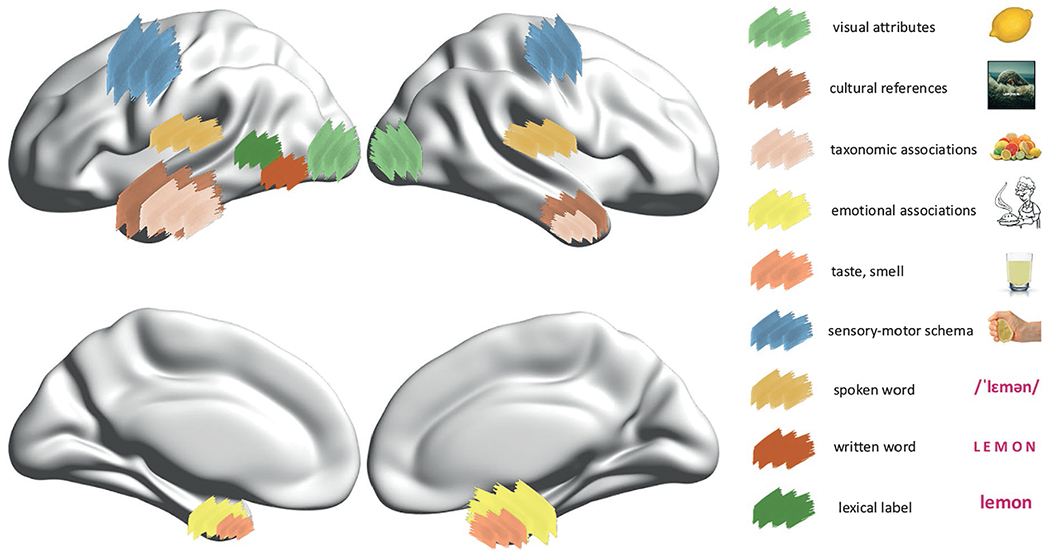
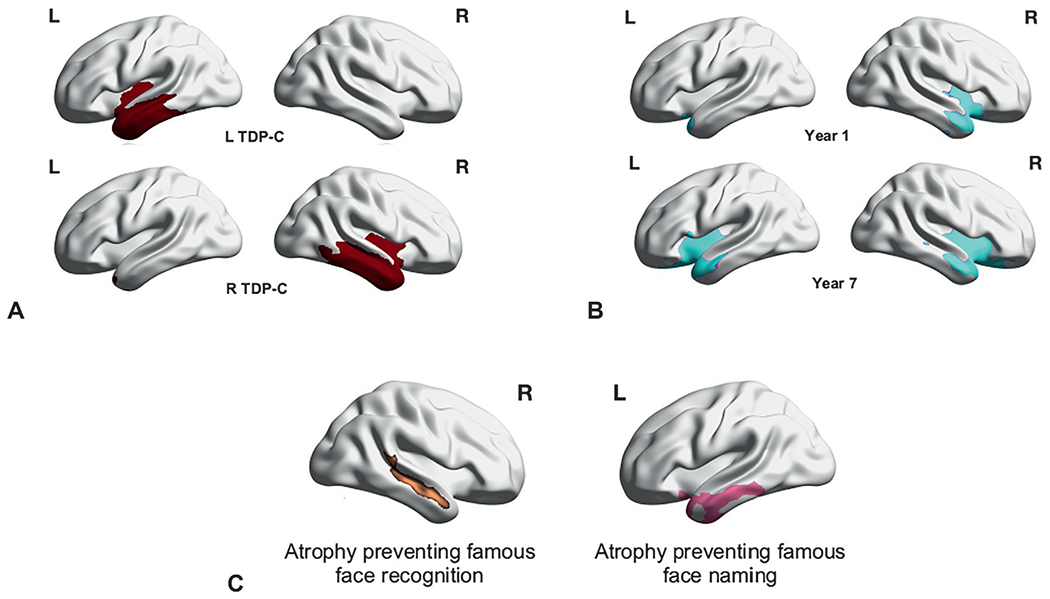
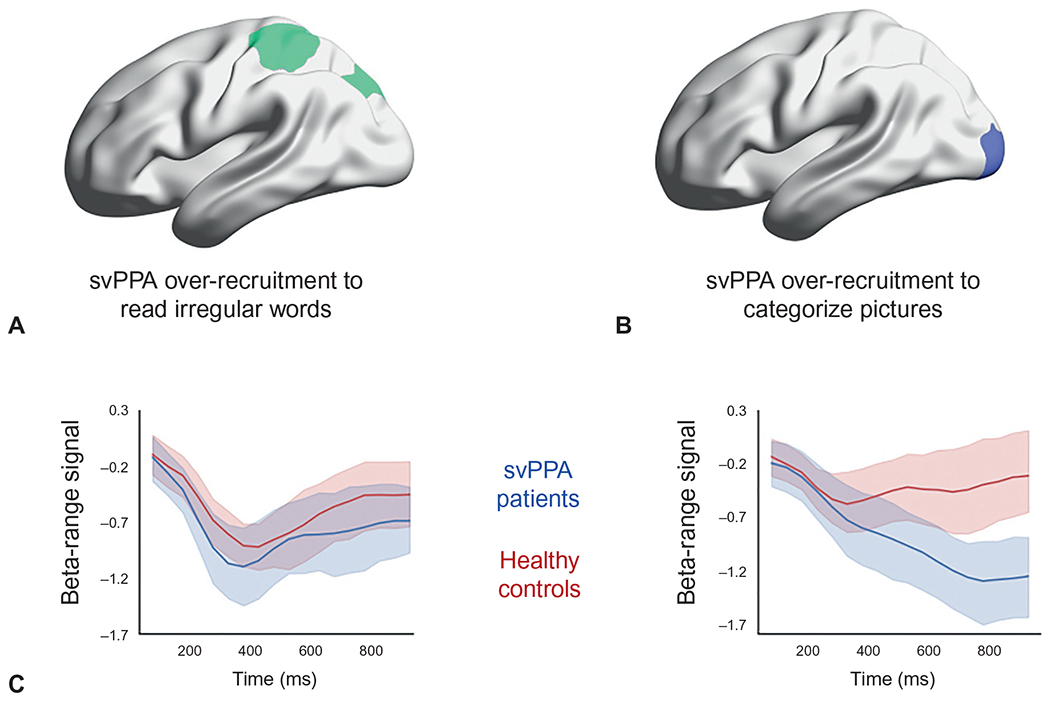
Frontotemporal dementia (FTD) is an umbrella term covering a plethora of progressive changes in executive functions, motor abilities, behavior, and/or language. Different clinical syndromes have been described in relation to localized atrophy, informing on the functional networks that underlie these specific cognitive, emotional, and behavioral processes. These functional declines are linked with the underlying neurodegeneration of frontal and/or temporal lobes due to diverse molecular pathologies. Initially, the accumulation of misfolded proteins targets specifically susceptible cell assemblies, leading to relatively focal neurodegeneration that later spreads throughout large-scale cortical networks. Here, we discuss the most recent clinical, neuropathological, imaging, and genetics findings in FTD-spectrum syndromes affecting the temporal lobe. We focus on the semantic variant of primary progressive aphasia and its mirror image, the right temporal variant of FTD. Incipient focal atrophy of the left anterior temporal lobe (ATL) manifests with predominant naming, word comprehension, reading, and object semantic deficits, while cases of predominantly right ATL atrophy present with impairments of socioemotional, nonverbal semantic, and person-specific knowledge. Overall, the observations in FTD allow for crucial clinical-anatomic inferences, shedding light on the role of the temporal lobes in both cognition and complex behaviors. The concerted activity of both ATLs is critical to ensure that percepts are translated into concepts, yet important hemispheric differences should be acknowledged. On one hand, the left ATL attributes meaning to linguistic, external stimuli, thus supporting goal-oriented, action-related behaviors (e.g., integrating sounds and letters into words). On the other hand, the right ATL assigns meaning to emotional, visceral stimuli, thus guiding socially relevant behaviors (e.g., integrating body sensations into feelings of familiarity).
额颞叶痴呆(FTD)是一个涵盖广泛的执行功能、运动能力、行为和/或语言进行性变化的总称。已经描述了与局部萎缩相关的不同临床综合征,这些综合征为这些特定认知、情感和行为过程的功能网络提供了信息。这些功能下降与由于不同分子病理学导致的额颞叶的潜在神经退行性变有关。最初,错误折叠蛋白的积累专门针对易受影响的细胞集合,导致相对局灶性的神经退行性变,随后扩散到大规模皮质网络中。在这里,我们讨论了影响颞叶的 FTD 谱综合征的最新临床、神经病理学、影像学和遗传学发现。我们专注于原发性进行性失语症的语义变体及其镜像,即 FTD 的右侧颞叶变体。左前颞叶(ATL)的起始局灶性萎缩表现为主要命名、单词理解、阅读和物体语义缺陷,而主要右 ATL 萎缩的病例则表现为社会情感、非言语语义和特定于人的知识受损。总体而言,FTD 的观察结果可以做出重要的临床解剖学推论,阐明颞叶在认知和复杂行为中的作用。两个 ATL 的协同活动对于确保感知转化为概念至关重要,但应该承认重要的半球差异。一方面,左 ATL 赋予语言、外部刺激以意义,从而支持以目标为导向、与行为相关的行为(例如,将声音和字母整合到单词中)。另一方面,右 ATL 赋予情感、内脏刺激以意义,从而指导与社会相关的行为(例如,将身体感觉整合到熟悉感中)。