Centro de Microscopia Eletronica, Departamento de Ciencias Biologicas, Universidade Estadual de Santa Cruz, Campus Soane Nazare de Andrade, Ilheus, Brazil.
Departamento de Fisiologia e Biofísica, Instituto de Ciencias Biologicas, Universidade Federal de Minas Gerais, Belo Horizonte, Brazil.
Front Endocrinol (Lausanne). 2022 Jul 28;13:908240. doi: 10.3389/fendo.2022.908240. eCollection 2022.
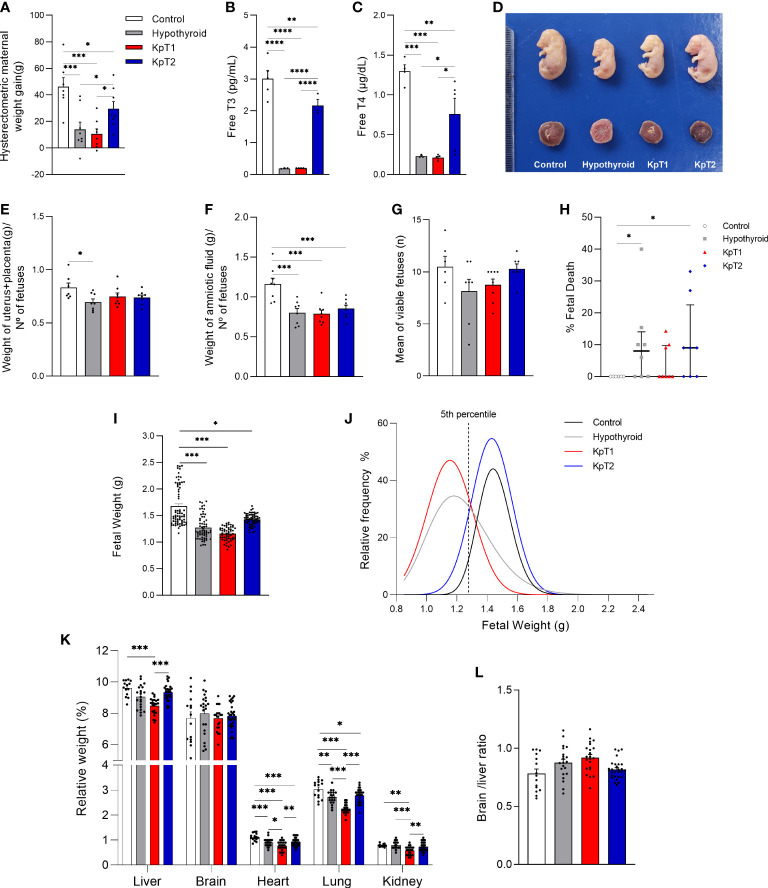
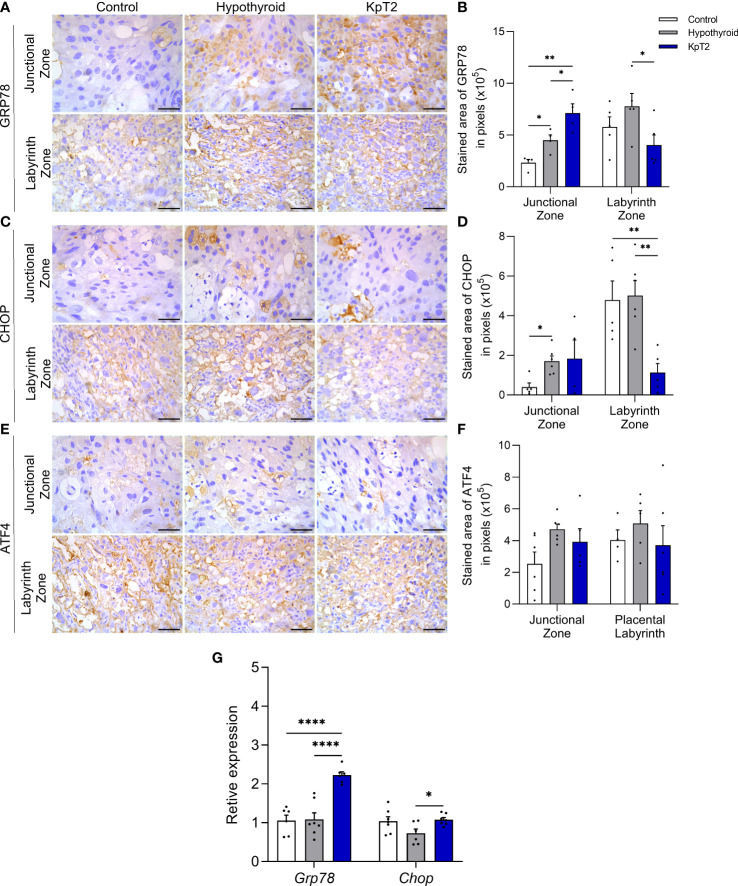
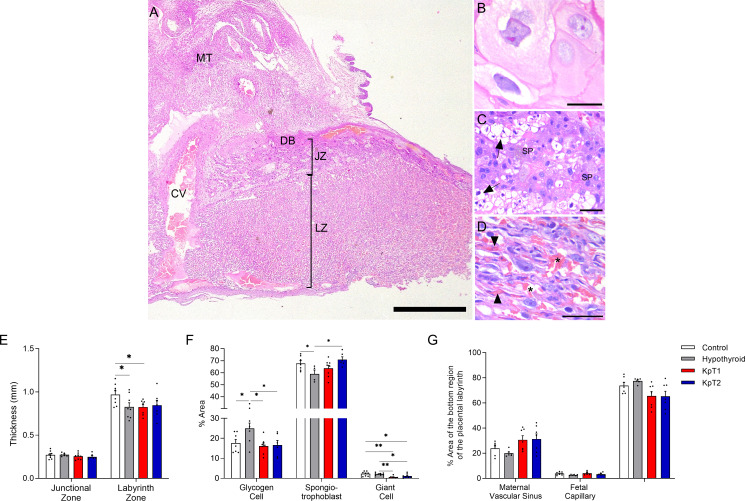
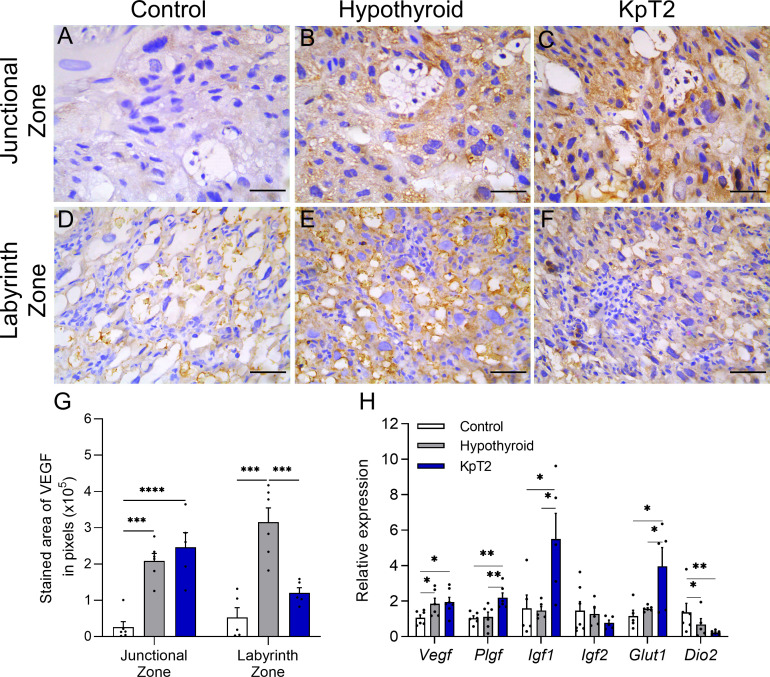
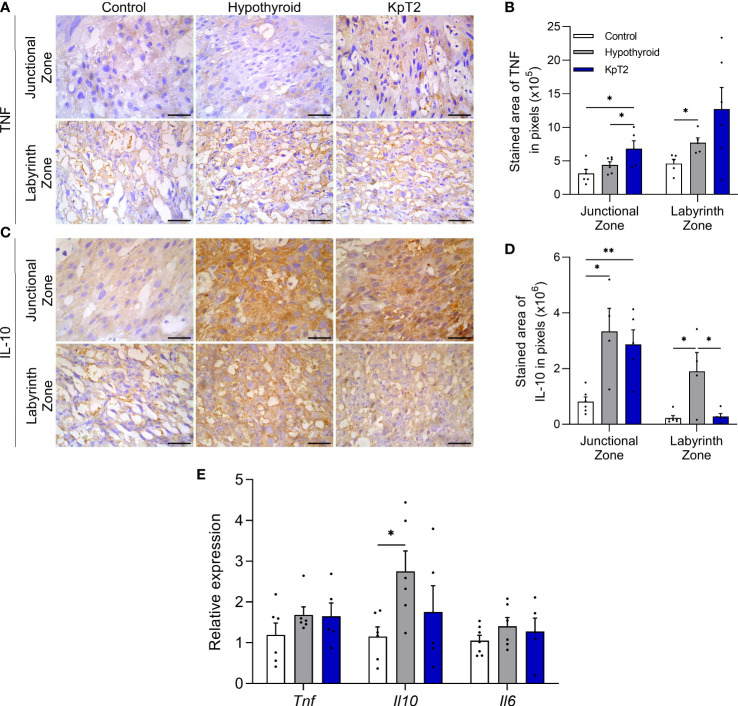
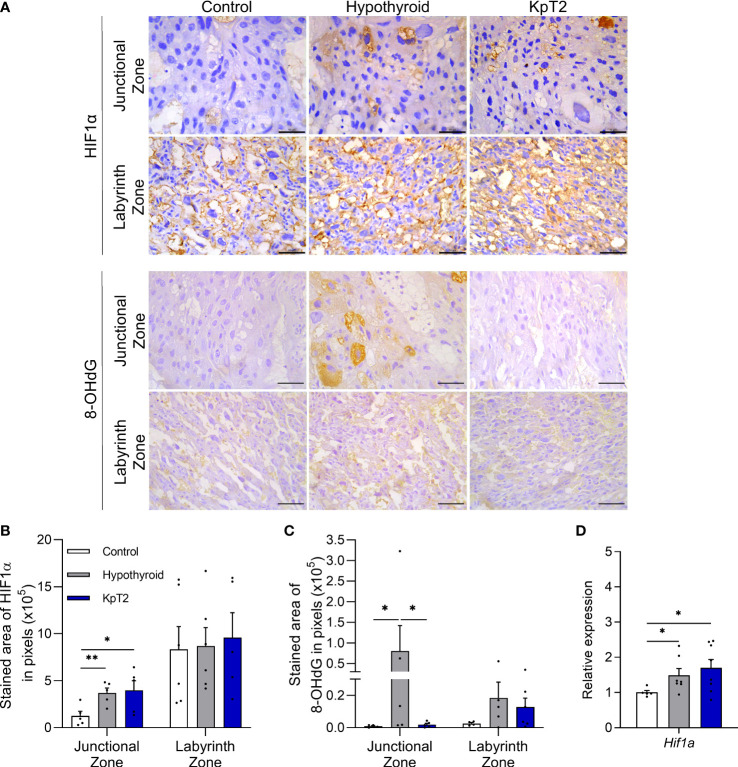
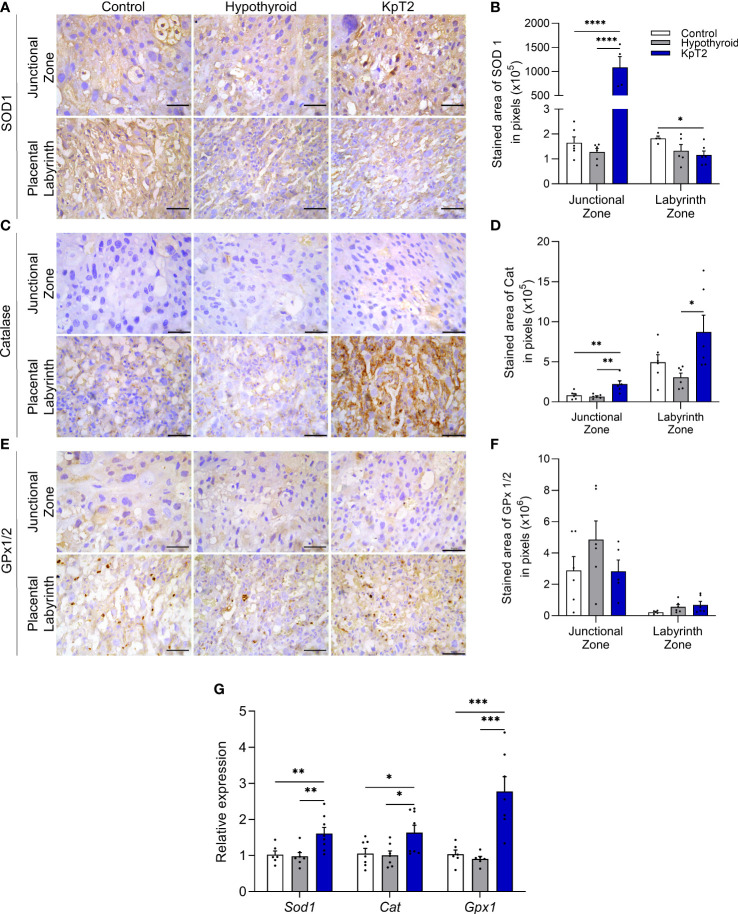
Maternal hypothyroidism is associated with fetal growth restriction, placental dysfunction, and reduced kisspeptin/Kiss1R at the maternal-fetal interface. Kisspeptin affects trophoblastic migration and has antioxidant and immunomodulatory activities. This study aimed to evaluate the therapeutic potential of kisspeptin in the fetal-placental dysfunction of hypothyroid Wistar rats. Hypothyroidism was induced by daily administration of propylthiouracil. Kisspeptin-10 (Kp-10) treatment was performed every other day or daily beginning on day 8 of gestation. Feto-placental development, placental histomorphometry, and expression levels of growth factors (VEGF, PLGF, IGF1, IGF2, and GLUT1), hormonal (Dio2) and inflammatory mediators (TNFα, IL10, and IL6), markers of hypoxia (HIF1α) and oxidative damage (8-OHdG), antioxidant enzymes (SOD1, Cat, and GPx1), and endoplasmic reticulum stress mediators (ATF4, GRP78, and CHOP) were evaluated on day 18 of gestation. Daily treatment with Kp-10 increased free T3 and T4 levels and improved fetal weight. Both treatments reestablished the glycogen cell population in the junctional zone. Daily treatment with Kp-10 increased the gene expression levels of , , and in the placenta of hypothyroid animals, in addition to blocking the increase in 8-OHdG and increasing protein and/or mRNA expression levels of SOD1, Cat, and GPx1. Daily treatment with Kp-10 did not alter the higher protein expression levels of VEGF, HIF1α, IL10, GRP78, and CHOP caused by hypothyroidism in the junctional zone compared to control, nor the lower expression of caused by hypothyroidism. However, in the labyrinth zone, this treatment restored the expression of VEGF and IL10 and reduced the GRP78 and CHOP immunostaining. These findings demonstrate that daily treatment with Kp-10 improves fetal development and placental morphology in hypothyroid rats, blocks placental oxidative damage, and increases the expression of growth factors and antioxidant enzymes in the placenta.
母体甲状腺功能减退与胎儿生长受限、胎盘功能障碍以及母胎界面的 kisspeptin/Kiss1R 减少有关。 kisspeptin 影响滋养细胞迁移,具有抗氧化和免疫调节作用。本研究旨在评估 kisspeptin 在甲状腺功能减退 Wistar 大鼠胎儿-胎盘功能障碍中的治疗潜力。甲状腺功能减退通过每天给予丙硫氧嘧啶诱导。从妊娠第 8 天开始,每隔一天或每天一次给予 kisspeptin-10 (Kp-10) 治疗。在妊娠第 18 天评估胎儿-胎盘发育、胎盘组织形态计量学以及生长因子(VEGF、PLGF、IGF1、IGF2 和 GLUT1)、激素(Dio2)和炎症介质(TNFα、IL10 和 IL6)、缺氧标志物(HIF1α)和氧化损伤标志物(8-OHdG)、抗氧化酶(SOD1、Cat 和 GPx1)和内质网应激介质(ATF4、GRP78 和 CHOP)的表达水平。每天用 Kp-10 治疗可增加游离 T3 和 T4 水平并改善胎儿体重。两种治疗方法均重建了连接区的糖原细胞群。每天用 Kp-10 治疗可增加甲状腺功能减退动物胎盘的基因表达水平,同时阻断 8-OHdG 的增加,并增加 SOD1、Cat 和 GPx1 的蛋白和/或 mRNA 表达水平。与对照组相比,每天用 Kp-10 治疗并未改变甲状腺功能减退在连接区引起的更高的 VEGF、HIF1α、IL10、GRP78 和 CHOP 蛋白表达水平,也未改变甲状腺功能减退引起的 表达水平降低。然而,在绒毛膜区,这种治疗方法恢复了 VEGF 和 IL10 的表达,并减少了 GRP78 和 CHOP 的免疫染色。这些发现表明,每天用 Kp-10 治疗可改善甲状腺功能减退大鼠的胎儿发育和胎盘形态,阻断胎盘氧化损伤,并增加胎盘生长因子和抗氧化酶的表达。