Espinoza-Guillen José Abel, Alderete-Malpartida Marleni Beatriz, Cañari-Cancho Jimmy Hans, Pando-Huerta Dennis Libio, Vargas-La Rosa David Fernando, Bernabé-Meza Sadyth Jhocelú
Programa de Maestría en Ciencias Ambientales, Universidad Nacional Agraria La Molina, Lima, Peru.
Departamento Académico de Ingeniería Ambiental, Universidad Nacional Agraria La Molina, Lima, Peru.
Environ Dev Sustain. 2022 Aug 5:1-30. doi: 10.1007/s10668-022-02592-0.
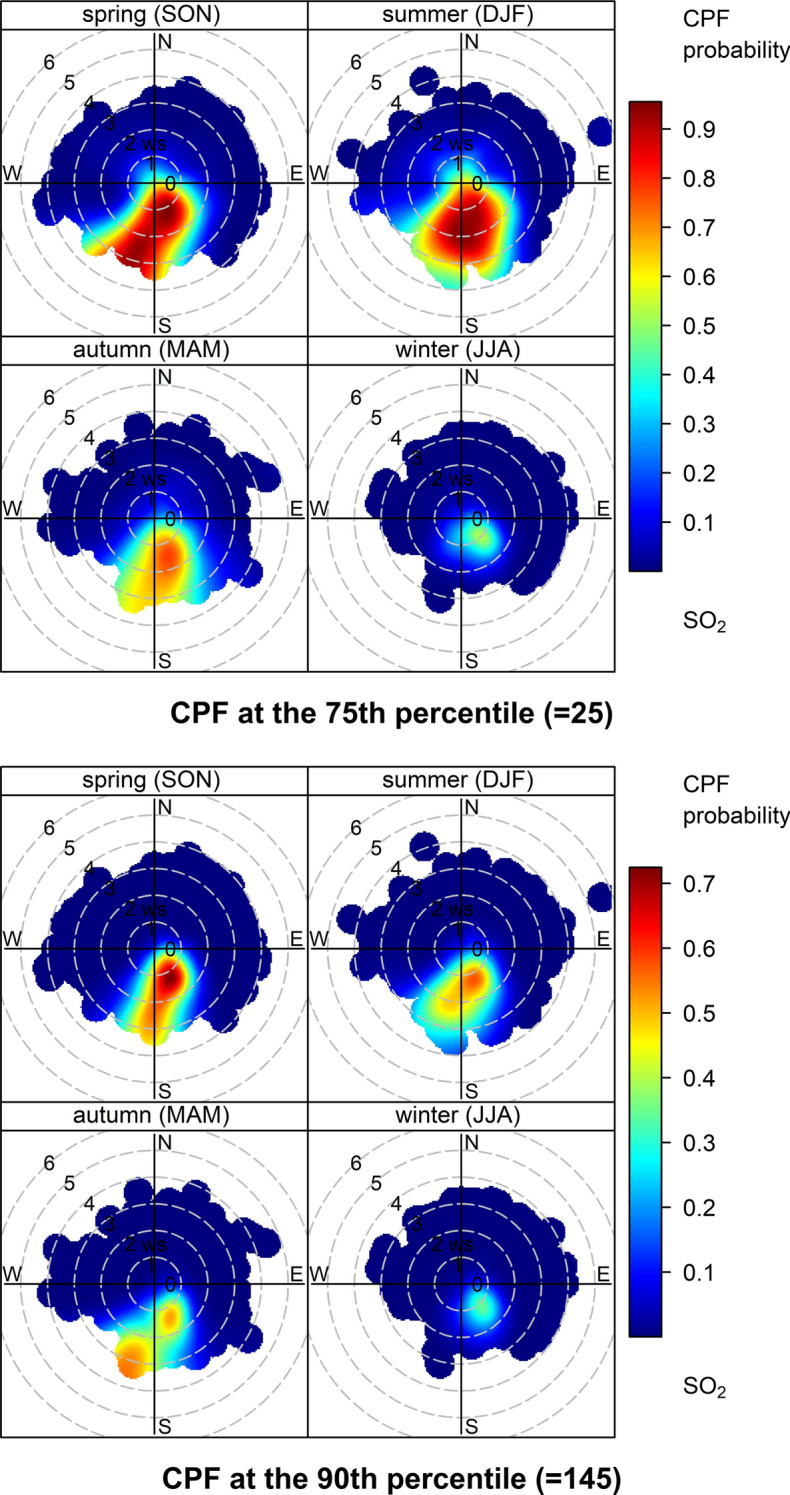
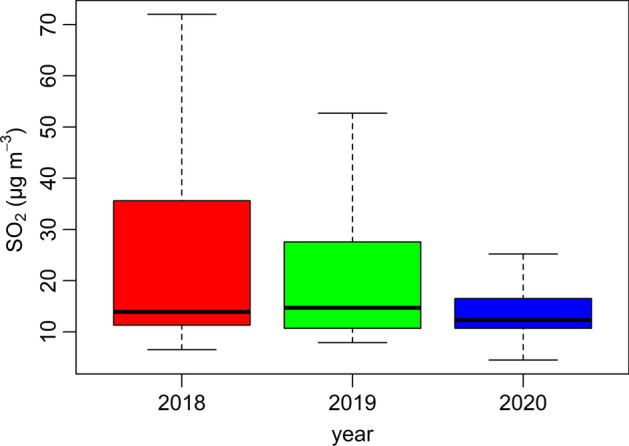
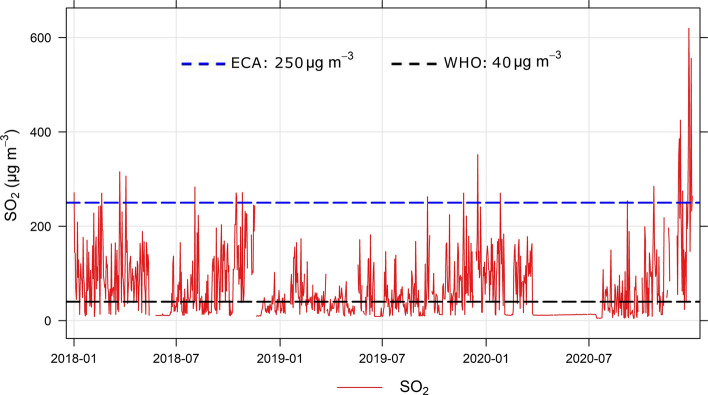
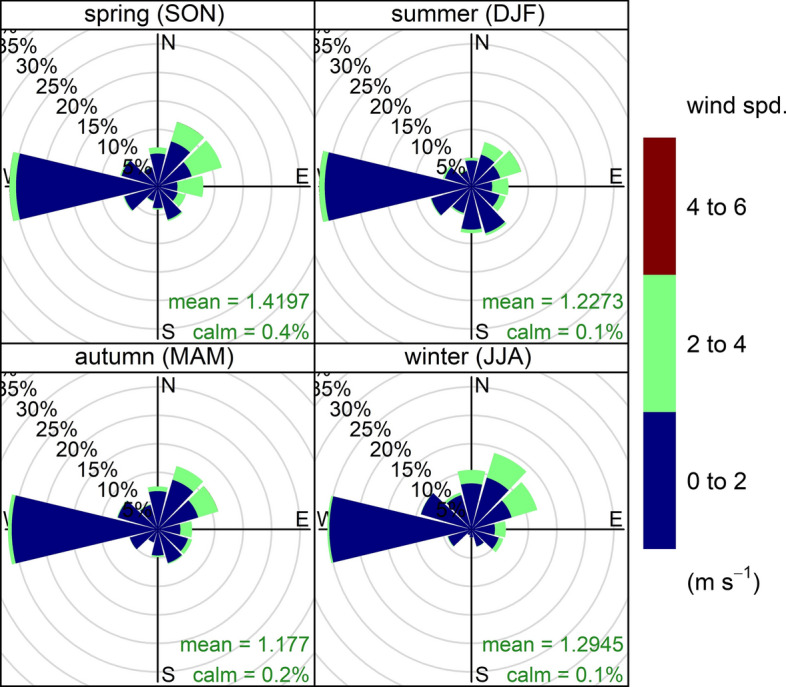
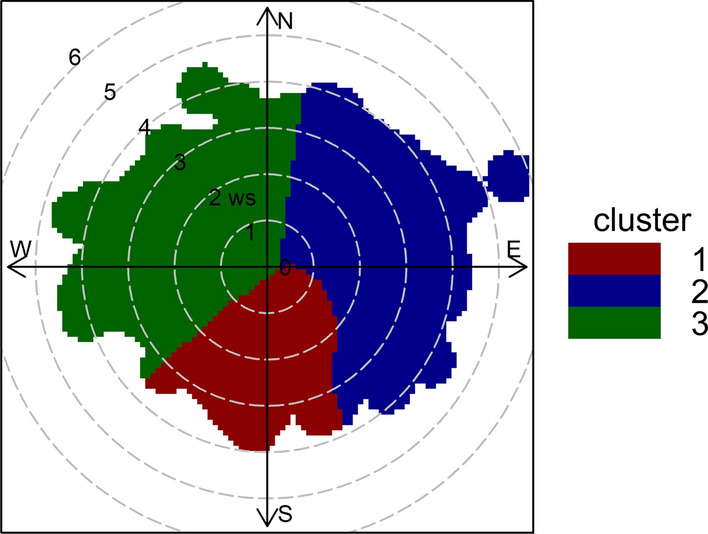
La Oroya is a city in the Peruvian Andes that has suffered a serious deterioration in its air quality, especially due to the high rate of sulfur dioxide (SO) emissions, which underlines the importance of knowing its sources of contamination and variation over the years. In this sense, this study aimed to evaluate the immission levels and determine the sources of SO contamination in La Oroya. This analysis was performed using the hourly concentration data of SO, and meteorological variables (wind speed and direction), which were analyzed for a period of three years (2018-2020). Graphs of time series, wind and pollutant roses, bivariate polar graphs, clustering k-means, nonparametric statistical tests, and the application of the conditional bivariate probability function were performed to analyze the data and identify the emission sources. The mean concentration of SO was 264.2 μg m for the study period, where 55.66 and 2.37% of the evaluated days exceeded the guideline values recommended by the World Health Organization and the Peruvian Environmental Quality Standard for air for 24 h, respectively. The results showed a defined pattern for the daily and monthly variations, with peaks in the morning hours (0900-1000 h LT) and at the end of the year (December), respectively. The main sources of SO emissions identified were light and heavy vehicles that travel through the Central Highway, the La Oroya Metallurgical Complex, the transit of vehicles within the city, and the diesel-electric locomotives that provide cargo transportation services and tourism passenger transportation. The article attempts to contribute to the development of adequate air quality management policies.
拉奥罗亚是秘鲁安第斯山脉中的一座城市,其空气质量严重恶化,尤其是由于二氧化硫(SO)的高排放率,这凸显了了解其污染来源和多年来变化情况的重要性。从这个意义上说,本研究旨在评估拉奥罗亚的污染物排放水平并确定SO污染的来源。该分析使用了SO的每小时浓度数据以及气象变量(风速和风向),这些数据在三年期间(2018 - 2020年)进行了分析。通过绘制时间序列图、风向和污染物玫瑰图、双变量极坐标图、聚类k均值分析、非参数统计检验以及应用条件双变量概率函数来分析数据并识别排放源。在研究期间,SO的平均浓度为264.2μg/m³,其中分别有55.66%和2.37%的评估天数超过了世界卫生组织和秘鲁空气质量环境质量标准推荐的24小时指导值。结果显示出日变化和月变化的特定模式,分别在上午时段(当地时间09:00 - 10:00)和年末(12月)出现峰值。确定的SO排放主要来源包括行驶在中央高速公路上的轻型和重型车辆、拉奥罗亚冶金厂、城市内车辆的通行以及提供货物运输服务和旅游客运的柴油电力机车。本文试图为制定适当的空气质量管理政策做出贡献。