Peking University Ditan Teaching Hospital, Beijing, China.
Beijing Key Laboratory of Emerging Infectious Diseases, Institute of Infectious Diseases, Beijing Ditan Hospital, Capital Medical University, Beijing, China.
Front Immunol. 2022 Jul 28;13:947647. doi: 10.3389/fimmu.2022.947647. eCollection 2022.
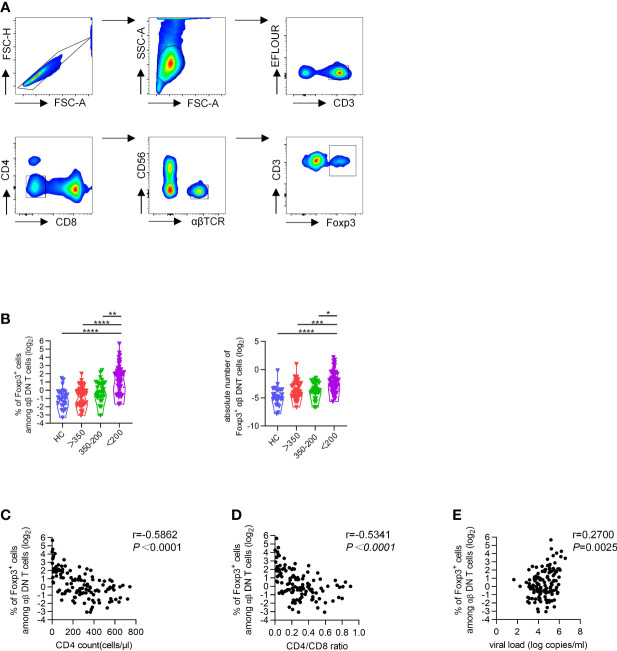
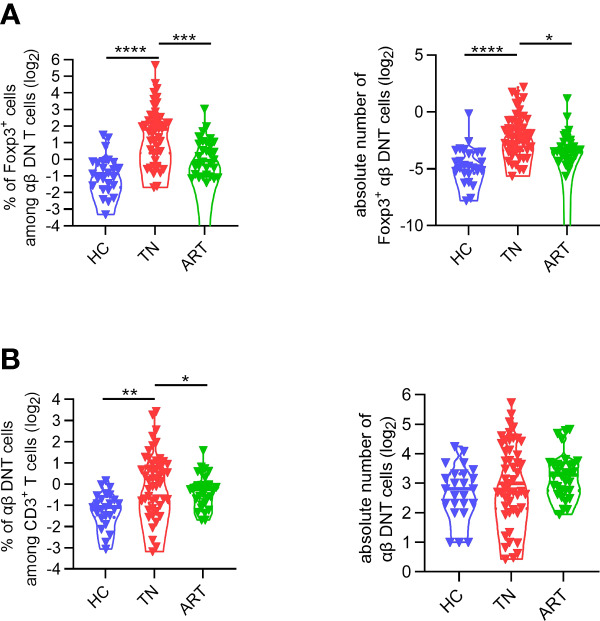
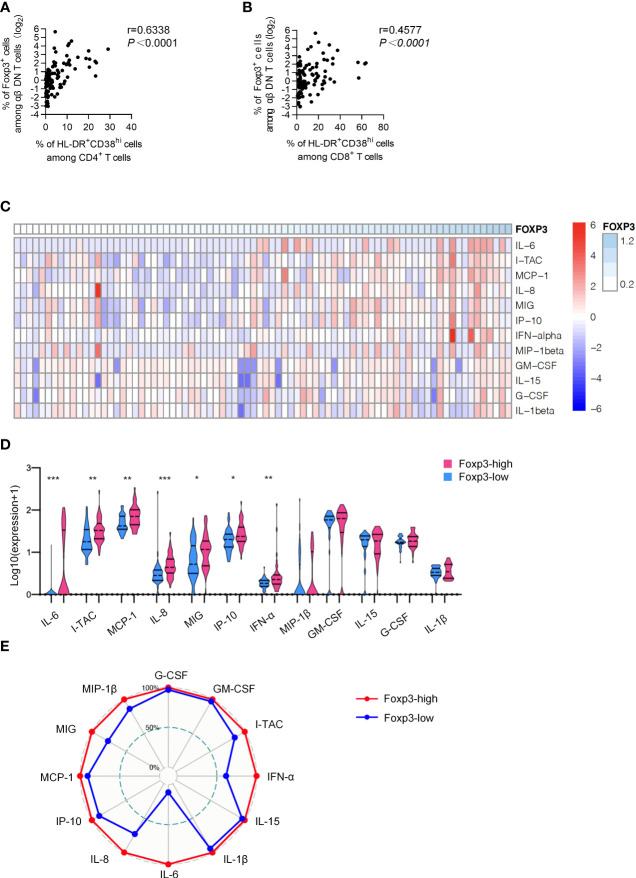
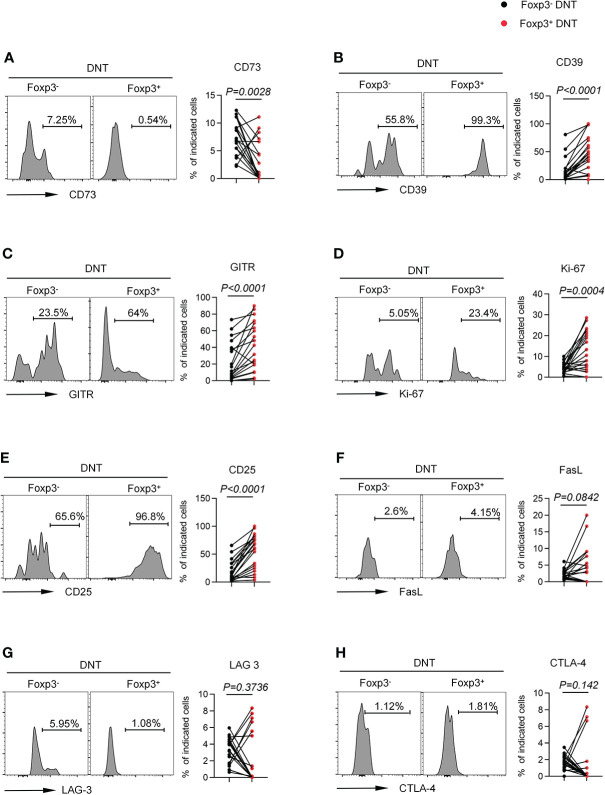
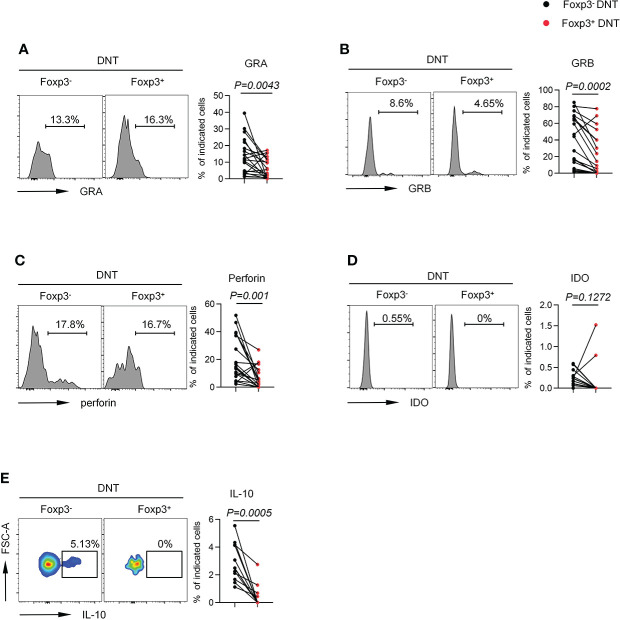
Persistent immune activation, which occurs during the whole course of HIV infection, plays a pivotal role in CD4 T cells depletion and AIDS progression. Furthermore, immune activation is a key factor that leads to impaired immune reconstitution after long-term effective antiretroviral therapy (ART), and is even responsible for the increased risk of developing non-AIDS co-morbidities. Therefore, it's imperative to identify an effective intervention targeting HIV-associated immune activation to improve disease management. Double negative T cells (DNT) were reported to provide immunosuppression during HIV infection, but the related mechanisms remained puzzled. Foxp3 endows Tregs with potent suppressive function to maintain immune homeostasis. However, whether DNT cells expressed Foxp3 and the accurate function of these cells urgently needed to be investigated. Here, we found that Foxp3 DNT cells accumulated in untreated people living with HIV (PLWH) with CD4 T cell count less than 200 cells/µl. Moreover, the frequency of Foxp3 DNT cells was negatively correlated with CD4 T cell count and CD4/CD8 ratio, and positively correlated with immune activation and systemic inflammation in PLWH. Of note, Foxp3 DNT cells might exert suppressive regulation by increased expression of CD39, CD25, or vigorous proliferation (high levels of GITR and ki67) in ART-naive PLWH. Our study underlined the importance of Foxp3 DNT cells in the HIV disease progression, and suggest that Foxp3 DNT may be a potential target for clinical intervention for the control of immune activation during HIV infection.
持续的免疫激活发生在 HIV 感染的整个过程中,在 CD4 T 细胞耗竭和 AIDS 进展中起着关键作用。此外,免疫激活是导致长期有效抗逆转录病毒治疗 (ART) 后免疫重建受损的关键因素,甚至是导致非艾滋病合并症风险增加的原因。因此,确定针对 HIV 相关免疫激活的有效干预措施以改善疾病管理至关重要。双阴性 T 细胞 (DNT) 在 HIV 感染期间被报道提供免疫抑制,但相关机制仍不清楚。Foxp3 赋予 Tregs 强大的抑制功能以维持免疫稳态。然而,DNT 细胞是否表达 Foxp3 以及这些细胞的确切功能仍亟待研究。在这里,我们发现 Foxp3 DNT 细胞在未经治疗的 CD4 T 细胞计数小于 200 个/µl 的 HIV 感染者 (PLWH) 中积累。此外,Foxp3 DNT 细胞的频率与 CD4 T 细胞计数和 CD4/CD8 比值呈负相关,与 PLWH 中的免疫激活和全身炎症呈正相关。值得注意的是,Foxp3 DNT 细胞可能通过在未经 ART 治疗的 PLWH 中增加 CD39、CD25 或强烈增殖 (高水平的 GITR 和 ki67) 来发挥抑制调节作用。我们的研究强调了 Foxp3 DNT 细胞在 HIV 疾病进展中的重要性,并表明 Foxp3 DNT 可能是控制 HIV 感染期间免疫激活的临床干预的潜在靶点。