Department of Dermatology, Xiangya Hospital, Central South University, Changsha, China.
Hunan Key Laboratory of Skin Cancer and Psoriasis, Xiangya Hospital, Central South University, Changsha, China.
Front Immunol. 2022 Jul 28;13:933312. doi: 10.3389/fimmu.2022.933312. eCollection 2022.
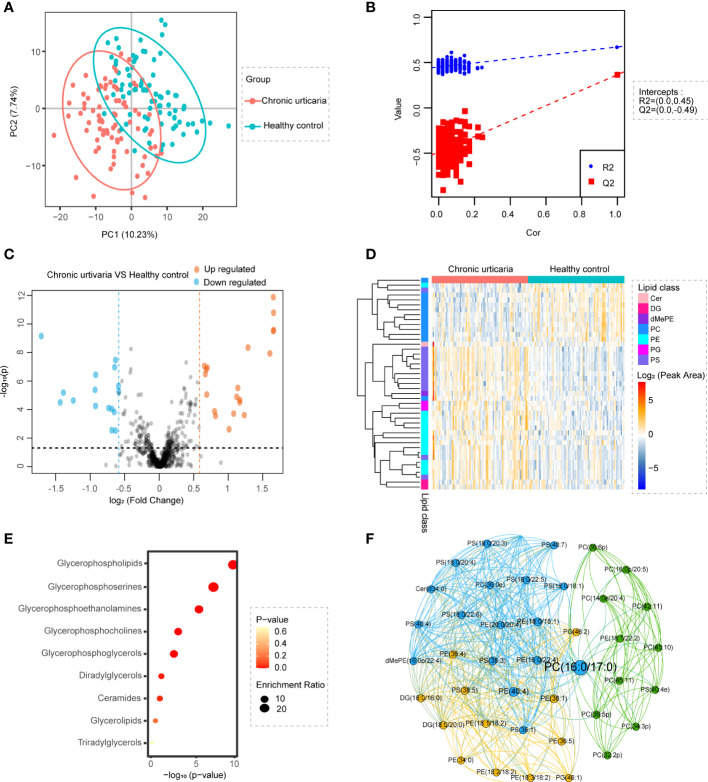
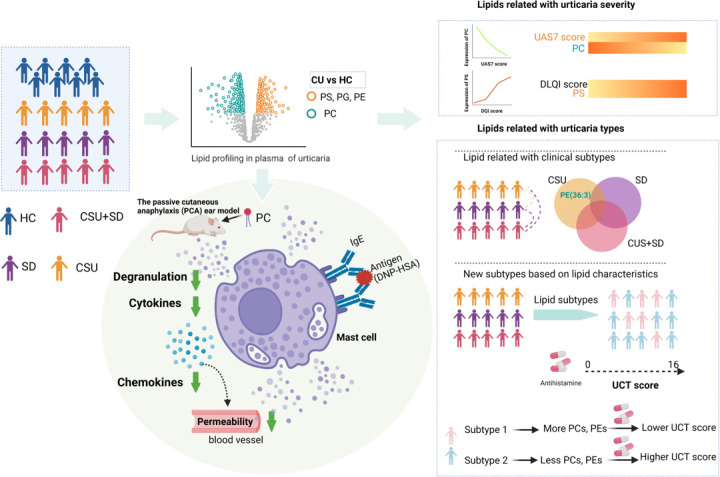
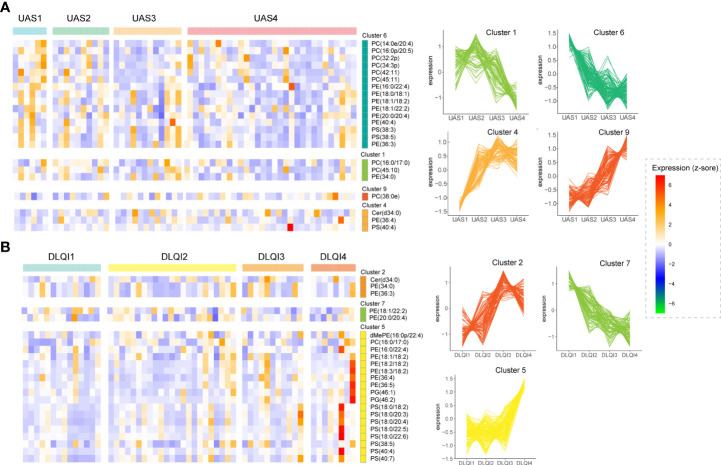
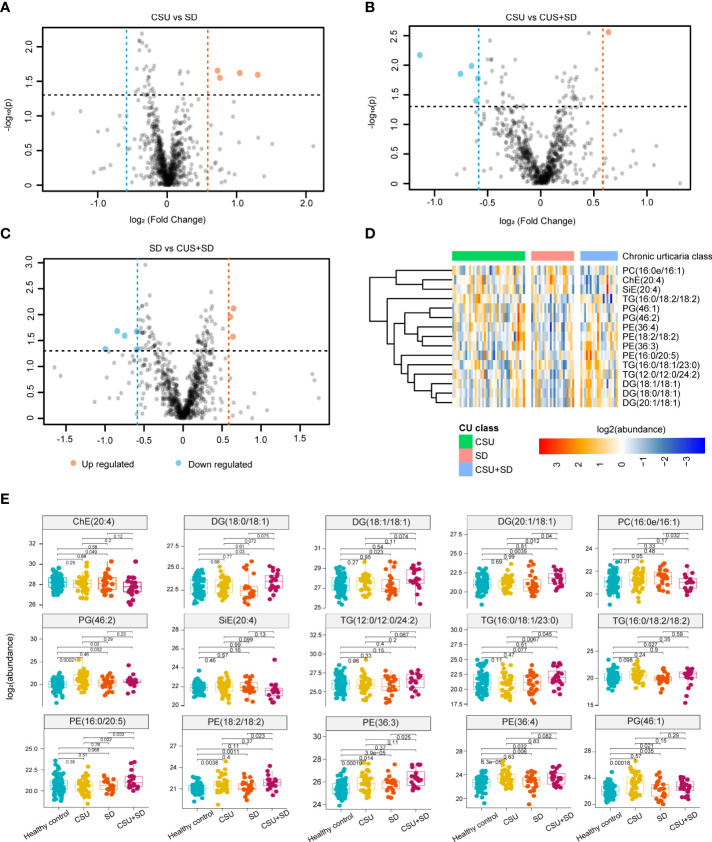
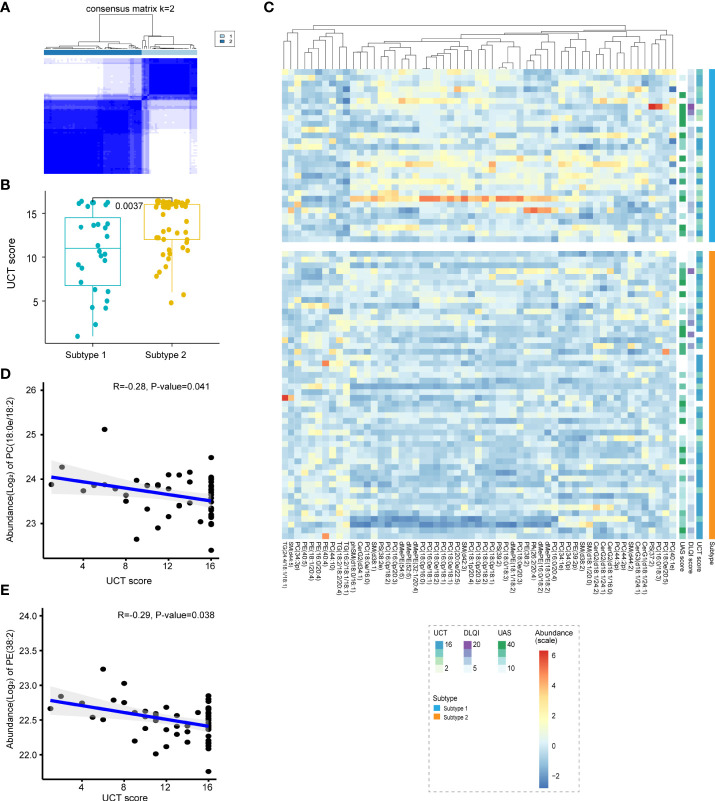
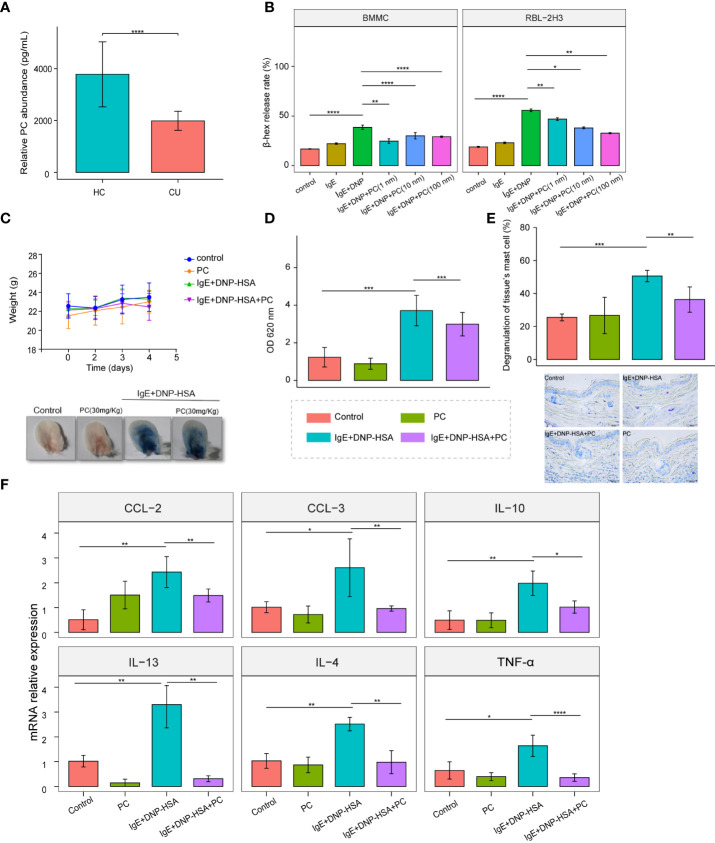
Chronic urticaria (CU) is a chronic inflammatory skin disease mainly mediated by mast cells. Lipids exert essential functions in biological processes; however, the role of lipids in CU remains unclear. Nontargeted lipidomics was performed to investigate the differential lipid profiles between CU patients and healthy control (HC) subjects. Functional validation studies were performed and including β-hexosaminidase release examination from mast cells and passive cutaneous anaphylaxis (PCA) mouse model. We detected dramatically altered glycerophospholipids in CU patients compared with HCs. Phosphatidylserine (PS), phosphatidylethanolamine (PE), and phosphatidylglycerol (PG) were increased, while phosphatidylcholine (PC) was reduced in CU patients. The reduction in PC was related to a high weekly urticaria activity score (UAS7), while PS was positively associated with the dermatology life quality index (DLQI). We also identified the differential lipid profiles between chronic spontaneous urticaria (CSU), symptomatic dermographism (SD), and CSU coexist with SD. CU patients were classified into two subtypes (subtype 1 and subtype 2) based on consensus clustering of lipid profiling. Compared with patients in subtype 2, patients in subtype 1 had elevated levels of PC (18:0e/18:2) and PE (38:2), and lower urticaria control test (UCT) scores indicated worse clinical efficiency of secondary generation H1 antihistamines treatment. Importantly, we found that supplementation with PC could attenuate IgE-induced immune responses in mast cells. In general, We described the landscape of plasma lipid alterations in CU patients and provided novel insights into the role of PC in mast cells.
慢性荨麻疹(CU)是一种主要由肥大细胞介导的慢性炎症性皮肤病。脂质在生物过程中发挥着重要的功能;然而,脂质在 CU 中的作用尚不清楚。我们采用非靶向脂质组学方法研究 CU 患者与健康对照(HC)个体之间的差异脂质图谱。并进行了功能验证研究,包括肥大细胞β-己糖胺酶释放试验和被动皮肤过敏(PCA)小鼠模型。与 HC 相比,我们在 CU 患者中检测到甘油磷脂显著改变。PS、PE 和 PG 增加,而 CU 患者中的 PC 减少。PC 的减少与每周荨麻疹活动评分(UAS7)高有关,而 PS 与皮肤病生活质量指数(DLQI)呈正相关。我们还确定了慢性自发性荨麻疹(CSU)、症状性划痕症(SD)和 CSU 与 SD 共存之间的差异脂质图谱。根据脂质谱的共识聚类,将 CU 患者分为两种亚型(亚型 1 和亚型 2)。与亚型 2 患者相比,亚型 1 患者的 PC(18:0e/18:2)和 PE(38:2)水平升高,UCT 评分较低表明第二代 H1 抗组胺药治疗的临床疗效较差。重要的是,我们发现补充 PC 可以减轻 IgE 诱导的肥大细胞免疫反应。总的来说,我们描述了 CU 患者血浆脂质改变的图谱,并提供了 PC 在肥大细胞中作用的新见解。