Xu Kailei, Han Ying, Huang Yuye, Wei Peng, Yin Jun, Jiang Junhui
Department of Plastic and Reconstructive Surgery, Ningbo First Hospital, Ningbo 315010, China.
Center for Medical and Engineering Innovation, Central Laboratory, Ningbo First Hospital, Ningbo 315010, China.
Mater Today Bio. 2022 Aug 2;16:100388. doi: 10.1016/j.mtbio.2022.100388. eCollection 2022 Dec.
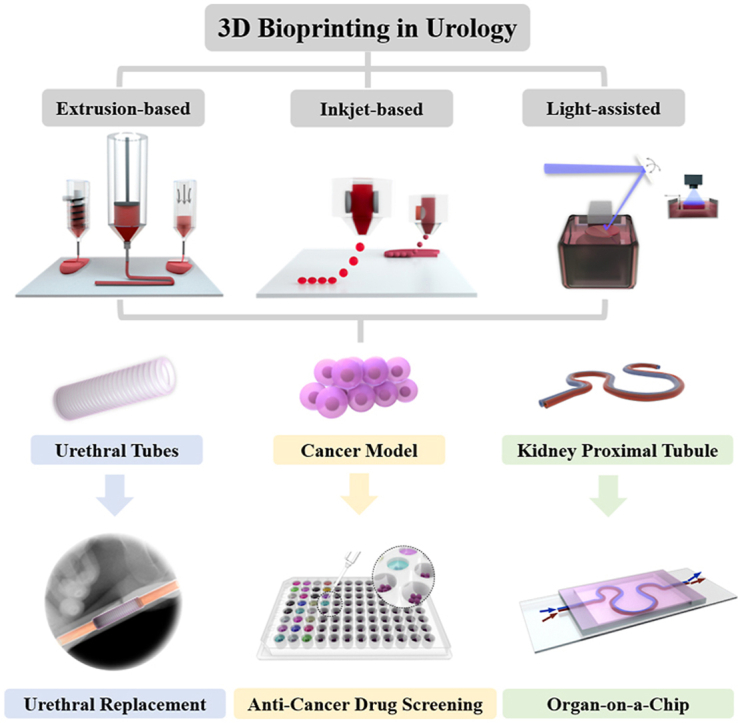
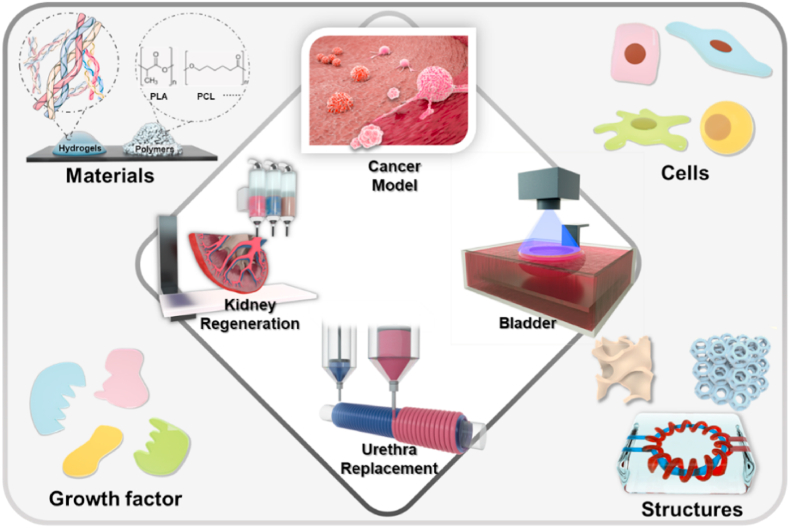
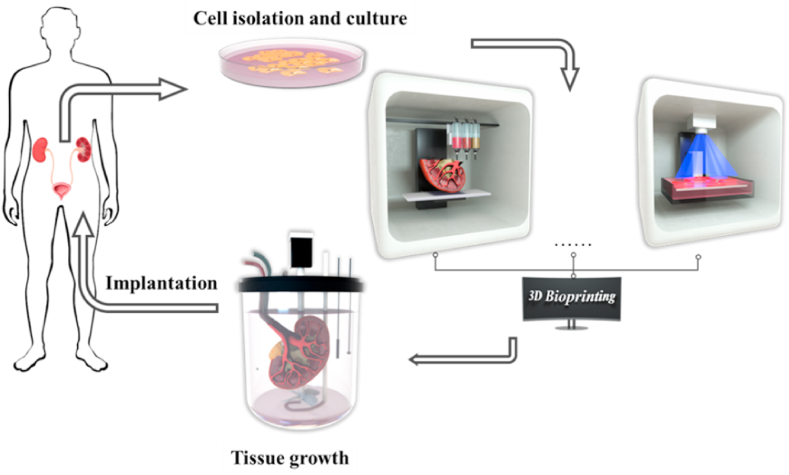
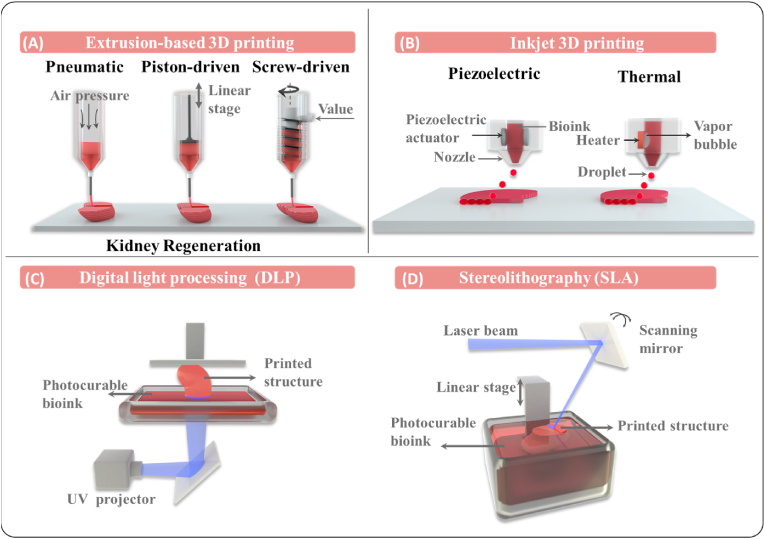
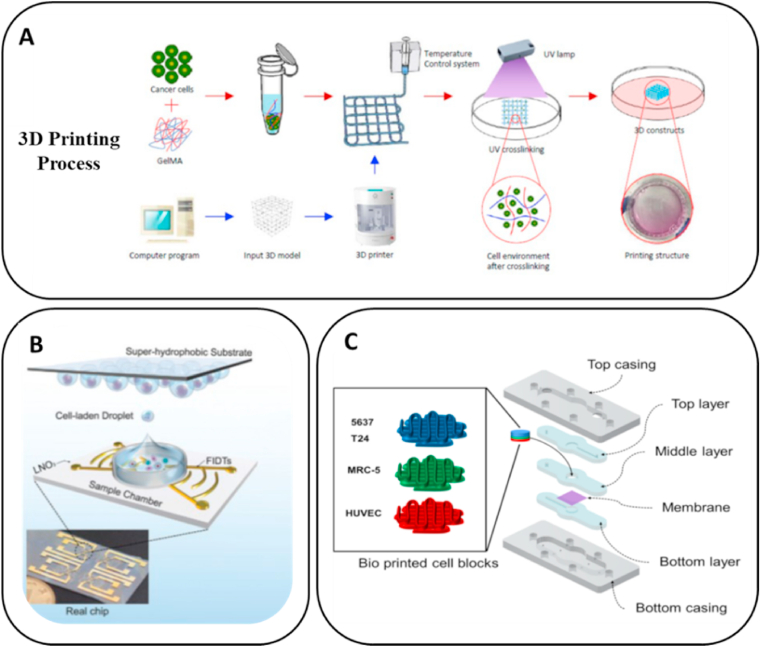
Urologic diseases are commonly diagnosed health problems affecting people around the world. More than 26 million people suffer from urologic diseases and the annual expenditure was more than 11 billion US dollars. The urologic cancers, like bladder cancer, prostate cancer and kidney cancer are always the leading causes of death worldwide, which account for approximately 22% and 10% of the new cancer cases and death, respectively. Organ transplantation is one of the major clinical treatments for urological diseases like end-stage renal disease and urethral stricture, albeit strongly limited by the availability of matching donor organs. Tissue engineering has been recognized as a highly promising strategy to solve the problems of organ donor shortage by the fabrication of artificial organs/tissue. This includes the prospective technology of three-dimensional (3D) bioprinting, which has been adapted to various cell types and biomaterials to replicate the heterogeneity of urological organs for the investigation of organ transplantation and disease progression. This review discusses various types of 3D bioprinting methodologies and commonly used biomaterials for urological diseases. The literature shows that advances in this field toward the development of functional urological organs or disease models have progressively increased. Although numerous challenges still need to be tackled, like the technical difficulties of replicating the heterogeneity of urologic organs and the limited biomaterial choices to recapitulate the complicated extracellular matrix components, it has been proved by numerous studies that 3D bioprinting has the potential to fabricate functional urological organs for clinical transplantation and disease models.
泌尿系统疾病是影响全球人群的常见诊断健康问题。超过2600万人患有泌尿系统疾病,年支出超过110亿美元。泌尿系统癌症,如膀胱癌、前列腺癌和肾癌,一直是全球主要的死亡原因,分别约占新发癌症病例和死亡人数的22%和10%。器官移植是治疗晚期肾病和尿道狭窄等泌尿系统疾病的主要临床治疗方法之一,尽管受到匹配供体器官可用性的严重限制。组织工程被认为是一种极具前景的策略,可通过制造人工器官/组织来解决器官供体短缺问题。这包括三维(3D)生物打印的前瞻性技术,该技术已适用于各种细胞类型和生物材料,以复制泌尿系统器官的异质性,用于器官移植和疾病进展的研究。本文综述了用于泌尿系统疾病的各种3D生物打印方法和常用生物材料。文献表明,该领域在功能性泌尿系统器官或疾病模型开发方面的进展逐渐增加。尽管仍有许多挑战需要解决,如复制泌尿系统器官异质性的技术困难以及用于概括复杂细胞外基质成分的生物材料选择有限,但大量研究已证明3D生物打印有潜力制造用于临床移植的功能性泌尿系统器官和疾病模型。