School of Human Sciences, University of Greenwich, London, United Kingdom.
Maternal and Reproductive Health Research Collective, Lagos, Nigeria.
Front Public Health. 2022 Jul 29;10:931401. doi: 10.3389/fpubh.2022.931401. eCollection 2022.
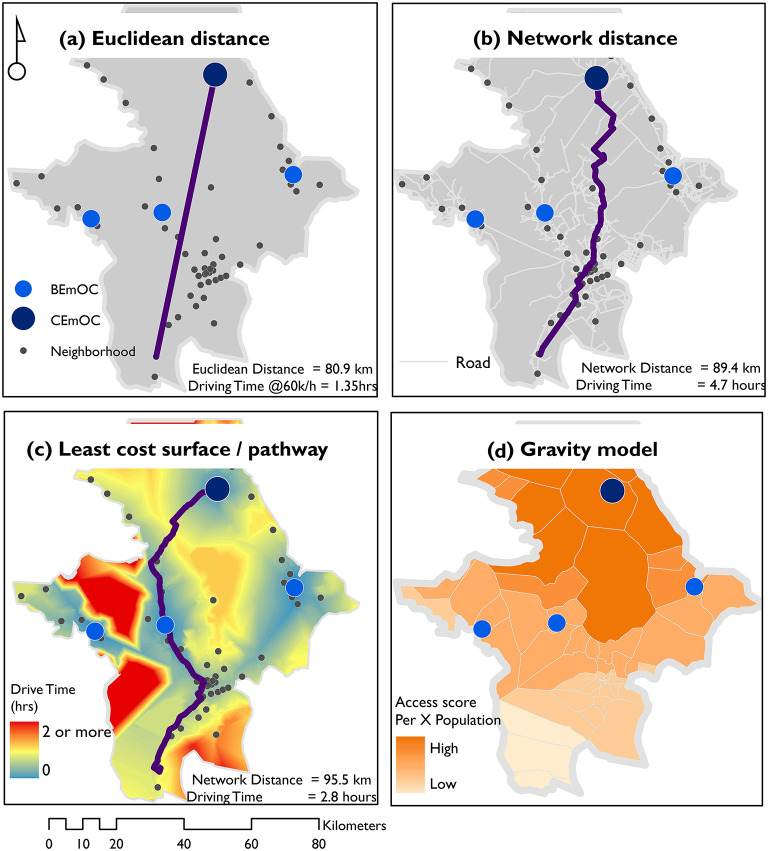
Maternal and perinatal mortality remain huge challenges globally, particularly in low- and middle-income countries (LMICs) where >98% of these deaths occur. Emergency obstetric care (EmOC) provided by skilled health personnel is an evidence-based package of interventions effective in reducing these deaths associated with pregnancy and childbirth. Until recently, pregnant women residing in urban areas have been considered to have good access to care, including EmOC. However, emerging evidence shows that due to rapid urbanization, this so called " is shrinking and in some LMIC settings, it is almost non-existent. This poses a complex challenge for structuring an effective health service delivery system, which tend to have poor spatial planning especially in LMIC settings. To optimize access to EmOC and ultimately reduce preventable maternal deaths within the context of urbanization, it is imperative to accurately locate areas and population groups that are geographically marginalized. Underpinning such assessments is accurately estimating travel time to health facilities that provide EmOC. In this perspective, we discuss strengths and weaknesses of approaches commonly used to estimate travel times to EmOC in LMICs, broadly grouped as reported and modeled approaches, while contextualizing our discussion in urban areas. We then introduce the novel OnTIME project, which seeks to address some of the key limitations in these commonly used approaches by leveraging big data. The perspective concludes with a discussion on anticipated outcomes and potential policy applications of the OnTIME project.
孕产妇和围产期死亡率仍然是全球面临的巨大挑战,特别是在中低收入国家(LMICs),这些死亡中有 98%以上发生在这些国家。熟练卫生人员提供的紧急产科护理(EmOC)是一套基于证据的干预措施,可有效降低与妊娠和分娩相关的这些死亡。直到最近,人们还认为居住在城市地区的孕妇能够很好地获得护理,包括 EmOC。然而,新出现的证据表明,由于快速城市化,这种所谓的“可达性正在缩小,在一些中低收入国家环境中,几乎不存在”。这对构建有效的卫生服务提供系统构成了复杂的挑战,这些系统往往空间规划不佳,尤其是在中低收入国家环境中。为了优化获得 EmOC 的机会,并最终在城市化背景下降低可预防的孕产妇死亡,必须准确确定在地理上处于边缘地位的地区和人口群体。要进行此类评估,必须准确估计前往提供 EmOC 的卫生设施的旅行时间。在这方面,我们讨论了在 LMICs 中估算前往 EmOC 的旅行时间的常用方法的优缺点,这些方法大致可分为报告和建模方法,并在城市环境中对其进行了背景化讨论。然后,我们介绍了新颖的 OnTIME 项目,该项目旨在通过利用大数据来解决这些常用方法中的一些关键限制。该观点最后讨论了 OnTIME 项目的预期结果和潜在政策应用。