Department of Pediatrics, Division of Medical Genetics, Dalhousie University, Halifax, NS, Canada.
Department of Pharmacology, Dalhousie University, Halifax, NS, Canada.
J Biol Rhythms. 2021 Jun;36(3):203-220. doi: 10.1177/0748730421993953. Epub 2021 Mar 1.
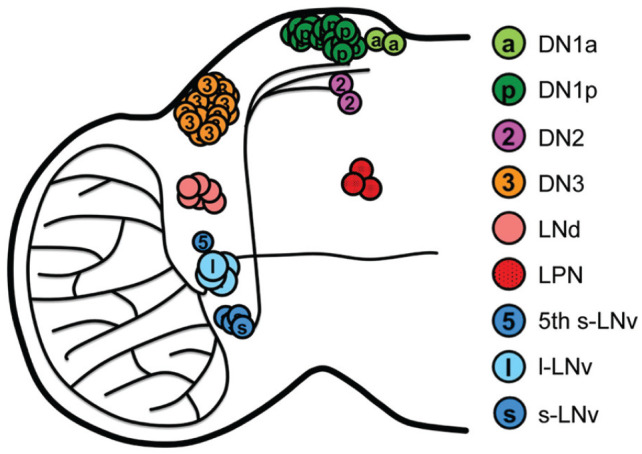
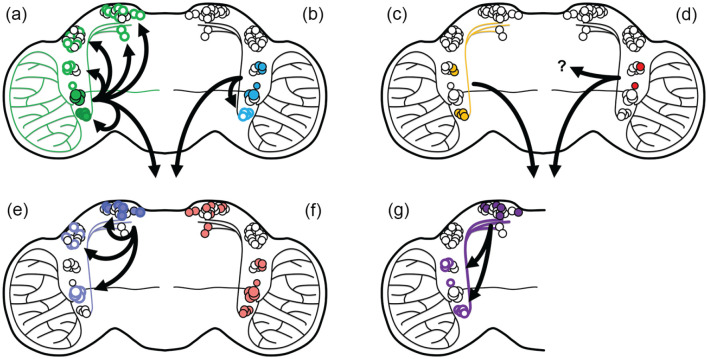
Circadian clocks are biochemical time-keeping machines that synchronize animal behavior and physiology with planetary rhythms. In , the core components of the clock comprise a transcription/translation feedback loop and are expressed in seven neuronal clusters in the brain. Although it is increasingly evident that the clocks in each of the neuronal clusters are regulated differently, how these clocks communicate with each other across the circadian neuronal network is less clear. Here, we review the latest evidence that describes the physical connectivity of the circadian neuronal network . Using small ventral lateral neurons as a starting point, we summarize how one clock may communicate with another, highlighting the signaling pathways that are both upstream and downstream of these clocks. We propose that additional efforts are required to understand how temporal information generated in each circadian neuron is integrated across a neuronal circuit to regulate rhythmic behavior.
生物钟是一种生化计时机器,它使动物的行为和生理机能与地球的节奏同步。在哺乳动物中,生物钟的核心组成部分包括一个转录/翻译反馈回路,并在大脑中的七个神经元簇中表达。尽管越来越明显的是,每个神经元簇中的时钟受到不同的调节,但这些时钟如何在整个昼夜节律神经网络中相互通信尚不清楚。在这里,我们回顾了描述昼夜节律神经网络物理连通性的最新证据。我们以小的腹外侧神经元作为起点,总结了一个时钟如何与另一个时钟进行通信,强调了这些时钟上下游的信号通路。我们提出,需要进一步努力来了解在调节节律行为时,在神经元回路中产生的每个生物钟的时间信息是如何整合的。