Department of Internal Medicine, NYC Health and Hospitals/Coney Island, Brooklyn, NY, USA.
Department of Internal Medicine, Harbor-UCLA Medical Center, Los Angeles, CA, USA.
J Geriatr Oncol. 2023 Jan;14(1):101349. doi: 10.1016/j.jgo.2022.07.009. Epub 2022 Aug 12.
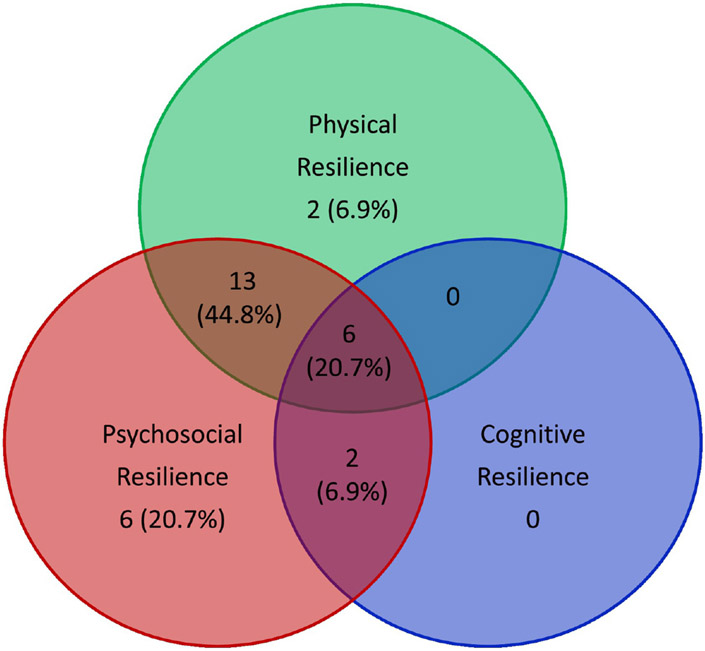
Resilience, the ability to respond to stressors by maintaining or rapidly returning to normal homeostasis, serves as a new paradigm to improve the care of older adults. However, resilience research in oncology is nascent. We aimed to describe the current research landscape on physical, cognitive, and psychosocial resilience in older cancer patients.
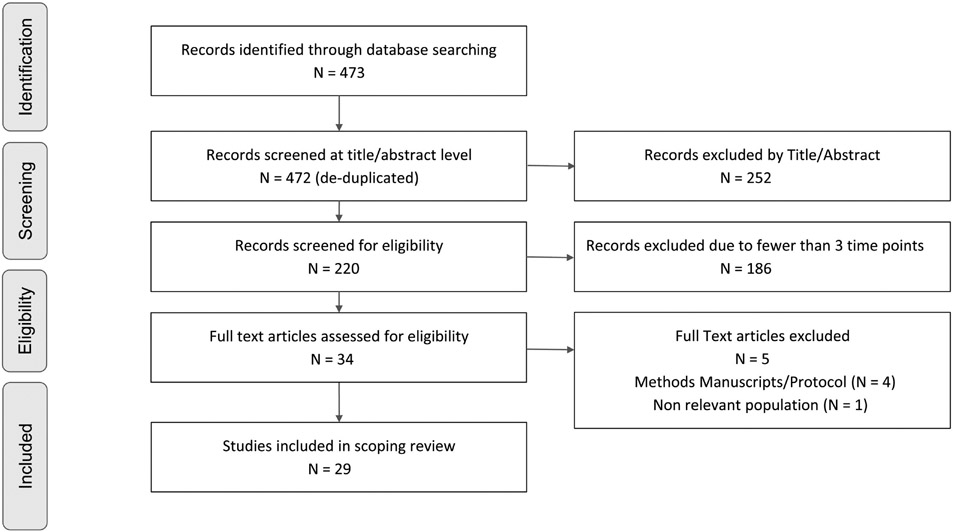
We searched PubMed/MEDLINE from inception to January 28, 2022 for records with the terms "resilient OR resilience OR resiliency." We included studies that focused on persons over age 65 with cancer and assessed physical, cognitive, or psychological resilience. We excluded studies that did not report original data; did not have the full text available; assessed resilience on fewer than three time points; and published in non-English languages. Definitions and measures of resilience were extracted and categorized using qualitative analysis.
Of 473 articles screened, we found 29 articles that met criteria for inclusion in our review. There was a high degree of heterogeneity in the definitions and measures of resilience. Resilience was defined as robustness/resistance to decline (n = 11), recovery from trauma/stressor (n = 7), and adaptive and proactive coping behaviors (n = 6). Ten papers did not define resilience. 21 studies utilized longitudinal analysis, five studies used randomized and nonrandomized control trials, and four studies assessed pre-post analysis. Stressors included cancer diagnosis (n = 18), chemotherapy (n = 3), radiation (n = 3), acute illness (n = 3), surgery (n = 2), and hematopoietic cell transplant (n = 1).
Evidence for predictors and determinants of resilience in older adults with cancer is limited by the absence of standardized definitions and measurements. There is a fundamental need for a more precise definition, measures, and understanding of the physiologic mechanisms underlying the response to the physical, cognitive, and psychosocial stressors of cancer and its treatments.
韧性是指通过维持或迅速恢复到正常的体内平衡来应对压力源的能力,它是改善老年患者护理的新范式。然而,肿瘤学中的韧性研究还处于起步阶段。我们旨在描述老年癌症患者身体、认知和心理社会韧性的当前研究现状。
我们从建库到 2022 年 1 月 28 日在 PubMed/MEDLINE 上使用术语“resilient 或 resilience 或 resiliency”进行检索,以查找记录。我们纳入了专注于年龄在 65 岁以上且患有癌症的人群,并评估了身体、认知或心理韧性的研究。我们排除了未报告原始数据、无法获取全文、评估韧性的时间少于 3 次以及发表在非英语语言的研究。使用定性分析提取和分类韧性的定义和衡量标准。
在筛选出的 473 篇文章中,我们发现有 29 篇文章符合纳入我们综述的标准。韧性的定义和衡量标准存在高度异质性。韧性被定义为对衰退的抵抗力/稳健性(n=11)、从创伤/压力源中恢复(n=7)以及适应性和积极的应对行为(n=6)。有 10 篇论文未定义韧性。21 项研究采用了纵向分析,5 项研究采用了随机和非随机对照试验,4 项研究评估了前后分析。压力源包括癌症诊断(n=18)、化疗(n=3)、放疗(n=3)、急性疾病(n=3)、手术(n=2)和造血细胞移植(n=1)。
由于缺乏标准化的定义和衡量标准,关于老年癌症患者韧性的预测因素和决定因素的证据有限。因此,我们迫切需要更精确的定义、衡量标准和对生理机制的理解,这些机制是对癌症及其治疗的身体、认知和心理社会压力源的反应的基础。