Beijing Key Laboratory of Viticulture and Enology, College of Food Science and Nutritional Engineering, China Agricultural University, Beijing, People's Republic of China.
Cell Death Dis. 2022 Aug 16;13(8):708. doi: 10.1038/s41419-022-05110-2.
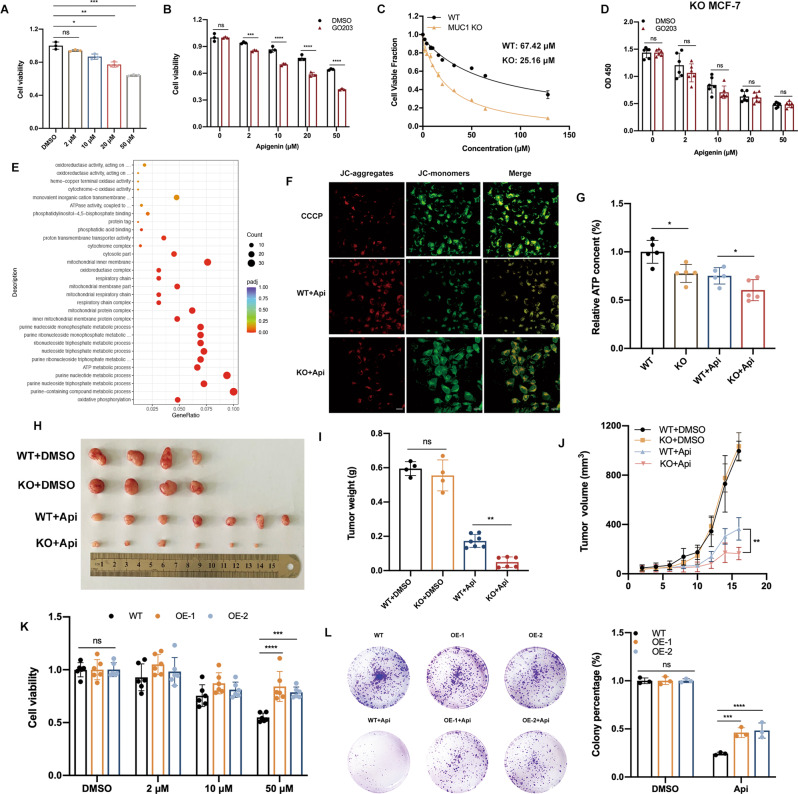
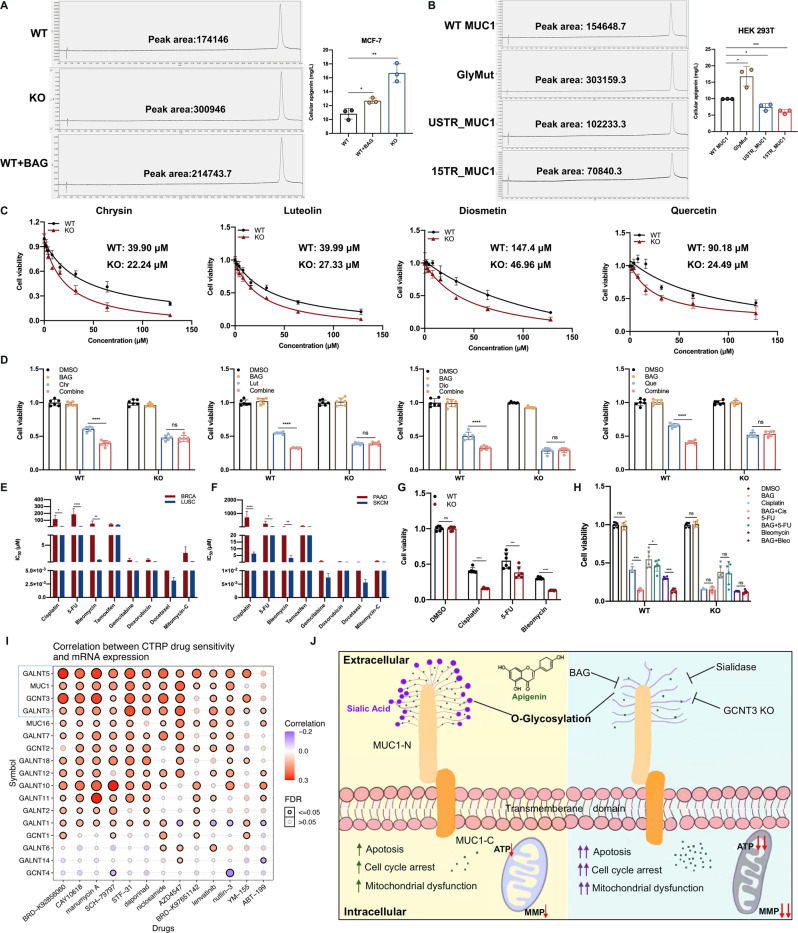
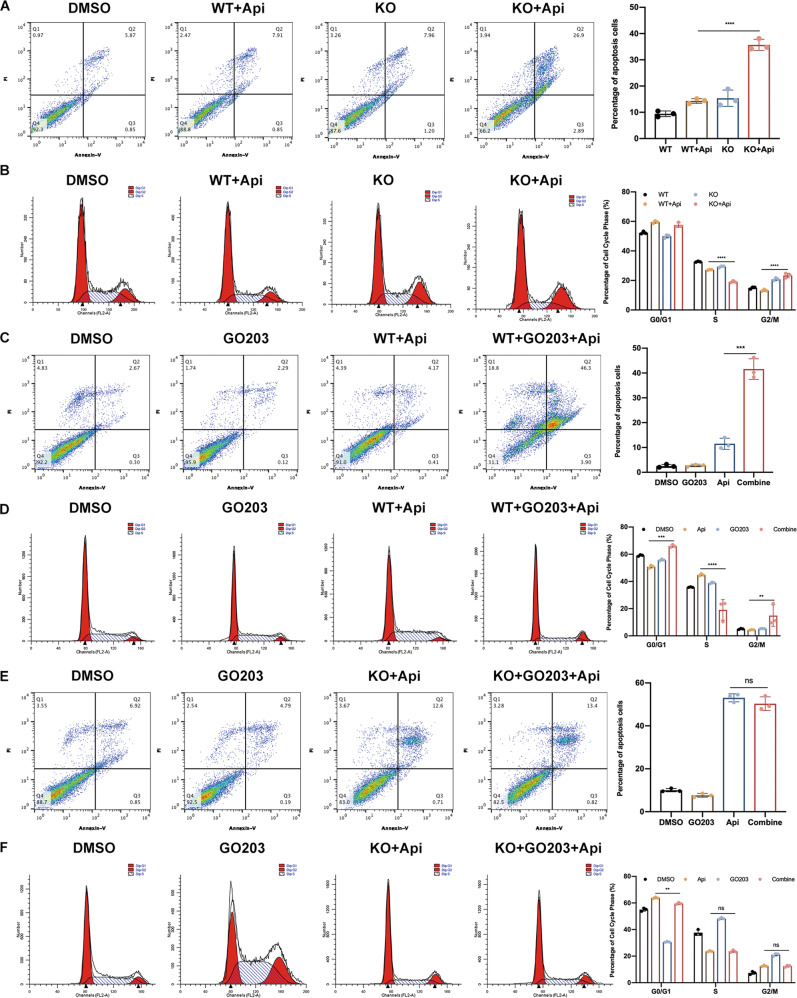
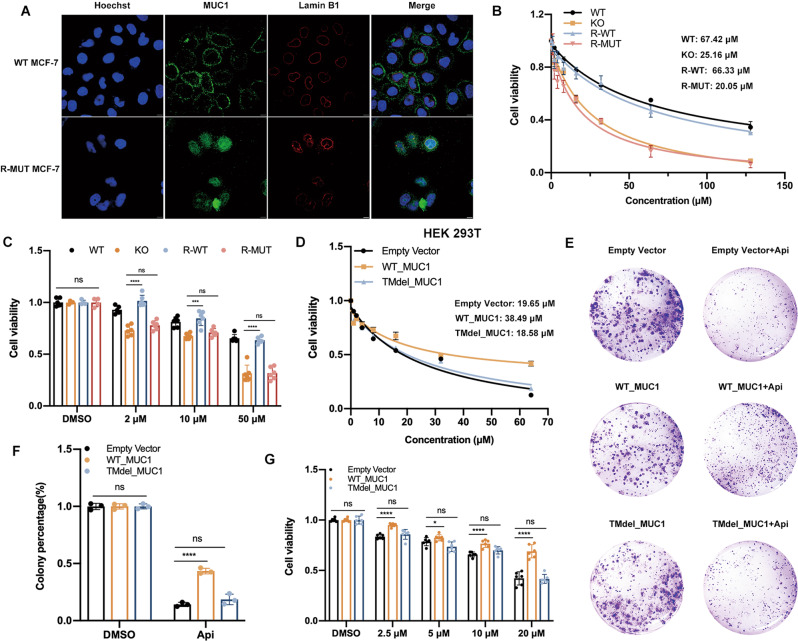
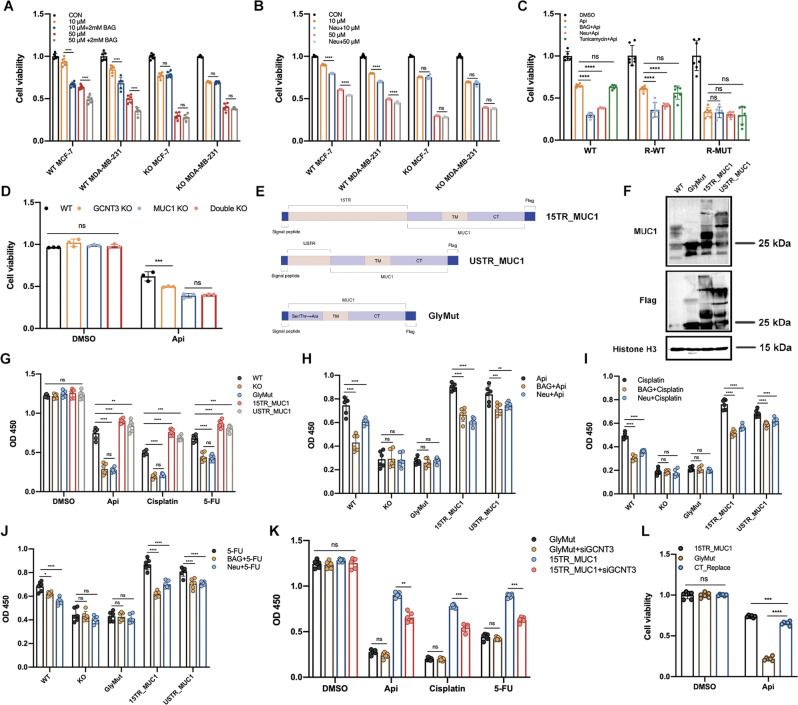
Breast cancer, the most common cancer in women, usually exhibits intrinsic insensitivity to drugs, even without drug resistance. MUC1 is a highly glycosylated transmembrane protein, overexpressed in breast cancer, contributing to tumorigenesis and worse prognosis. However, the molecular mechanism between MUC1 and drug sensitivity still remains unclear. Here, natural flavonoid apigenin was used as objective due to the antitumor activity and wide availability. MUC1 knockout (KO) markedly sensitized breast cancer cells to apigenin cytotoxicity in vitro and in vivo. Both genetical and pharmacological inhibition significantly enhanced the chemosensitivity to apigenin and clinical drugs whereas MUC1 overexpression conversely aggravated such drug resistance. Constitutively re-expressing wild type MUC1 in KO cells restored the drug resistance; however, the transmembrane domain deletant could not rescue the phenotype. Notably, further investigation discovered that membrane-dependent drug resistance relied on the extracellular glycosylated modification since removing O-glycosylation via inhibitor, enzyme digestion, or GCNT3 (MUC1 related O-glycosyltransferase) knockout markedly reinvigorated the chemosensitivity in WT cells, but had no effect on KO cells. Conversely, inserting O-glycosylated sites to MUC1-N increased the drug tolerance whereas the O-glycosylated deletant (Ser/Thr to Ala) maintained high susceptibility to drugs. Importantly, the intracellular concentration of apigenin measured by UPLC and fluorescence distribution firmly revealed the increased drug permeation in MUC1 KO and BAG-pretreated cells. Multiple clinical chemotherapeutics with small molecular were tested and obtained the similar conclusion. Our findings uncover a critical role of the extracellular O-glycosylation of MUC1-N in weakening drug sensitivity through acting as a barrier, highlighting a new perspective that targeting MUC1 O-glycosylation has great potential to promote drug sensitivity and efficacy.
乳腺癌是女性最常见的癌症,通常对药物表现出内在的不敏感性,即使没有耐药性。MUC1 是一种高度糖基化的跨膜蛋白,在乳腺癌中过度表达,促进肿瘤发生和预后不良。然而,MUC1 与药物敏感性之间的分子机制仍不清楚。在这里,我们使用天然类黄酮芹菜素作为研究对象,因为它具有抗肿瘤活性和广泛的可用性。MUC1 敲除(KO)显著提高了乳腺癌细胞对芹菜素细胞毒性的体外和体内敏感性。遗传和药理学抑制都显著增强了对芹菜素和临床药物的化疗敏感性,而 MUC1 过表达则相反地加重了这种耐药性。在 KO 细胞中组成性地重新表达野生型 MUC1 恢复了耐药性;然而,跨膜结构域缺失体不能挽救表型。值得注意的是,进一步的研究发现,膜依赖性耐药性依赖于细胞外糖基化修饰,因为通过抑制剂、酶消化或 GCNT3(MUC1 相关的 O-糖基转移酶)敲除去除 O-糖基化显著增强了 WT 细胞的化疗敏感性,但对 KO 细胞没有影响。相反,将 O-糖基化位点插入 MUC1-N 增加了药物耐受性,而 O-糖基化缺失体(Ser/Thr 到 Ala)则保持对药物的高敏感性。重要的是,通过 UPLC 和荧光分布测量的细胞内芹菜素浓度,确实揭示了 MUC1 KO 和 BAG 预处理细胞中药物通透性的增加。测试了多种小分子临床化疗药物,并得出了类似的结论。我们的研究结果揭示了 MUC1-N 细胞外 O-糖基化在削弱药物敏感性方面的关键作用,它作为一个屏障,强调了靶向 MUC1 O-糖基化具有提高药物敏感性和疗效的巨大潜力。