Department of Structural Engineering, University of California San Diego, La Jolla, CA 92093.
Department of Civil, Environmental, and Geo-Engineering, University of Minnesota, Minneapolis, MN 55455.
J Biomech Eng. 2022 Dec 1;144(12). doi: 10.1115/1.4055238.
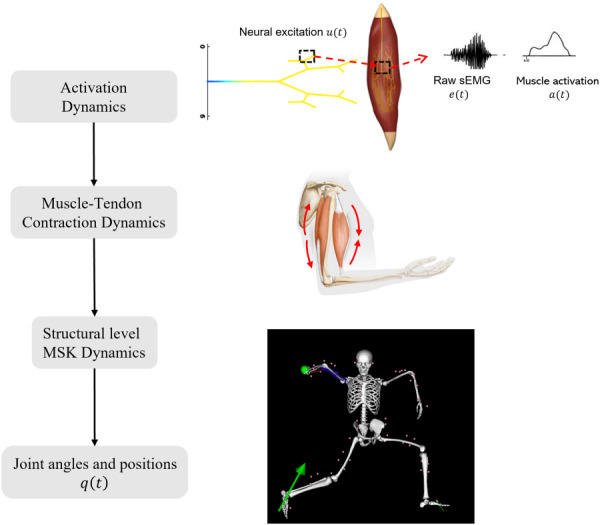
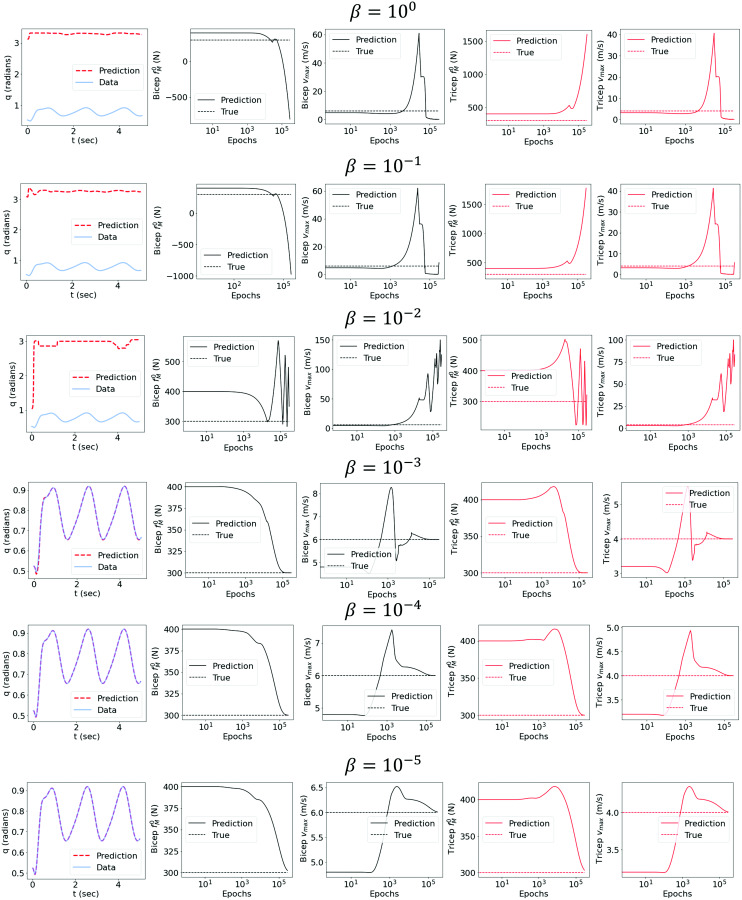
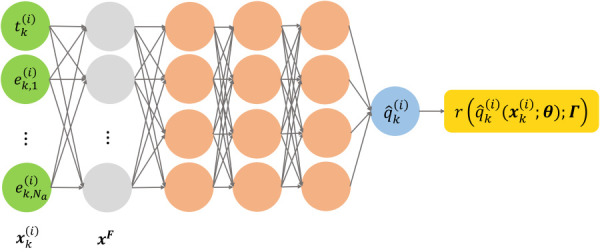
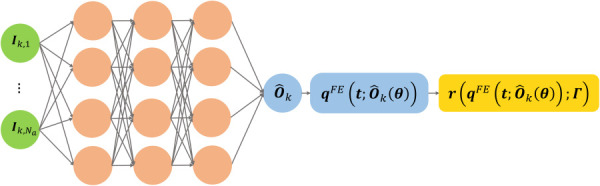
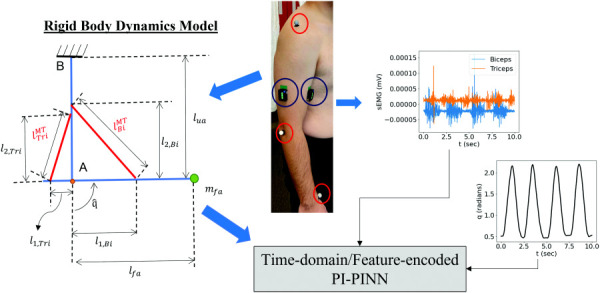
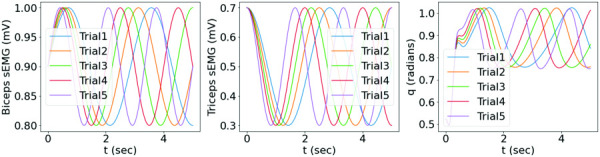
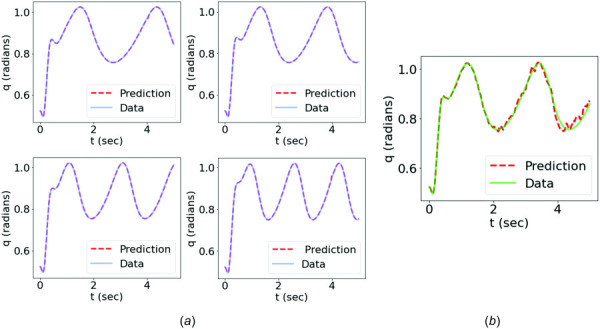
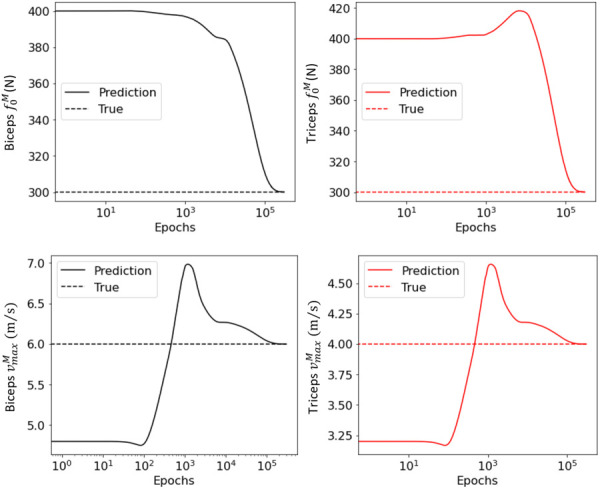
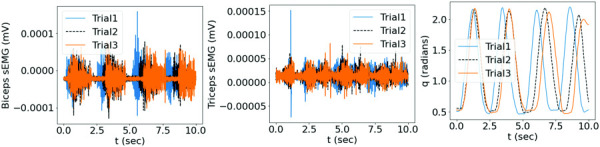
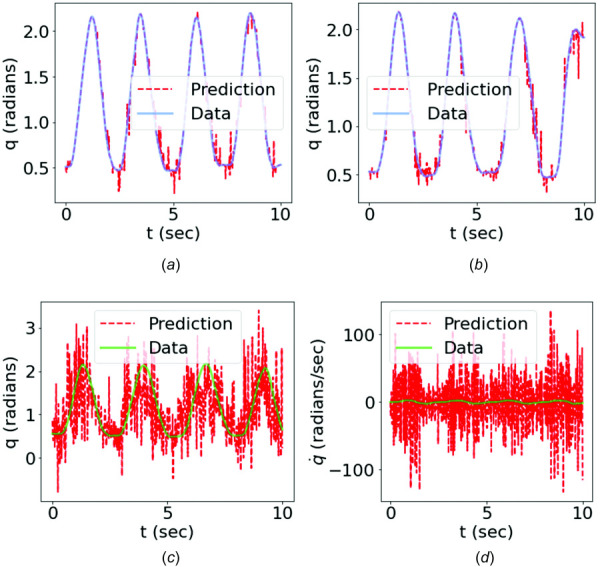
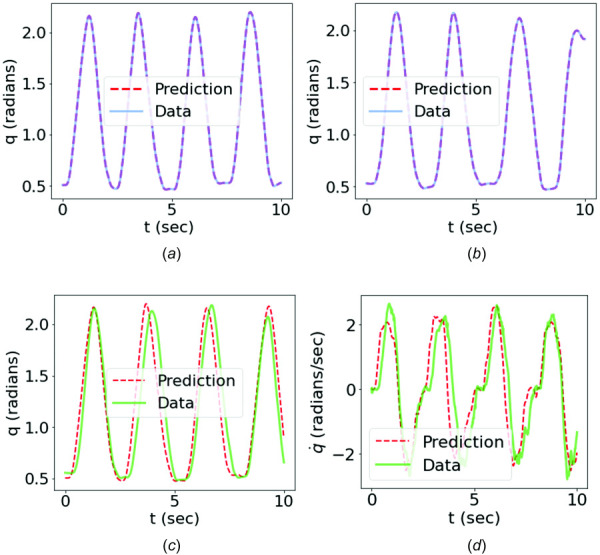
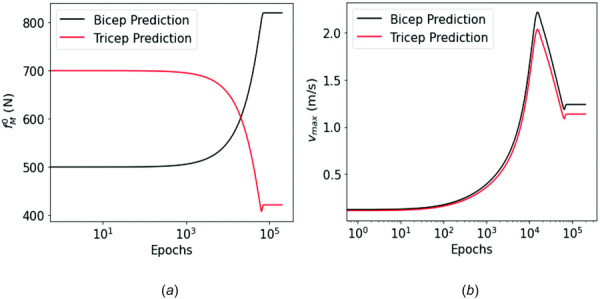
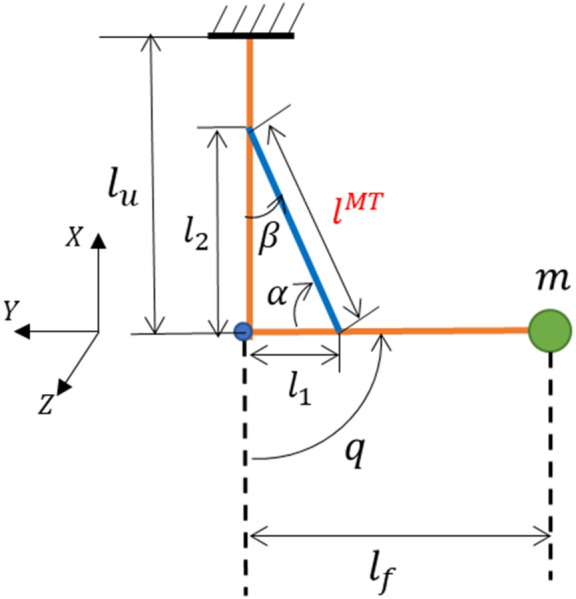
Identification of muscle-tendon force generation properties and muscle activities from physiological measurements, e.g., motion data and raw surface electromyography (sEMG), offers opportunities to construct a subject-specific musculoskeletal (MSK) digital twin system for health condition assessment and motion prediction. While machine learning approaches with capabilities in extracting complex features and patterns from a large amount of data have been applied to motion prediction given sEMG signals, the learned data-driven mapping is black-box and may not satisfy the underlying physics and has reduced generality. In this work, we propose a feature-encoded physics-informed parameter identification neural network (FEPI-PINN) for simultaneous prediction of motion and parameter identification of human MSK systems. In this approach, features of high-dimensional noisy sEMG signals are projected onto a low-dimensional noise-filtered embedding space for the enhancement of forwarding dynamics prediction. This FEPI-PINN model can be trained to relate sEMG signals to joint motion and simultaneously identify key MSK parameters. The numerical examples demonstrate that the proposed framework can effectively identify subject-specific muscle parameters and the trained physics-informed forward-dynamics surrogate yields accurate motion predictions of elbow flexion-extension motion that are in good agreement with the measured joint motion data.
从生理测量(例如运动数据和原始表面肌电图 (sEMG))中识别肌肉-肌腱力的产生特性和肌肉活动,为构建针对特定个体的肌肉骨骼 (MSK) 数字孪生系统以进行健康状况评估和运动预测提供了机会。虽然机器学习方法具有从大量数据中提取复杂特征和模式的能力,已经应用于基于 sEMG 信号的运动预测,但所学习的数据驱动映射是黑盒的,可能不符合底层物理规律,通用性也降低了。在这项工作中,我们提出了一种用于同时预测人体 MSK 系统运动和参数识别的特征编码物理信息参数识别神经网络 (FEPI-PINN)。在这种方法中,高维噪声 sEMG 信号的特征被投影到低维噪声过滤的嵌入空间中,以增强正向动力学预测。这个 FEPI-PINN 模型可以被训练为将 sEMG 信号与关节运动相关联,并同时识别关键的 MSK 参数。数值示例表明,所提出的框架可以有效地识别特定于个体的肌肉参数,并且经过训练的物理信息正向动力学代理可以生成准确的肘部屈伸运动预测,与测量的关节运动数据吻合良好。