Xiao Weiye, Wei Yehua Dennis, Wu Yangyi
Nanjing Institute of Geography and Limnology, Chinese Academy of Sciences, Nanjing, Jiangsu 214000, China.
Department of Geography, University of Utah, Salt Lake City, UT 84112-9155, USA.
Transp Res D Transp Environ. 2022 Sep;110:103428. doi: 10.1016/j.trd.2022.103428. Epub 2022 Aug 12.
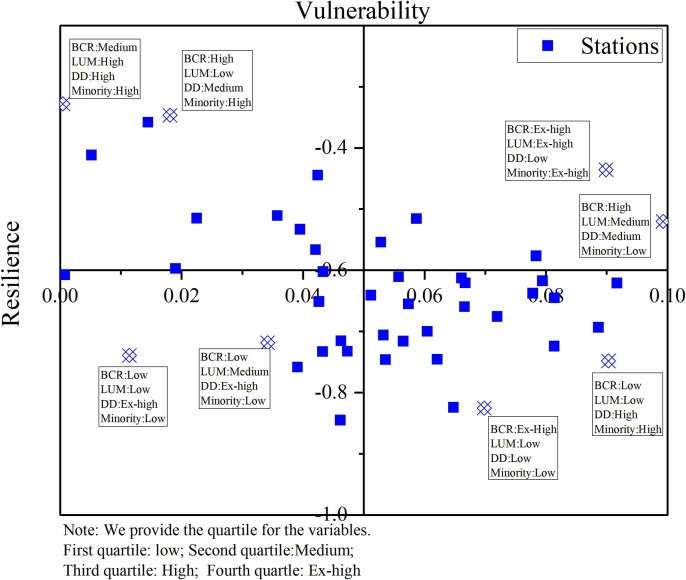
COVID-19 has swept the world, and the unprecedented decline in transit ridership has been noticed. However, little attention has been paid to the resilience of the transportation system, particularly in medium-sized cities. Drawing upon a light rail ridership dataset in Salt Lake County from 2017 to 2021, we develop a novel method to measure the vulnerability and resilience of transit ridership using a Bayesian structure time series model. The results show that government policies have a more significant impact than the number of COVID-19 cases on transit ridership. Regarding the built environment, a highly compact urban design might reduce the building coverage ratio and makes transit stations more vulnerable and less resilient. Furthermore, the high rate of minorities is the primary reason for the drops in transit ridership. The findings are valuable for understanding the vulnerability and resilience of transit ridership to pandemics for better coping strategies in the future.
新冠疫情席卷全球,公共交通客流量出现了前所未有的下降。然而,人们很少关注交通系统的恢复力,尤其是中型城市的交通系统。利用2017年至2021年盐湖县轻轨客流量数据集,我们开发了一种新颖的方法,使用贝叶斯结构时间序列模型来衡量公共交通客流量的脆弱性和恢复力。结果表明,政府政策对公共交通客流量的影响比新冠病例数更为显著。在建筑环境方面,高度紧凑的城市设计可能会降低建筑覆盖率,使公交站点更易受到影响且恢复力更弱。此外,少数族裔比例高是公共交通客流量下降的主要原因。这些发现对于理解公共交通客流量对大流行病的脆弱性和恢复力,以便未来制定更好的应对策略具有重要价值。