Independent.
School of Life Sciences, University of Nottingham, Nottingham, UK.
Br J Pharmacol. 2022 Dec;179(23):5172-5179. doi: 10.1111/bph.15933. Epub 2022 Aug 16.
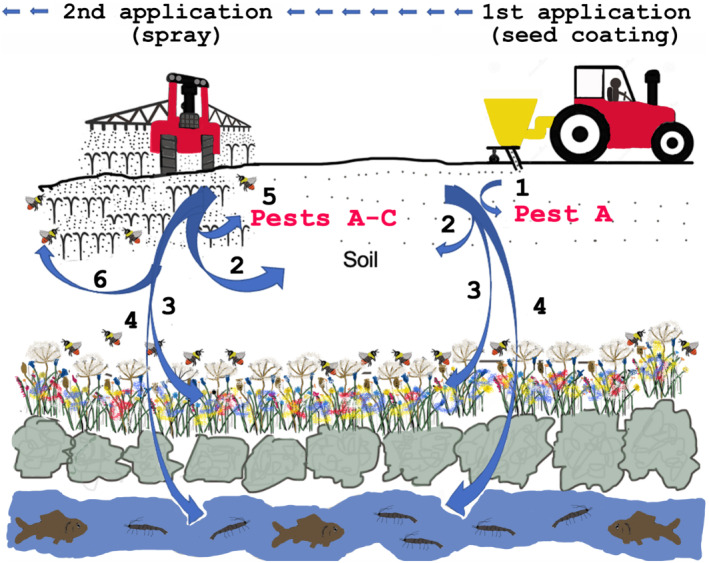
Pesticide action is predominantly measured as a toxicological outcome, with pharmacological impact of sublethal doses on bystander species left largely undocumented. Likewise, chronic exposure, which often results in responses different from acute administration, has also been understudied. In this article, we propose the application of standard pharmacological principles, already used to establish safe clinical dosing regimens in humans, to the 'dosing of the environment'. These principles include relating the steady state dose of an agent to its beneficial effects (e.g. pest control), while minimising harmful impacts (e.g. off-target bioactivity in beneficial insects). We propose the term 'environmental therapeutic window', analogous to that used in mammalian pharmacology, to guide risk assessment. To make pharmacological terms practically useful to environmental protection, quantitative data on pesticide action need to be made available in a freely accessible database, which should include toxicological and pharmacological impacts on both target and off-target species.
农药作用主要以毒理学结果来衡量,而亚致死剂量对旁观者物种的药理学影响在很大程度上仍未被记录。同样,慢性暴露通常会导致与急性给药不同的反应,这方面也研究得很少。在本文中,我们建议应用标准药理学原理,这些原理已经被用于在人类中建立安全的临床给药方案,将“环境给药”。这些原则包括将药物的稳态剂量与其有益效果(例如害虫防治)相关联,同时将有害影响最小化(例如有益昆虫的非靶标生物活性)。我们提出了“环境治疗窗”的概念,类似于在哺乳动物药理学中使用的概念,以指导风险评估。为了使药理学术语对环境保护具有实际意义,需要在一个免费获取的数据库中提供有关农药作用的定量数据,该数据库应包括对靶标和非靶标物种的毒理学和药理学影响。