Fundação Oswaldo Cruz, Instituto Aggeu Magalhães, Departamento de Imunologia, Laboratório de Imunoparasitologia, Recife, PE, Brasil.
Núcleo de Vigilância em Saúde de Moreno, Moreno, PE, Brasil.
Rev Soc Bras Med Trop. 2022 Aug 12;55:e0600. doi: 10.1590/0037-8682-0600-2021. eCollection 2022.
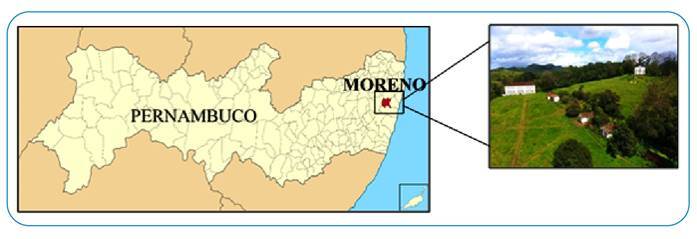
American cutaneous leishmaniasis is a commonly neglected, vector-borne tropical parasitic disease that is a major public health concern in Brazil. Leishmania (Viannia) braziliensis is the main species associated with the disease. Accurate diagnosis is based on epidemiological surveillance, clinical assessment, and laboratory testing. Leishmania (V.) braziliensis has been detected in several wild and synanthropic mammals. Their epidemiological role has not been entirely elucidated. This study aimed to assess potential L. braziliensis infections in asymptomatic domestic animals, by molecular and serological testing in endemic areas, in the metropolitan region of Recife.
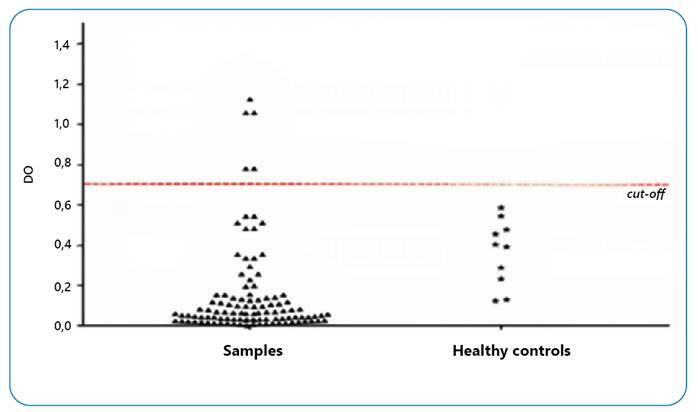
Blood samples and conjunctival fluids were collected from 232 animals (canids, felids, equines, and caprines) for the detection of L. braziliensis using molecular tests (conventional and real-time polymerase chain reaction [PCR and qPCR]). For immunological detection, blood samples from 115 dogs were assessed using enzyme-linked immunosorbent assay.
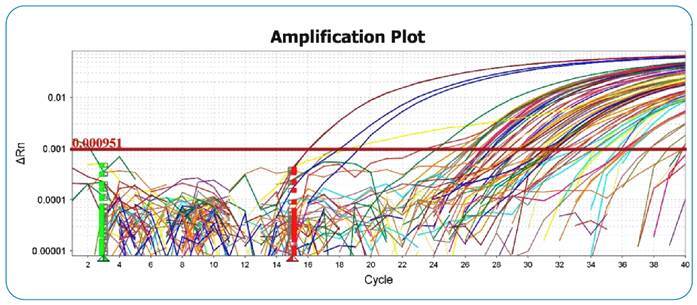
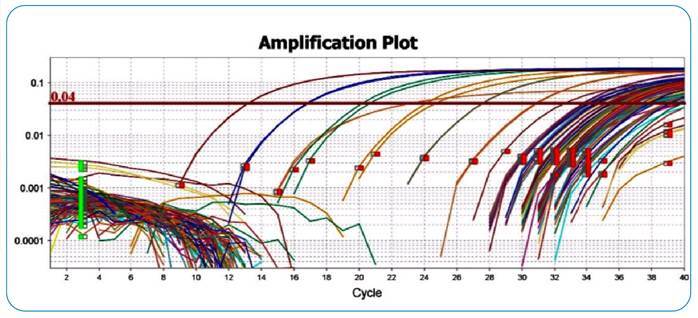
Real-time quantitative PCR showed positive results for blood and conjunctival samples in all investigated species. The results of the blood and conjunctival samples were 68.2% and 26.9% in Canis familiaris, 100% and 41.7% in Felis catus, 77.3% and 30.8% in Equus caballus/Equus asinus, and 50% and 33.3% in Capra hircus samples, respectively.
Results from this study adds valuable information to our understanding of the role of asymptomatic domestic animals, L. braziliensis life cycle, and American cutaneous leishmaniasis in Northeast Brazil.
美国皮肤利什曼病是一种常见的被忽视的、由媒介传播的热带寄生虫病,在巴西是一个主要的公共卫生关注问题。利什曼原虫(Viannia) braziliensis 是与该疾病相关的主要物种。准确的诊断基于流行病学监测、临床评估和实验室检测。已经在几种野生和共生哺乳动物中检测到利什曼原虫(V.) braziliensis。它们的流行病学作用尚未完全阐明。本研究旨在评估流行地区无症状家养动物中潜在的 L. braziliensis 感染情况,在累西腓大都市区对犬科、猫科、马科和羊科动物进行分子和血清学检测。
从 232 只动物(犬科、猫科、马科和羊科)采集血液和结膜液样本,使用分子检测(常规和实时聚合酶链反应[PCR 和 qPCR])检测 L. braziliensis。为了进行免疫检测,对 115 只狗的血液样本进行了酶联免疫吸附试验。
实时定量 PCR 显示所有调查物种的血液和结膜样本均呈阳性结果。犬的血液和结膜样本的结果分别为 68.2%和 26.9%,猫的结果为 100%和 41.7%,马/驴的结果为 77.3%和 30.8%,羊的结果为 50%和 33.3%。
本研究的结果为我们了解无症状家养动物、L. braziliensis 生命周期以及巴西东北部的美国皮肤利什曼病的作用提供了有价值的信息。