An Rui, Yu Haitao, Wang Yanzhong, Lu Jie, Gao Yuzhen, Xie Xinyou, Zhang Jun
Department of Clinical Laboratory, Sir Run Run Shaw Hospital, Zhejiang University School of Medicine, 3 East Qingchun Road, Hangzhou, Zhejiang, 310016, People's Republic of China.
Key Laboratory of Precision Medicine in Diagnosis and Monitoring Research of Zhejiang Province, 3 East Qingchun Road, Hangzhou, Zhejiang, 310016, People's Republic of China.
Cancer Metab. 2022 Aug 17;10(1):13. doi: 10.1186/s40170-022-00289-6.
Breast cancer (BC) is the most commonly diagnosed cancer. Currently, mammography and breast ultrasonography are the main clinical screening methods for BC. Our study aimed to reveal the specific metabolic profiles of BC patients and explore the specific metabolic signatures in human plasma for BC diagnosis.
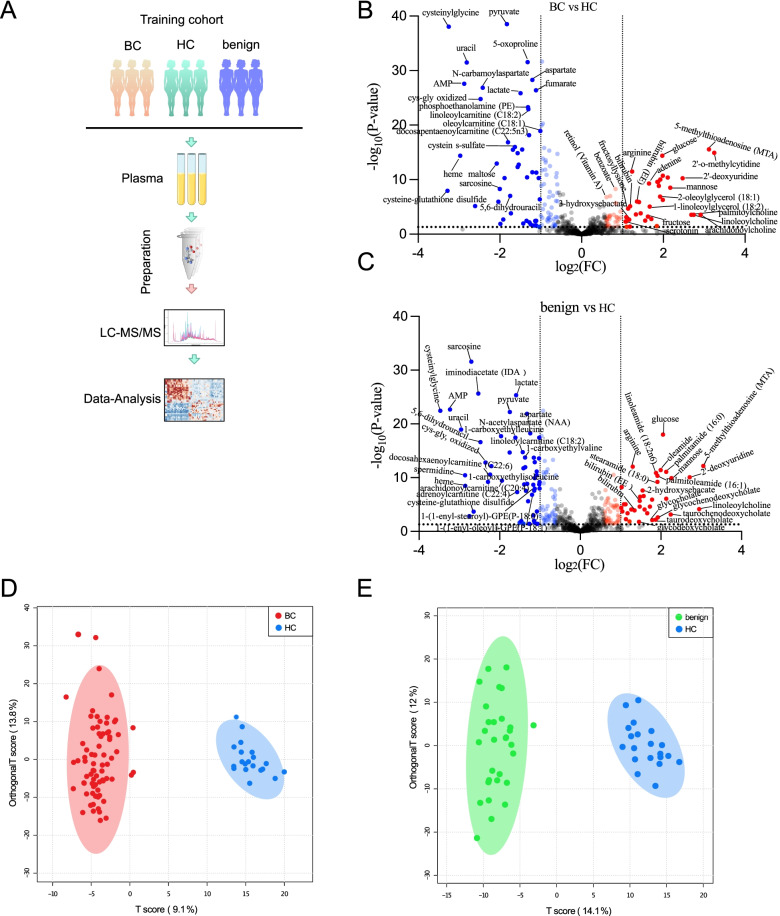
This study enrolled 216 participants, including BC patients, benign patients, and healthy controls (HC) and formed two cohorts, one training cohort and one testing cohort. Plasma samples were collected from each participant and subjected to perform nontargeted metabolomics and proteomics. The metabolic signatures for BC diagnosis were identified through machine learning.
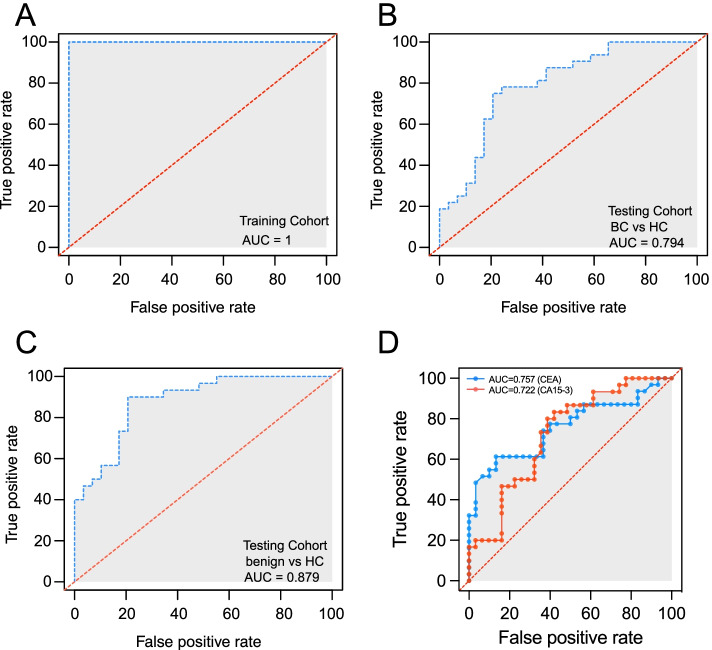
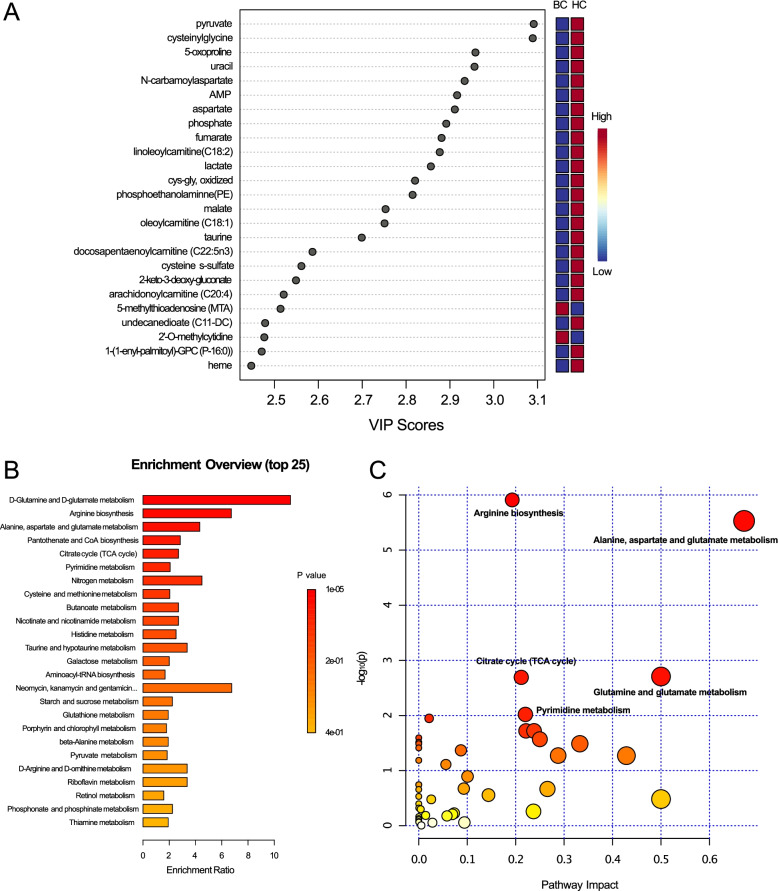
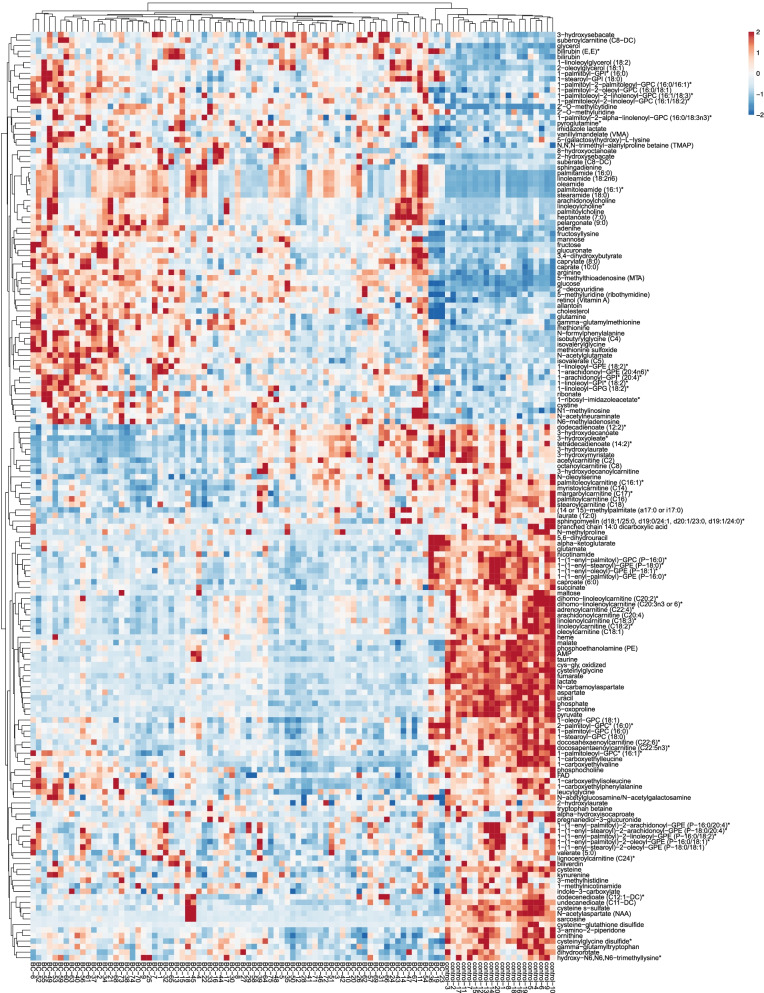
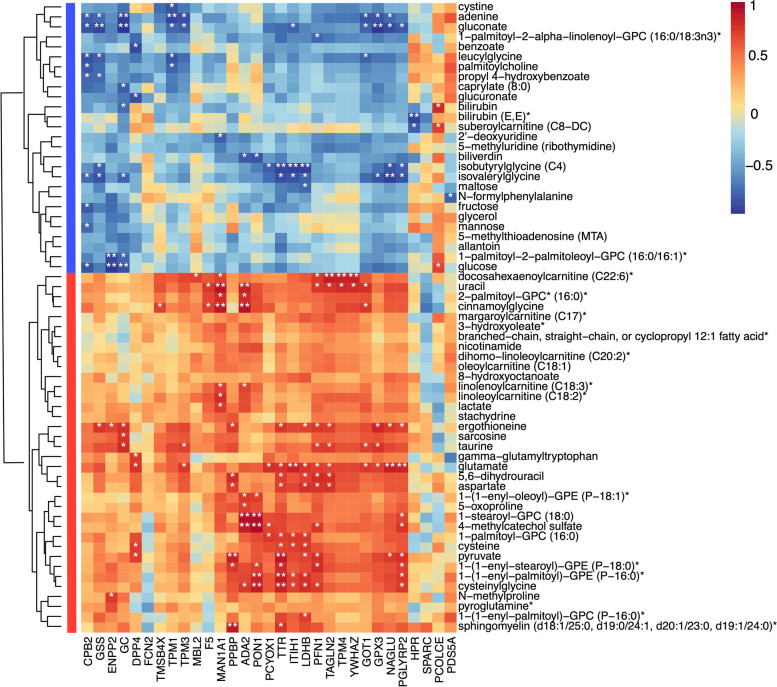
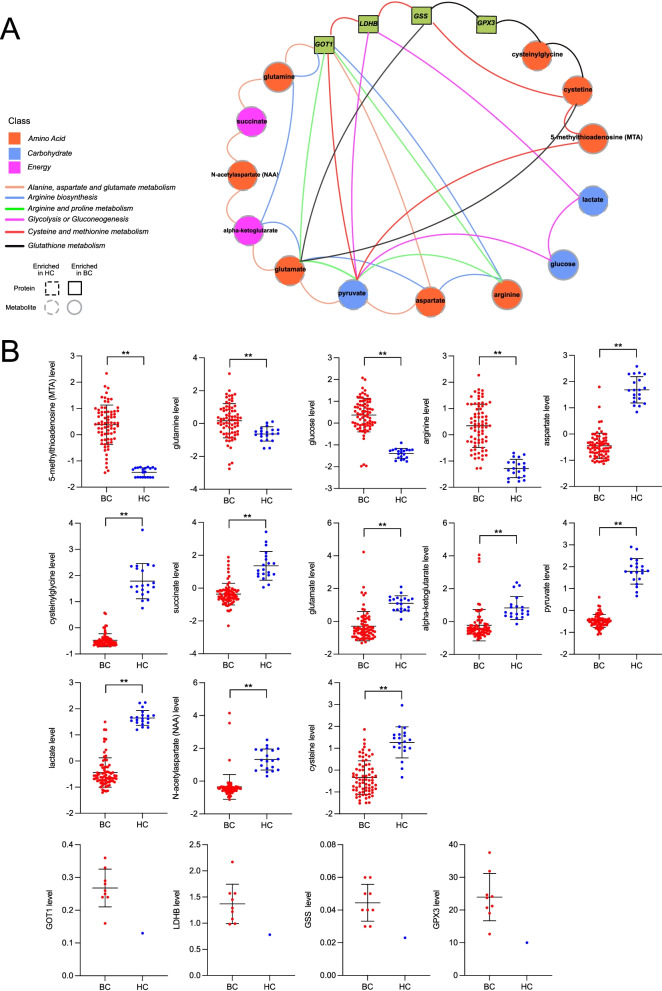
Metabolomics analysis revealed that BC patients showed a significant change of metabolic profiles compared to HC individuals. The alanine, aspartate and glutamate pathways, glutamine and glutamate metabolic pathways, and arginine biosynthesis pathways were the critical biological metabolic pathways in BC. Proteomics identified 29 upregulated and 2 downregulated proteins in BC. Our integrative analysis found that aspartate aminotransferase (GOT1), L-lactate dehydrogenase B chain (LDHB), glutathione synthetase (GSS), and glutathione peroxidase 3 (GPX3) were closely involved in these metabolic pathways. Support vector machine (SVM) demonstrated a predictive model with 47 metabolites, and this model achieved a high accuracy in BC prediction (AUC = 1). Besides, this panel of metabolites also showed a fairly high predictive power in the testing cohort between BC vs HC (AUC = 0.794), and benign vs HC (AUC = 0.879).
This study uncovered specific changes in the metabolic and proteomic profiling of breast cancer patients and identified a panel of 47 plasma metabolites, including sphingomyelins, glutamate, and cysteine could be potential diagnostic biomarkers for breast cancer.
乳腺癌(BC)是最常被诊断出的癌症。目前,乳房X线摄影和乳房超声检查是BC的主要临床筛查方法。我们的研究旨在揭示BC患者的特定代谢谱,并探索人血浆中用于BC诊断的特定代谢特征。
本研究招募了216名参与者,包括BC患者、良性疾病患者和健康对照(HC),并形成了两个队列,一个训练队列和一个测试队列。从每个参与者收集血浆样本,并进行非靶向代谢组学和蛋白质组学分析。通过机器学习识别出用于BC诊断的代谢特征。
代谢组学分析显示,与HC个体相比,BC患者的代谢谱有显著变化。丙氨酸、天冬氨酸和谷氨酸途径、谷氨酰胺和谷氨酸代谢途径以及精氨酸生物合成途径是BC中的关键生物代谢途径。蛋白质组学鉴定出BC中有29种上调蛋白和2种下调蛋白。我们的综合分析发现,天冬氨酸转氨酶(GOT1)、L-乳酸脱氢酶B链(LDHB)、谷胱甘肽合成酶(GSS)和谷胱甘肽过氧化物酶3(GPX3)密切参与这些代谢途径。支持向量机(SVM)展示了一个包含47种代谢物的预测模型,该模型在BC预测中具有很高的准确性(AUC = 1)。此外,这组代谢物在BC与HC之间的测试队列中(AUC = 0.794)以及良性疾病与HC之间(AUC = 0.879)也显示出相当高的预测能力。
本研究揭示了乳腺癌患者代谢和蛋白质组学谱的特定变化,并鉴定出一组47种血浆代谢物,包括鞘磷脂、谷氨酸和半胱氨酸,它们可能是乳腺癌的潜在诊断生物标志物。