Media and Communication Science, University of Erfurt, Erfurt, Germany.
Center for Empirical Research in Economics and Behavioural Science (CEREB), University of Erfurt, Erfurt, Germany.
Glob Health Res Policy. 2022 Aug 18;7(1):28. doi: 10.1186/s41256-022-00261-3.
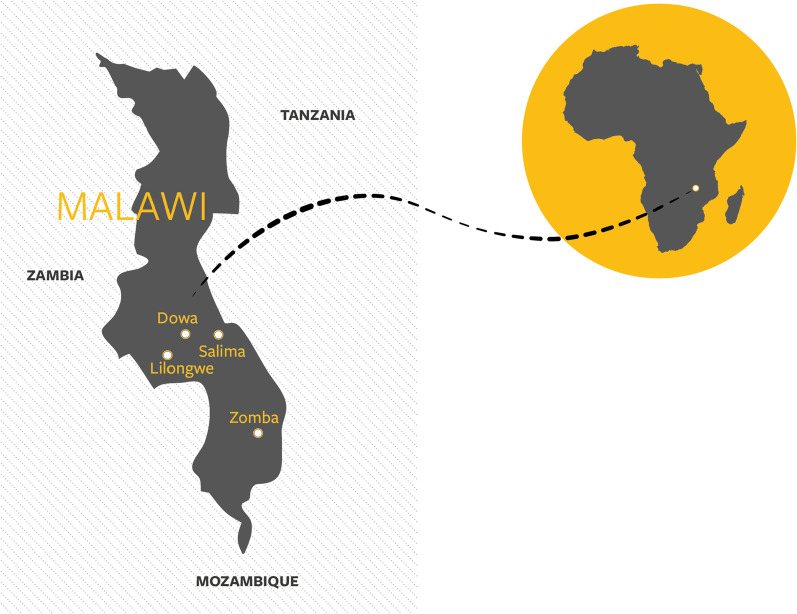
The contribution of vaccination to global public health and community wellbeing has been described as one of the greatest success stories of modern medicine. However, 13.5 million children still miss at least one of their routine vaccinations, and this contributes to about 1.5 million deaths from vaccine-preventable diseases. One of the contributing factors has been associated with vaccine hesitancy. Vaccine hesitancy is the delay or refusal of vaccines despite their availability. The study explored factors from multiple perspectives that influence hesitancy among caregivers of children and adolescent girls eligible for childhood routine immunisation and the Human Papillomavirus vaccine in Malawi.
The methodology used was qualitative such as key informant interviews and focus-group discussion. Information was obtained from caregivers, community and religious leaders, leaders of civil society groups, teachers in schools where Human Papillomavirus vaccine were piloted, healthcare workers, national and district-level officials of the expanded program on immunisation. There were 25 key informant interviews and two focus-group discussions, with 13 participants. The study was conducted between April to May 2020. The Interviews and discussions were audio-recorded, transcribed, and analysed using a thematic content approach.
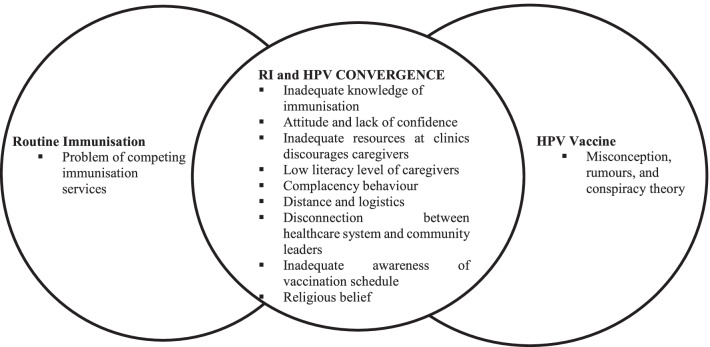
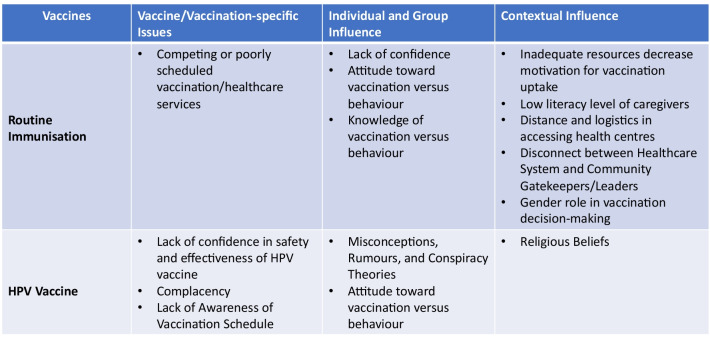
Most vaccine-hesitancy drivers for routine immunisation were also relevant for the HPV vaccine. The drivers included inadequate awareness of the vaccination schedule, rumours and conspiracy theories exacerbated by religious beliefs, low literacy levels of caregivers, distance and transport to the vaccination clinic, gender role and a disconnect between community healthcare workers and community leaders.
The study demonstrated that a network of factors determines vaccine hesitancy for childhood Routine Immunisation and Human Papillomavirus, and some of them are interrelated with one another. This has implications both for current levels of vaccine acceptance and the introduction of any new vaccine, such as those against Malaria, HIV/AIDS, HPV or COVID-19 (coronavirus disease 2019). Therefore, strategies developed to address vaccine hesitancy must be multi-component and wide-ranging.
疫苗接种为全球公共卫生和社区健康福祉做出的贡献堪称现代医学最伟大的成功故事之一。然而,仍有 1350 万名儿童至少错过了一次常规疫苗接种,这导致了约 150 万人死于可通过疫苗预防的疾病。造成这一情况的原因之一是疫苗犹豫。疫苗犹豫是指尽管疫苗可以获得,但仍延迟或拒绝接种疫苗。本研究从多个角度探讨了影响马拉维儿童和青少年女性常规免疫接种和人乳头瘤病毒疫苗接种的照顾者的犹豫因素。
所采用的方法是定性的,如关键知情人访谈和焦点小组讨论。信息是从照顾者、社区和宗教领袖、民间社会团体领袖、试点接种人乳头瘤病毒疫苗的学校教师、卫生保健工作者、国家和地区扩大免疫规划官员那里获得的。共进行了 25 次关键知情人访谈和 2 次焦点小组讨论,参与者共 13 人。该研究于 2020 年 4 月至 5 月进行。访谈和讨论均进行了录音,转录后采用主题内容分析法进行分析。
常规免疫接种的大多数疫苗犹豫驱动因素也与 HPV 疫苗相关。这些驱动因素包括对疫苗接种时间表的认识不足、受宗教信仰影响的谣言和阴谋论、照顾者的文化水平低、前往接种诊所的距离和交通、性别角色以及社区卫生工作者与社区领袖之间的脱节。
该研究表明,一个由多种因素构成的网络决定了儿童常规免疫接种和人乳头瘤病毒疫苗的犹豫程度,其中一些因素彼此相关。这不仅对当前的疫苗接种接受水平,而且对新疫苗(如疟疾、艾滋病毒/艾滋病、HPV 或 COVID-19(2019 年冠状病毒病)疫苗)的引入都有影响。因此,为解决疫苗犹豫问题而制定的策略必须是多方面和广泛的。