Laboratories of General Pathology and Immunology "Giovanna Tosi", Department of Medicine and Surgery, University of Insubria, Varese, Italy.
Laboratory of Biochemistry and Functional Proteomics, Department of Science and High Technology, University of Insubria, Busto Arsizio, Italy.
Front Immunol. 2022 Aug 1;13:939863. doi: 10.3389/fimmu.2022.939863. eCollection 2022.
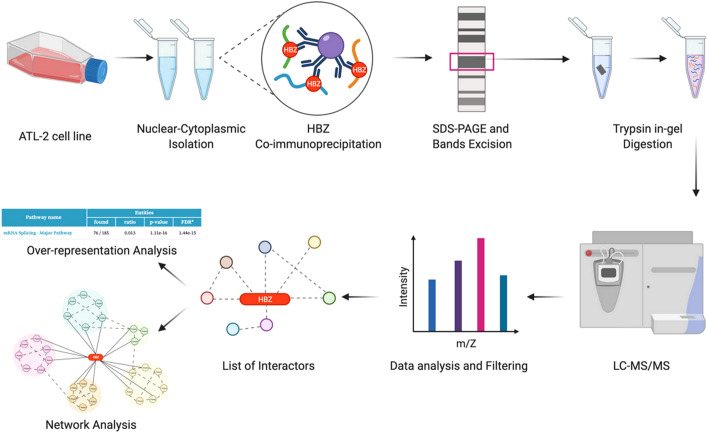
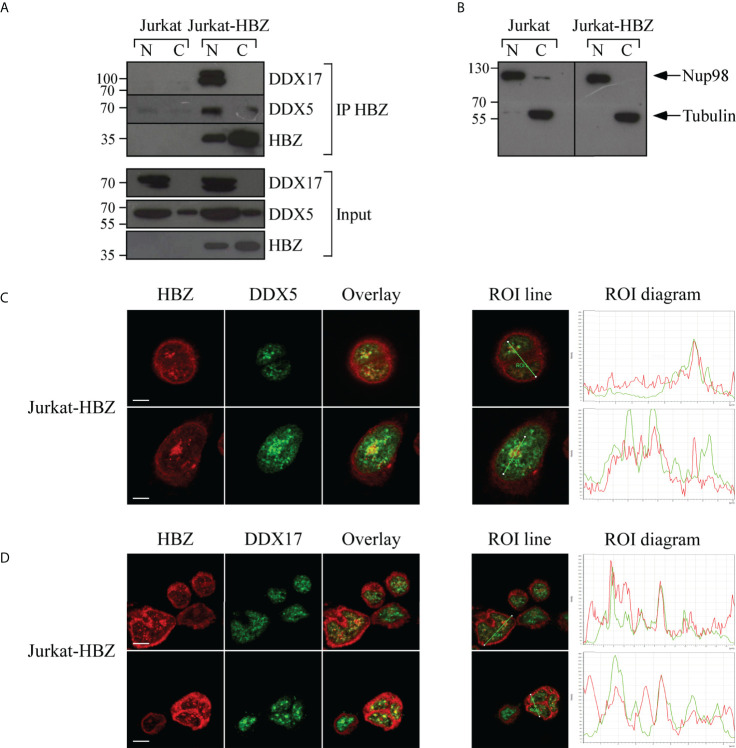
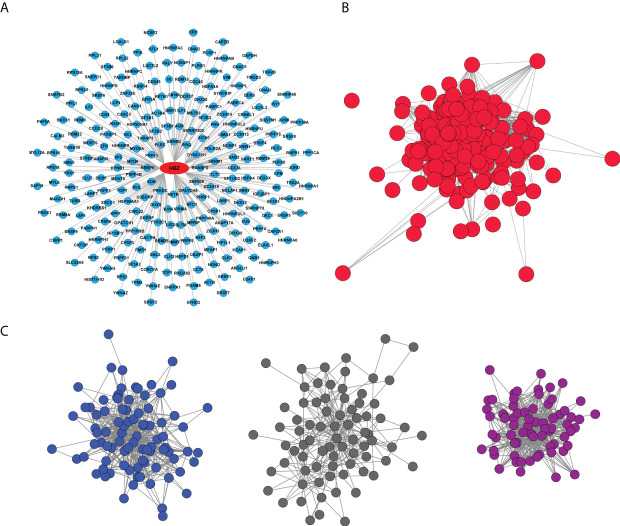
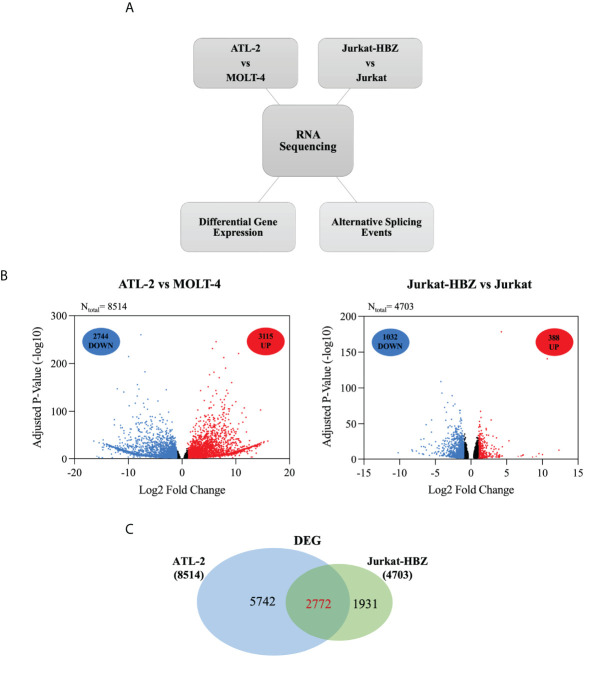
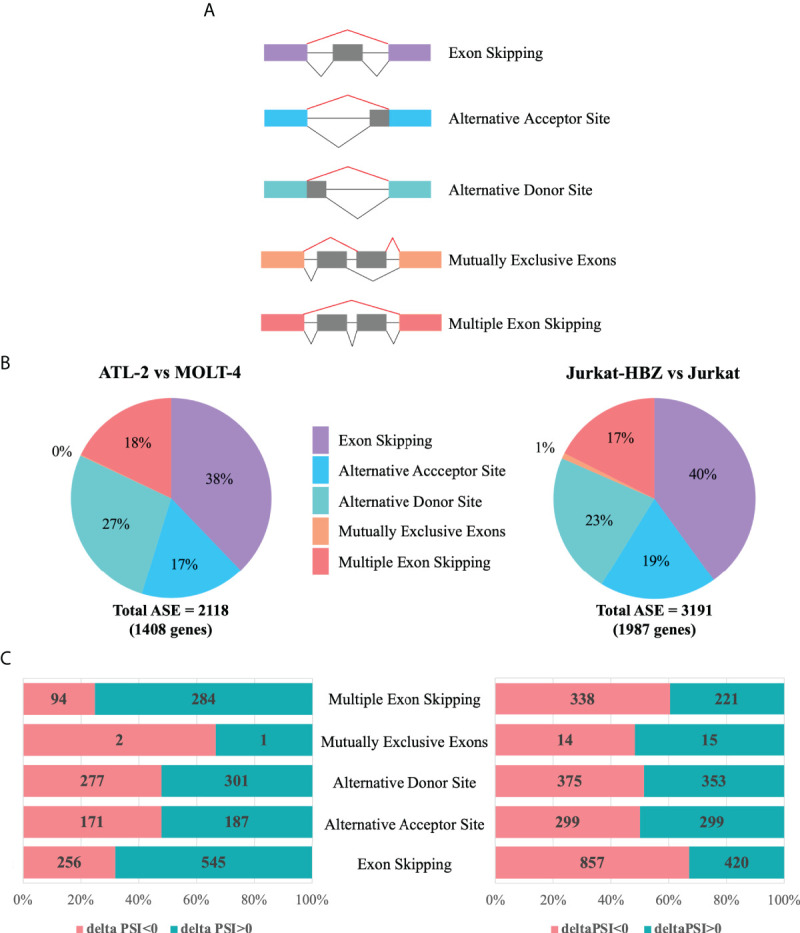
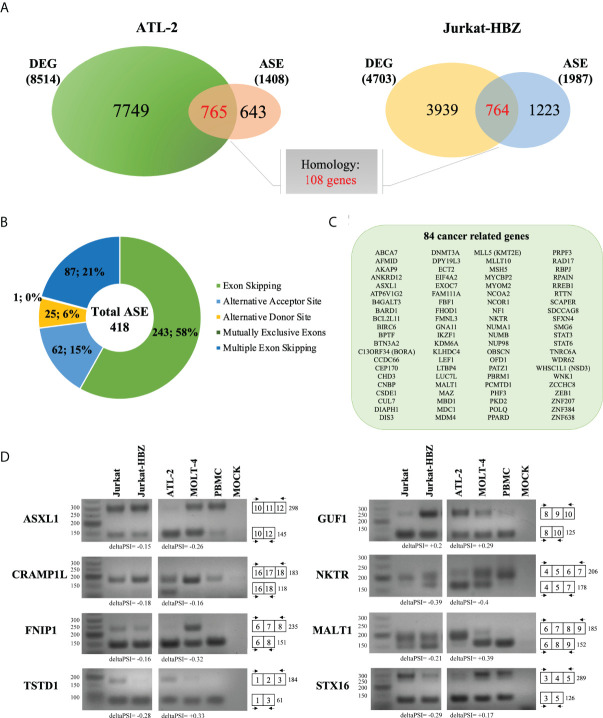
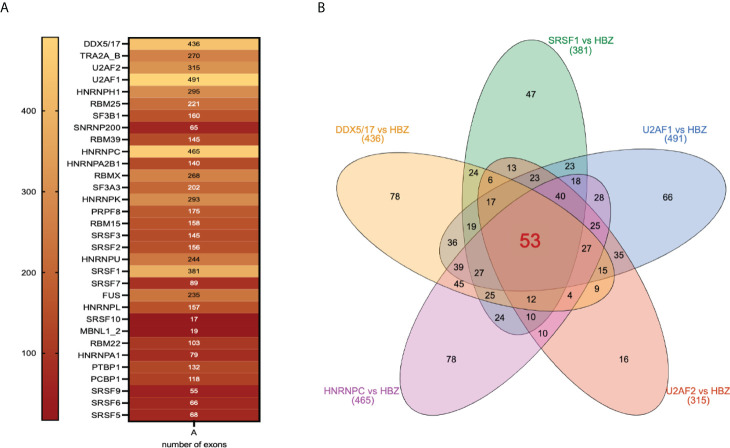
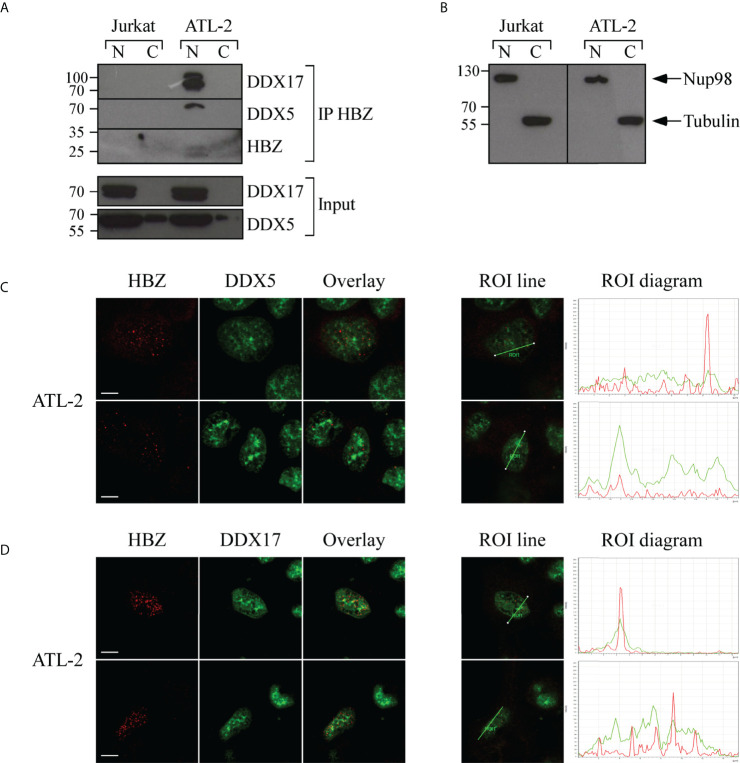
Adult T-cell leukemia/lymphoma (ATL) is a T-cell lymphoproliferative neoplasm caused by the human T-cell leukemia virus type 1 (HTLV-1). Two viral proteins, Tax-1 and HBZ play important roles in HTLV-1 infectivity and in HTLV-1-associated pathologies by altering key pathways of cell homeostasis. However, the molecular mechanisms through which the two viral proteins, particularly HBZ, induce and/or sustain the oncogenic process are still largely elusive. Previous results suggested that HBZ interaction with nuclear factors may alter cell cycle and cell proliferation. To have a more complete picture of the HBZ interactions, we investigated in detail the endogenous HBZ interactome in leukemic cells by immunoprecipitating the HBZ-interacting complexes of ATL-2 leukemic cells, followed by tandem mass spectrometry analyses. RNA seq analysis was performed to decipher the differential gene expression and splicing modifications related to HTLV-1. Here we compared ATL-2 with MOLT-4, a non HTLV-1 derived leukemic T cell line and further compared with HBZ-induced modifications in an isogenic system composed by Jurkat T cells and stably HBZ transfected Jurkat derivatives. The endogenous HBZ interactome of ATL-2 cells identified 249 interactors covering three main clusters corresponding to protein families mainly involved in mRNA splicing, nonsense-mediated RNA decay (NMD) and JAK-STAT signaling pathway. Here we analyzed in detail the cluster involved in RNA splicing. RNAseq analysis showed that HBZ specifically altered the transcription of many genes, including crucial oncogenes, by affecting different splicing events. Consistently, the two RNA helicases, members of the RNA splicing family, DDX5 and its paralog DDX17, recently shown to be involved in alternative splicing of cellular genes after NF-κB activation by HTLV-1 Tax-1, interacted and partially co-localized with HBZ. For the first time, a complete picture of the endogenous HBZ interactome was elucidated. The wide interaction of HBZ with molecules involved in RNA splicing and the subsequent transcriptome alteration strongly suggests an unprecedented complex role of the viral oncogene in the establishment of the leukemic state.
成人 T 细胞白血病/淋巴瘤 (ATL) 是一种由人类 T 细胞白血病病毒 1 型 (HTLV-1) 引起的 T 细胞淋巴增生性肿瘤。两种病毒蛋白 Tax-1 和 HBZ 通过改变细胞内稳态的关键途径,在 HTLV-1 的感染和 HTLV-1 相关病理中发挥重要作用。然而,两种病毒蛋白,特别是 HBZ,诱导和/或维持致癌过程的分子机制在很大程度上仍不清楚。先前的结果表明,HBZ 与核因子的相互作用可能改变细胞周期和细胞增殖。为了更全面地了解 HBZ 的相互作用,我们通过免疫沉淀 ATL-2 白血病细胞的 HBZ 相互作用复合物,然后进行串联质谱分析,详细研究了白血病细胞中内源性 HBZ 相互作用组。进行 RNA-seq 分析以破译与 HTLV-1 相关的差异基因表达和剪接修饰。在这里,我们将 ATL-2 与非 HTLV-1 衍生的白血病 T 细胞系 MOLT-4 进行比较,并进一步与由 Jurkat T 细胞和稳定转染 HBZ 的 Jurkat 衍生物组成的同基因系统中的 HBZ 诱导修饰进行比较。ATL-2 细胞的内源性 HBZ 相互作用组鉴定出 249 个相互作用物,覆盖三个主要簇,对应于主要涉及 mRNA 剪接、无意义介导的 RNA 降解 (NMD) 和 JAK-STAT 信号通路的蛋白质家族。在这里,我们详细分析了涉及 RNA 剪接的簇。RNA-seq 分析表明,HBZ 通过影响不同的剪接事件,特异性改变许多基因的转录,包括关键的癌基因。一致地,两种 RNA 解旋酶,即 RNA 剪接家族的成员,DDX5 和其旁系同源物 DDX17,最近被证明在 HTLV-1 Tax-1 激活 NF-κB 后参与细胞基因的可变剪接,与 HBZ 相互作用并部分共定位。这是首次阐明内源性 HBZ 相互作用组的全貌。HBZ 与参与 RNA 剪接的分子的广泛相互作用以及随后的转录组改变强烈表明病毒癌基因在白血病状态的建立中发挥了前所未有的复杂作用。