Department of Synthetic Biology and Immunology, National Institute of Chemistry, Ljubljana, Slovenia.
EN-FIST Centre of Excellence, Ljubljana, Slovenia.
Front Immunol. 2022 Aug 1;13:940969. doi: 10.3389/fimmu.2022.940969. eCollection 2022.
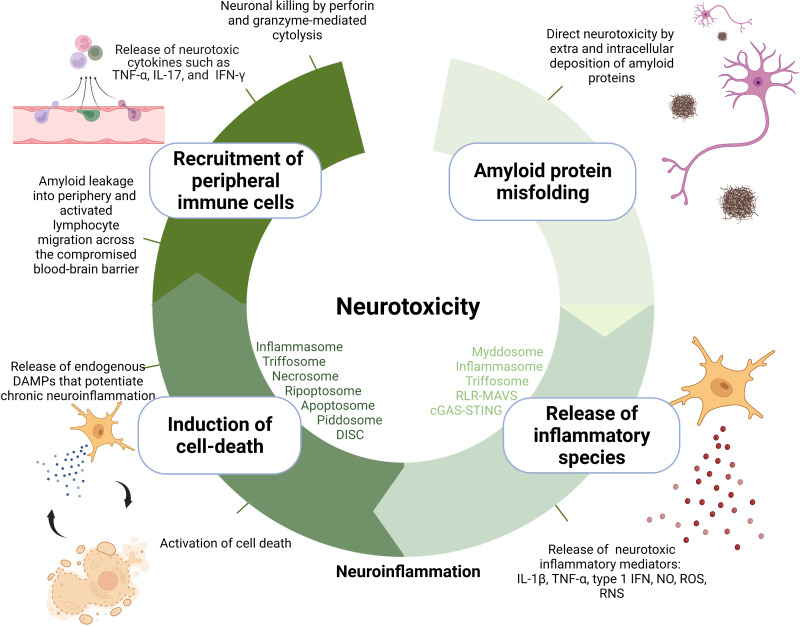
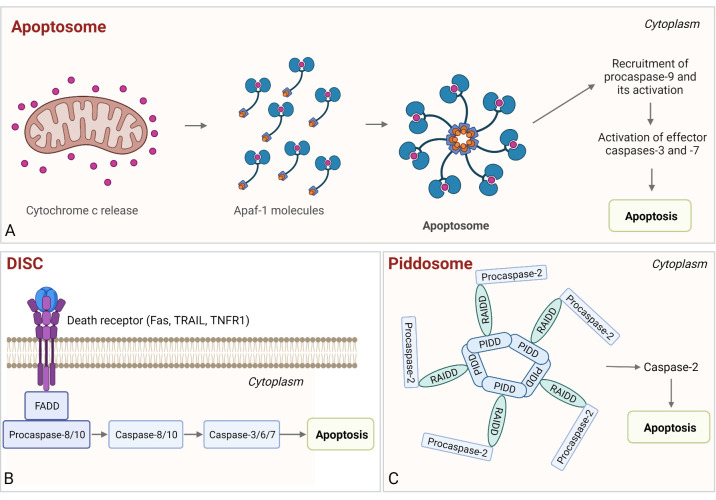
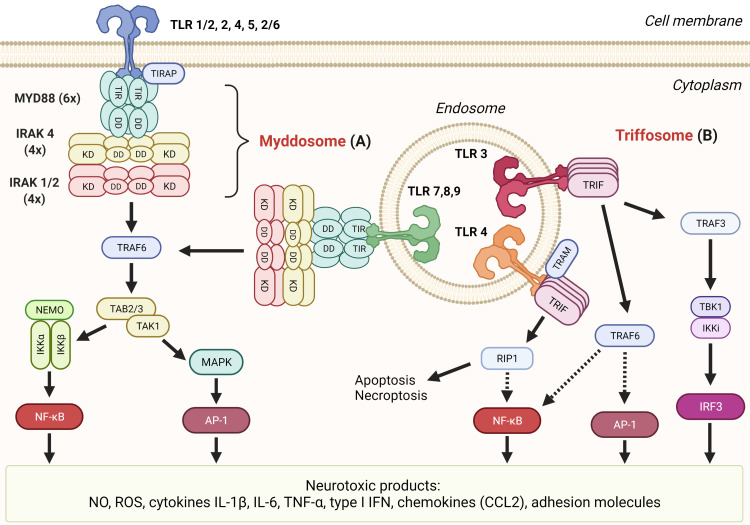
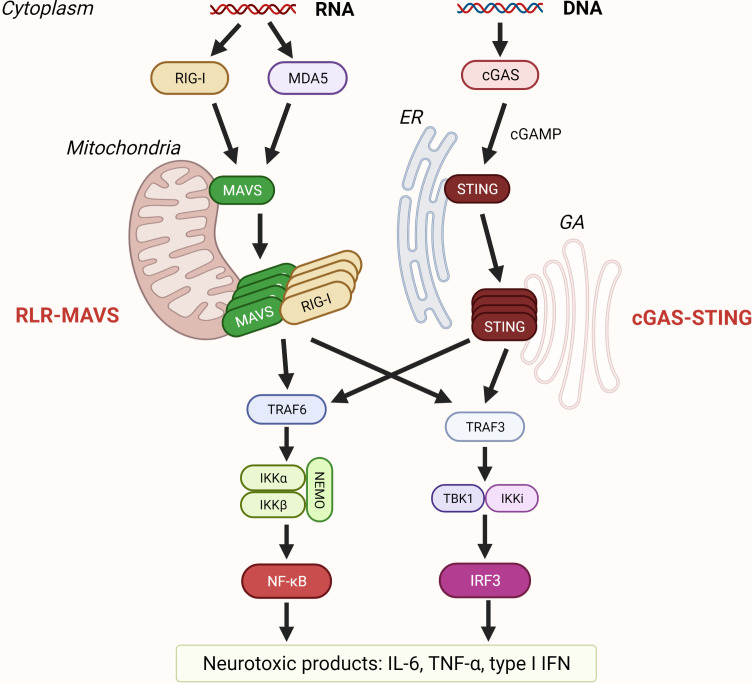
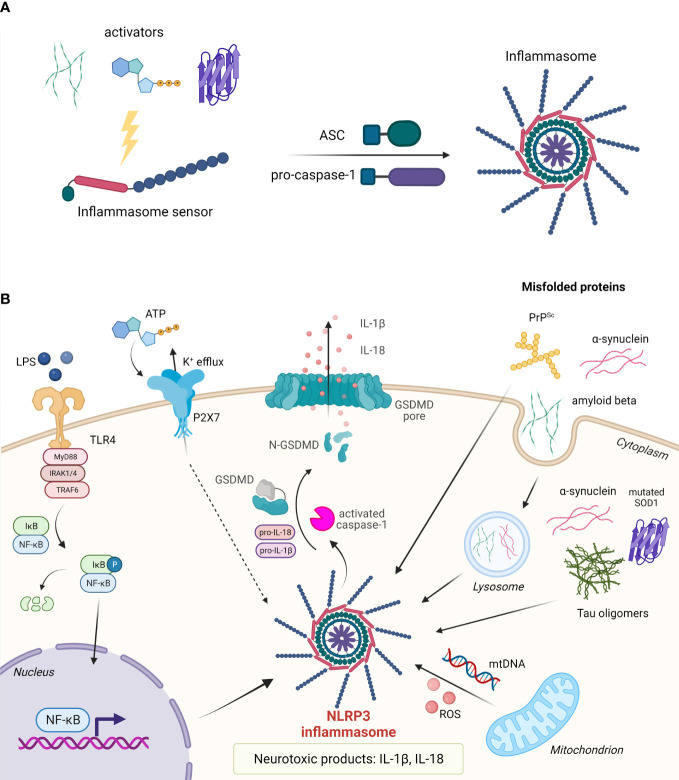
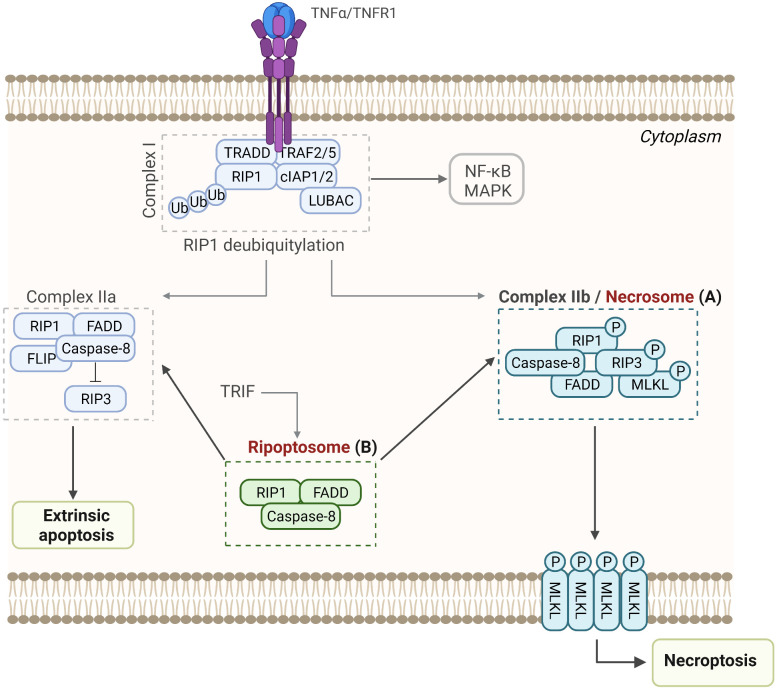
The pathogenesis of neurodegenerative diseases involves the accumulation of misfolded protein aggregates. These deposits are both directly toxic to neurons, invoking loss of cell connectivity and cell death, and recognized by innate sensors that upon activation release neurotoxic cytokines, chemokines, and various reactive species. This neuroinflammation is propagated through signaling cascades where activated sensors/receptors, adaptors, and effectors associate into multiprotein complexes known as supramolecular organizing centers (SMOCs). This review provides a comprehensive overview of the SMOCs, involved in neuroinflammation and neurotoxicity, such as myddosomes, inflammasomes, and necrosomes, their assembly, and evidence for their involvement in common neurodegenerative diseases. We discuss the multifaceted role of neuroinflammation in the progression of neurodegeneration. Recent progress in the understanding of particular SMOC participation in common neurodegenerative diseases such as Alzheimer's disease offers novel therapeutic strategies for currently absent disease-modifying treatments.
神经退行性疾病的发病机制涉及错误折叠的蛋白质聚集体的积累。这些沉积物直接对神经元有毒,导致细胞连接丧失和细胞死亡,并被先天传感器识别,这些传感器在被激活后会释放神经毒性细胞因子、趋化因子和各种活性物质。这种神经炎症通过信号级联传播,其中激活的传感器/受体、接头蛋白和效应物结合形成称为超分子组织中心 (SMOC) 的多蛋白复合物。这篇综述全面概述了参与神经炎症和神经毒性的 SMOC,如 MyD88 衔接子相关激酶 (Myddosome)、炎性小体和坏死小体,以及它们的组装,以及它们在常见神经退行性疾病中的作用的证据。我们讨论了神经炎症在神经退行性变进展中的多方面作用。目前对特定 SMOC 在阿尔茨海默病等常见神经退行性疾病中的参与的理解取得了进展,为目前缺乏的疾病修饰治疗提供了新的治疗策略。