Department of Psychology, Institute of Clinical Psychology and Psychotherapy, University of Cologne, Cologne, Germany.
PLoS One. 2022 Aug 18;17(8):e0271717. doi: 10.1371/journal.pone.0271717. eCollection 2022.
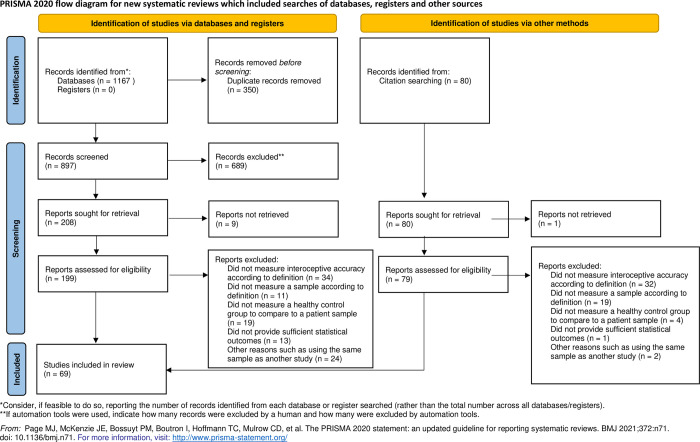
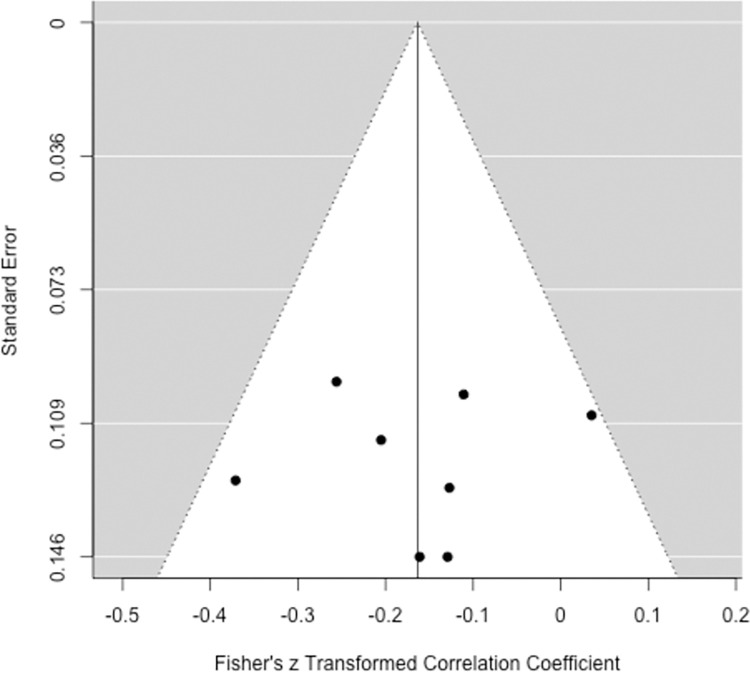
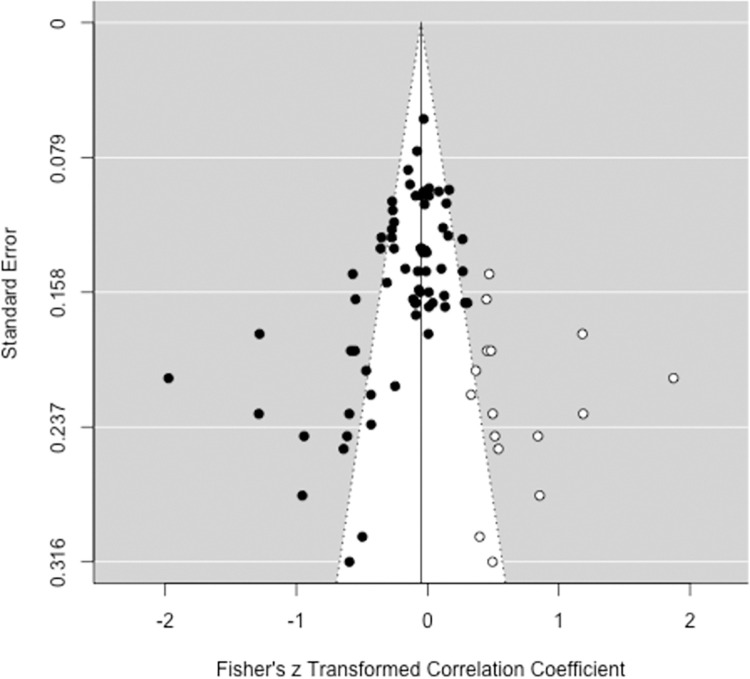
Somatic symptom disorder, illness anxiety disorder, and functional syndromes are characterized by burdensome preoccupation with somatic symptoms. Etiological models propose either increased interoceptive accuracy through hypervigilance to the body, or decreased and biased interoception through top-down predictions about sensory events. This systematic review and meta-analysis summarizes findings of 68 studies examining interoceptive accuracy and 8 studies examining response biases in clinical or non-clinical groups. Analyses yielded a medium population effect size for decreased interoceptive accuracy in functional syndromes, but no observable effect in somatic symptom disorder and illness anxiety disorder. The overall effect size was highly heterogeneous. Regarding response bias, there was a small significant effect in somatic symptom disorder and illness anxiety disorder. Our findings strengthen the notion of top-down factors that result in biased rather than accurate perception of body signals in somatic symptom disorder and illness anxiety disorder.
躯体症状障碍、疾病焦虑障碍和功能性躯体症状障碍的特征是过度关注躯体症状。病因学模型提出,通过对身体的过度警觉,增加内感受准确性,或者通过对感觉事件的自上而下的预测,降低和偏向内感受。本系统评价和荟萃分析总结了 68 项研究中内感受准确性和 8 项研究中临床或非临床组中反应偏差的发现。分析结果显示,功能性躯体症状障碍患者的内感受准确性降低,具有中等人群效应大小,但躯体症状障碍和疾病焦虑障碍则无明显影响。整体效应大小高度异质。关于反应偏差,躯体症状障碍和疾病焦虑障碍中存在较小的显著影响。我们的研究结果加强了这样一种观点,即躯体症状障碍和疾病焦虑障碍中,自上而下的因素导致对身体信号的感知产生偏差,而不是准确。