Department of Psychology, University of Kentucky, Lexington, KY 40536, United States.
Department of Pharmaceutical Sciences, University of Kentucky, Lexington, KY 40536, United States.
Alcohol. 2022 Nov;104:13-21. doi: 10.1016/j.alcohol.2022.07.008. Epub 2022 Aug 15.
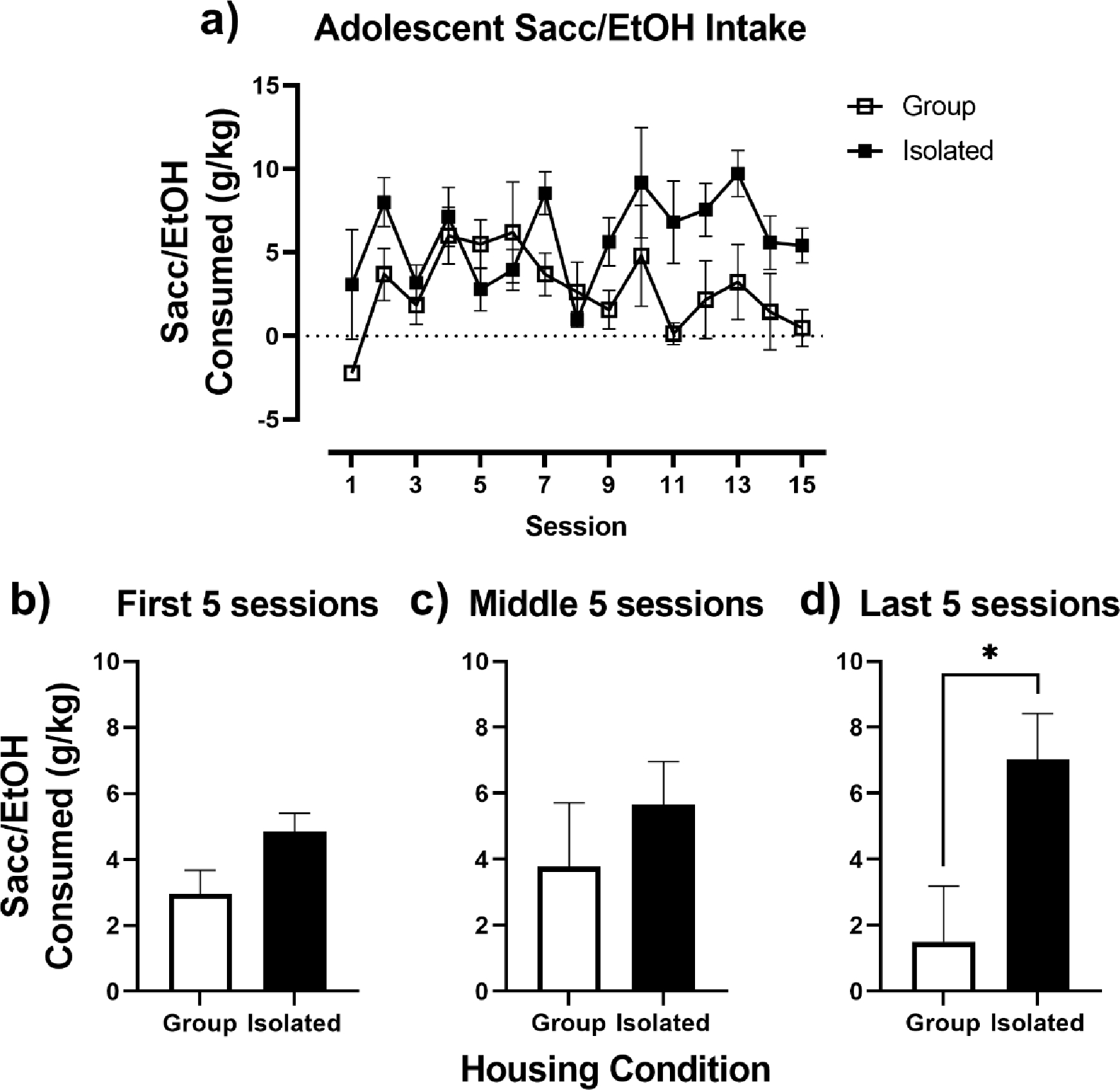
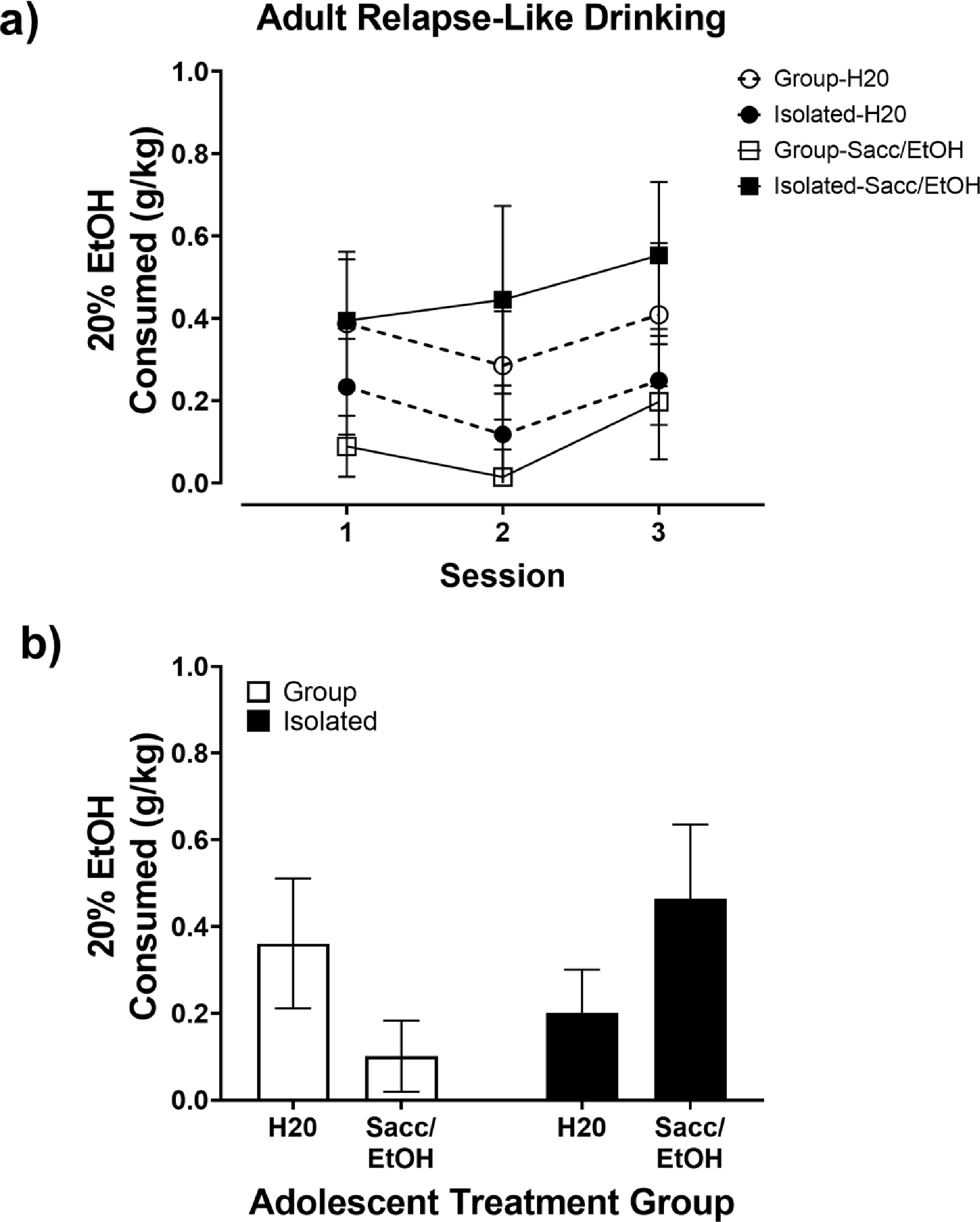
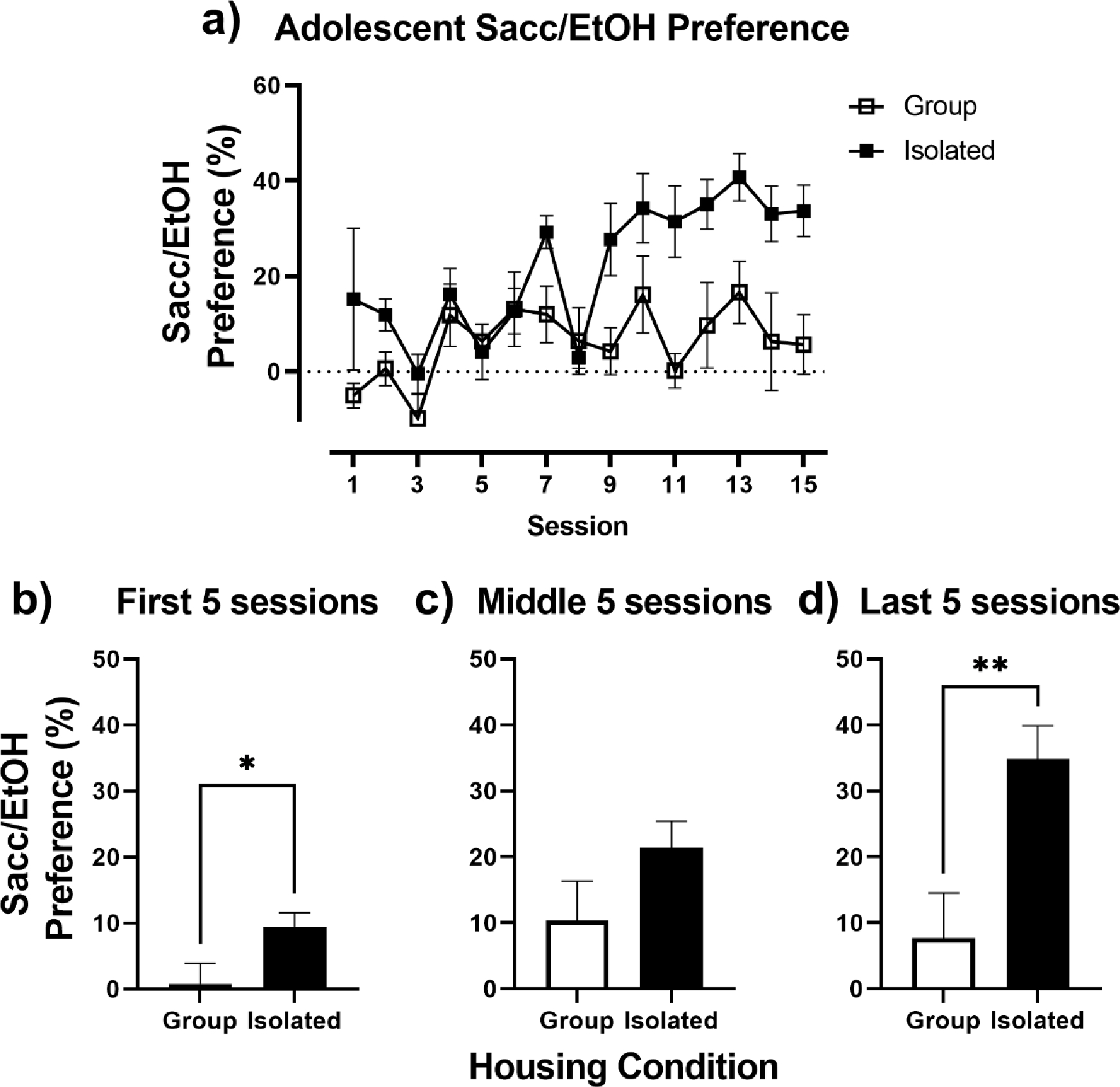
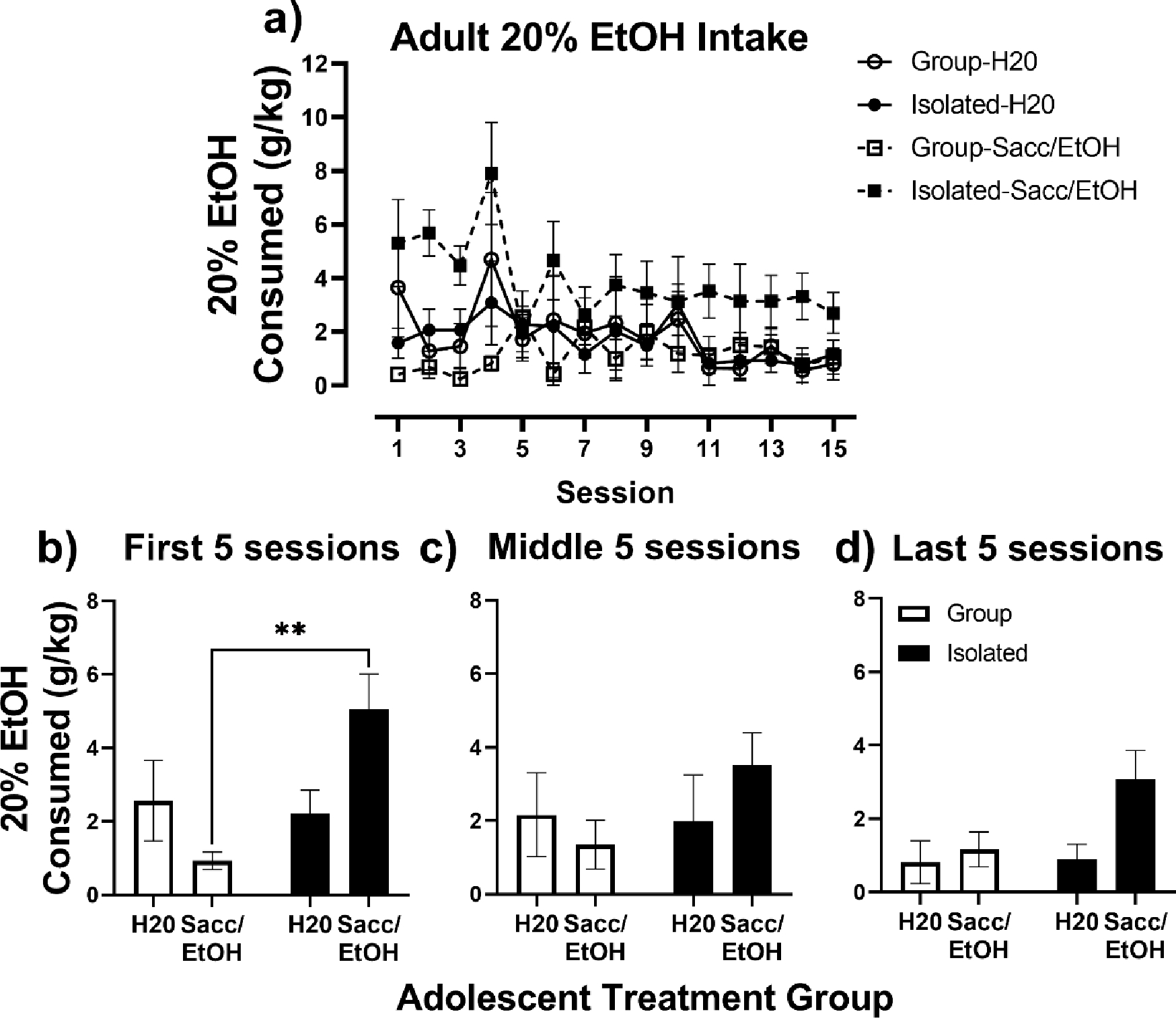
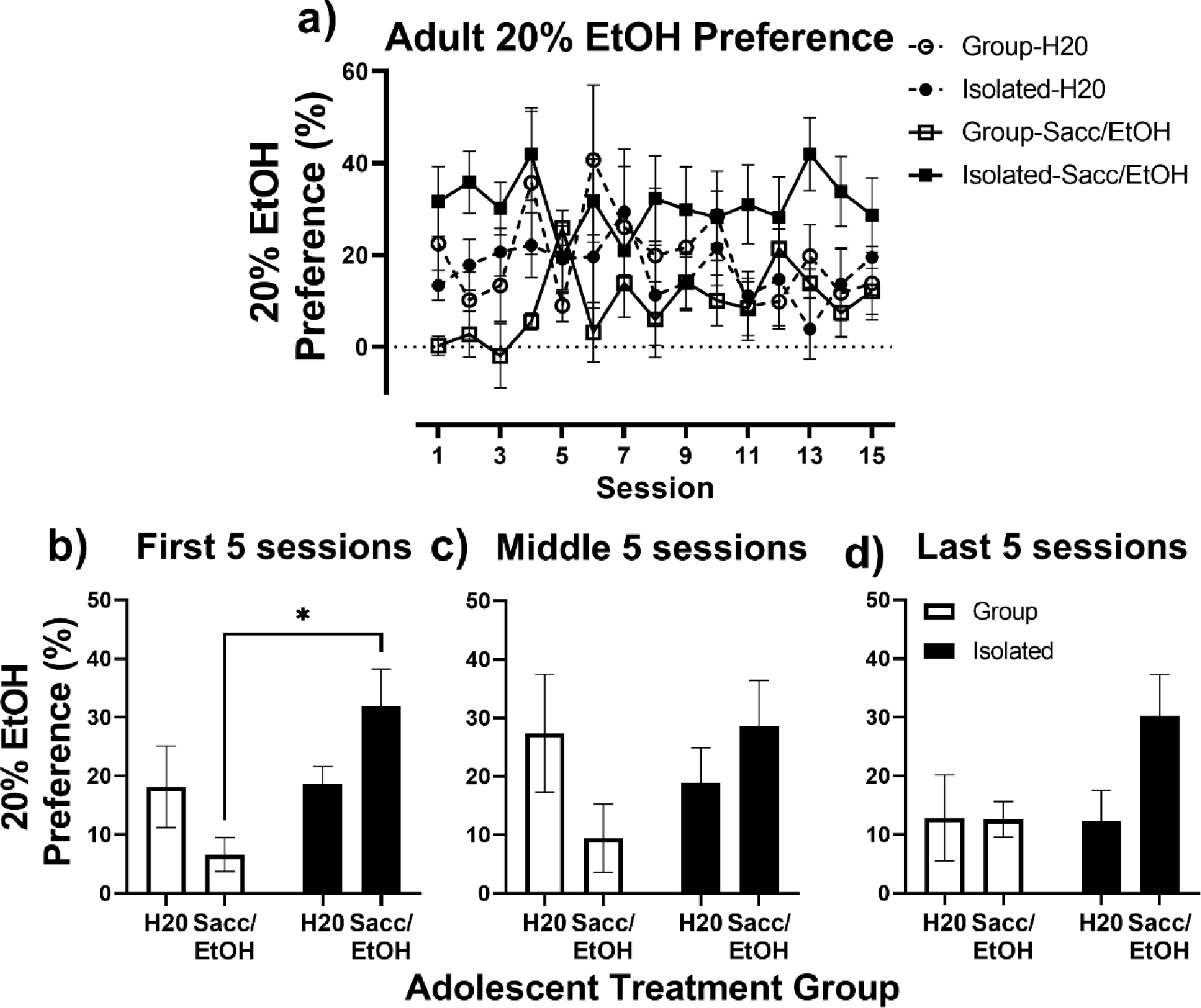
Initiating alcohol use in adolescence significantly increases the likelihood of developing adult alcohol use disorder (AUD). However, it has been difficult to replicate adolescent alcohol exposure leading to increased adult alcohol intake across differing preclinical models. In the present study, differentially housed male rats (group vs. single cages) were used to determine the effects of voluntary intermittent exposure of saccharin-sweetened ethanol during adolescence on adult intake of unsweetened 20% ethanol. Adolescent male rats were assigned to group- or isolated-housing conditions and underwent an intermittent 2-bottle choice in adolescence (water only or water vs. 0.2% saccharin/20% ethanol), and again in adulthood (water vs. 20% ethanol). Intermittent 2-bottle choice sessions lasted for 24 h, and occurred three days per week, for five weeks. Rats were moved from group or isolated housing to single-housing cages for 2-bottle choice tests and returned to their original housing condition on off days. During adolescence, rats raised in isolated-housing conditions consumed significantly more sweetened ethanol than rats raised in group-housing conditions, an effect that was enhanced across repeated exposures. In adulthood, rats raised in isolated-housing conditions and exposed to sweetened ethanol during adolescence also consumed significantly higher levels of unsweetened 20% ethanol compared to group-housed rats. The effect was most pronounced over the first five re-exposure sessions. Housing conditions alone had little effect on adult ethanol intake. These preclinical results suggest that social isolation stress, combined with adolescent ethanol exposure, may play a key role in adult AUD risk.
在青春期开始饮酒会显著增加成年后酗酒的可能性。然而,很难复制在不同的临床前模型中,青少年饮酒导致成年后饮酒量增加的情况。在本研究中,采用不同饲养方式的雄性大鼠(群居组与独居组)来确定青春期时自愿间歇性摄入含糖乙醇对成年后摄入无糖 20%乙醇的影响。青春期雄性大鼠被分配到群居或独居饲养条件下,并在青春期进行间歇性 2 瓶选择(仅水或水与 0.2% 蔗糖/20%乙醇),成年后再次进行(仅水与 20%乙醇)。间歇性 2 瓶选择试验持续 24 小时,每周进行 3 天。大鼠在进行 2 瓶选择测试时从群居或独居笼转移到单笼中,非测试日返回原饲养条件。在青春期,独居饲养条件下的大鼠比群居饲养条件下的大鼠摄入的含糖乙醇明显更多,这种效应在反复暴露时增强。在成年期,在青春期暴露于含糖乙醇的独居饲养条件下的大鼠也比群居饲养的大鼠摄入更多的无糖 20%乙醇。这种影响在最初的五次再暴露试验中最为明显。单独的饲养条件对成年乙醇摄入量影响很小。这些临床前结果表明,社会隔离应激与青少年乙醇暴露相结合,可能在成年酗酒障碍的风险中发挥关键作用。