Division of Nematology, ICAR-Indian Agricultural Research Institute, New Delhi, 110012, India.
Division of Agricultural Chemicals, ICAR-Indian Agricultural Research Institute, New Delhi, 110012, India.
BMC Genomics. 2022 Aug 18;23(1):601. doi: 10.1186/s12864-022-08843-8.
Due to the prolonged usage of Bt-based biopesticides and Bt-transgenic crops worldwide, insects are continually developing resistance against Cry toxins. This resistance may occur if any mechanistic step in the insecticidal process is disrupted possibly because of the alteration in Cry-receptor binding affinity due to mutation in receptor genes. Compared to other lepidopteran insects, Cry receptor-related research has made asymmetric progress in the model insect Galleria mellonella.
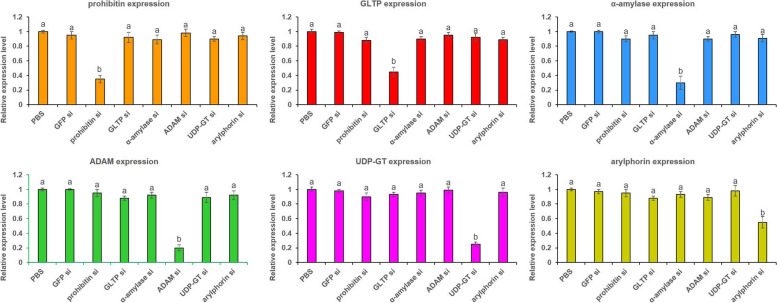
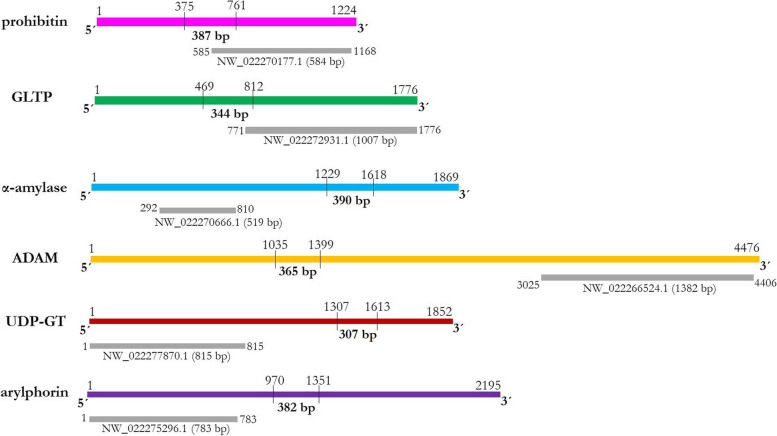
Present study describes the molecular characterization and functional analysis of five Cry toxin receptor-related genes (prohibitin, GLTP, α-amylase, ADAM and UDP-GT) and a gut repair gene (arylphorin) from the gut tissues of G. mellonella. Protein-protein docking analysis revealed that Cry1AcF putatively binds with all the five candidate proteins, suggesting their receptor-like function. These receptor-like genes were significantly overexpressed in the gut tissues of fourth-instar G. mellonella larvae upon early exposure to a sub-lethal dose of Cry1AcF toxin. However, targeted knockdown (by using bacterially-expressed dsRNAs) of these genes led to variable effect on insect susceptibility to Cry1AcF toxin. Insects pre-treated with prohibitin and α-amylase dsRNA exhibited significant reduction in Cry1AcF-induced mortality, suggesting their probable role as Cry receptor. By contrast, insects pre-treated with GLTP, ADAM and UDP-GT dsRNA exhibited no significant decline in mortality. This maybe explained by the possibility of RNAi feedback regulation (as few of the receptors belong to multigene family) or redundant role of GLTP, ADAM and UDP-GT in Cry intoxication process.
Since the laboratory culture of G. mellonella develop Bt resistance quite rapidly, findings of the current investigation may provide some useful information for future Cry receptor-related research in the model insect.
由于全球范围内长期使用 Bt 生物农药和 Bt 转基因作物,昆虫不断对 Cry 毒素产生抗性。如果杀虫过程中的任何机械步骤被打乱,就有可能发生这种抗性,这可能是由于受体基因的突变导致 Cry 受体结合亲和力的改变。与其他鳞翅目昆虫相比,Cry 受体相关的研究在模式昆虫家蚕中取得了不对称的进展。
本研究描述了从家蚕肠道组织中五个 Cry 毒素受体相关基因(阻遏蛋白、GLTP、α-淀粉酶、ADAM 和 UDP-GT)和一个肠道修复基因(arylphorin)的分子特征和功能分析。蛋白-蛋白对接分析表明,Cry1AcF 可能与所有五个候选蛋白结合,表明它们具有受体样功能。这些受体样基因在家蚕四龄幼虫早期暴露于亚致死剂量的 Cry1AcF 毒素后,在肠道组织中显著过表达。然而,这些基因的靶向敲低(通过表达细菌 dsRNA)导致昆虫对 Cry1AcF 毒素的敏感性发生不同程度的变化。用阻遏蛋白和α-淀粉酶 dsRNA 预处理的昆虫,Cry1AcF 诱导的死亡率显著降低,表明它们可能作为 Cry 受体发挥作用。相比之下,用 GLTP、ADAM 和 UDP-GT dsRNA 预处理的昆虫死亡率没有显著下降。这也许可以解释为 RNAi 反馈调节的可能性(因为一些受体属于多基因家族),或者 GLTP、ADAM 和 UDP-GT 在 Cry 中毒过程中具有冗余作用。
由于家蚕的实验室培养对 Bt 产生抗性的速度相当快,本研究的结果可能为模型昆虫未来的 Cry 受体相关研究提供一些有用的信息。