School of Pharmaceutical Sciences, Guangzhou University of Chinese Medicine, Guangzhou, 510006, China.
School of Pharmacy, Sun Yat-sen University, Guangzhou, 510006, China.
BMC Genomics. 2022 Aug 19;23(1):605. doi: 10.1186/s12864-022-08817-w.
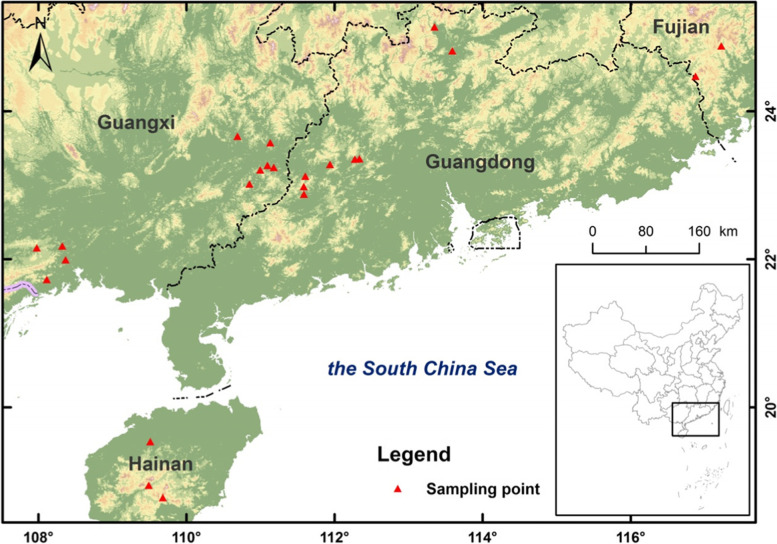
Morinda officinalis How (MO) is a perennial herb distributed in tropical and subtropical regions, which known as one of the "Four Southern Herbal Medicines". The extent of genetic variability and the population structure of MO are presently little understood. Here, nine morphological traits, six chemical components and Single nucleotide polymorphism (SNP) markers were used in integrative research of MO germplasm variation among 88 individuals collected from ten populations across four geographical provinces of China.
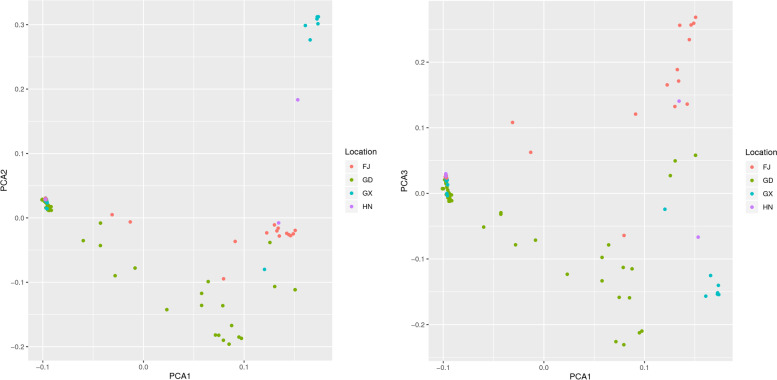
Both phenotype and chemical composition have significant genetic variation, and there is a certain correlation between them such as root diameter and the nystose content, as well as geographical distribution. The principal component analysis (PCA) showed the leaf length, leaf width, nystose, 1-furanosaccharide nystose, and the section color were the major contributors to diversity. The cluster analysis based on phenotypic and oligosaccharide data distinguished three significant groups, which was consistent with the result of a corresponding analysis with 228,615 SNP markers, and importantly, they all showed a significant correlation with geographical origin. However, there was little similarity between two cluster results. The Shannon's information index (I) varied from 0.17 to 0.53 with a mean of 0.37, suggesting a high level of genetic diversity in MO populations, which mainly existed among individuals within populations, accounting for 99.66% of the total according to the analysis of molecular variance (AMOVA) results. Each population also maintains the connection because of certain gene communication, so that the genetic differentiation between populations was not very significant. The STRUCTURE software was used to analyse the population structure and the result showed that 88 accessions were clustered into three groups, and 67% of them were pure type, which was also confirmed through PCA.
The comprehensive study of phenotypic, chemical and molecular markers will provide valuable information for future breeding plans and understanding the phylogenetic relationship of MO population.
巴戟天是一种分布在热带和亚热带地区的多年生草本植物,被称为“四大南药”之一。目前,人们对巴戟天的遗传变异程度和种群结构知之甚少。本研究综合运用 9 个性状、6 种化学成分和单核苷酸多态性(SNP)标记,对中国 4 个省 10 个产地的 88 个巴戟天个体的遗传变异进行了研究。
表型和化学成分均具有显著的遗传变异,且两者之间存在一定的相关性,如根径与密二糖含量以及地理分布。主成分分析(PCA)表明,叶长、叶宽、密二糖、1-呋喃果糖密二糖和节色是多样性的主要贡献者。基于表型和寡糖数据的聚类分析将 88 个个体分为 3 个显著组,这与基于 228615 个 SNP 标记的对应分析结果一致,重要的是,它们都与地理起源显著相关。然而,这两个聚类结果之间几乎没有相似性。Shannon 信息指数(I)变化范围为 0.17 至 0.53,平均值为 0.37,表明巴戟天种群具有较高的遗传多样性,主要存在于种群内个体之间,根据 AMOVA 结果,占总遗传多样性的 99.66%。每个种群也保持着一定的基因交流,使种群间的遗传分化不明显。STRUCTURE 软件用于分析种群结构,结果表明 88 个个体聚为 3 组,其中 67%为纯合型,这也通过 PCA 得到了证实。
综合表型、化学和分子标记的研究将为未来的育种计划和理解巴戟天种群的系统发育关系提供有价值的信息。