Department of Microbial, Cellular and Molecular Biology, Addis Ababa University, P.O.Box 1176, Addis Ababa, Ethiopia.
Department of Biology, Debre Tabor University, Debre Tabor, Ethiopia.
BMC Genet. 2020 Feb 12;21(1):18. doi: 10.1186/s12863-020-0825-x.
Ethiopia has been considered as a center of diversity and the second possible center of domestication of durum wheat. Genetic diversity and population structure analysis in the existing Ethiopian durum wheat germplasm have enormous importance in enhancing breeding effort and for sustainable conservation. Hence, 192 Ethiopian durum wheat accessions comprising 167 landraces collected from major wheat-growing areas of the country and 25 improved varieties released from Debre Zeit and Sinana Agricultural Research Centers, Ethiopia in different years (1994-2010) were assembled for the current study.
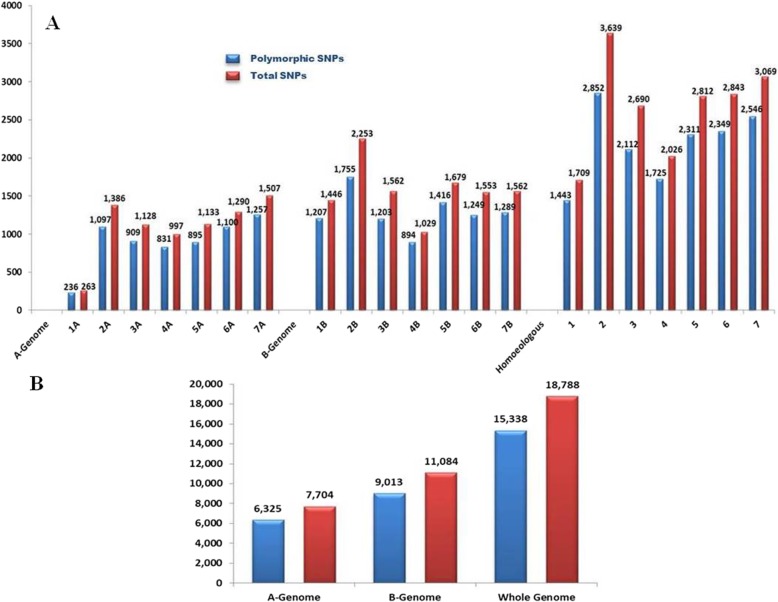
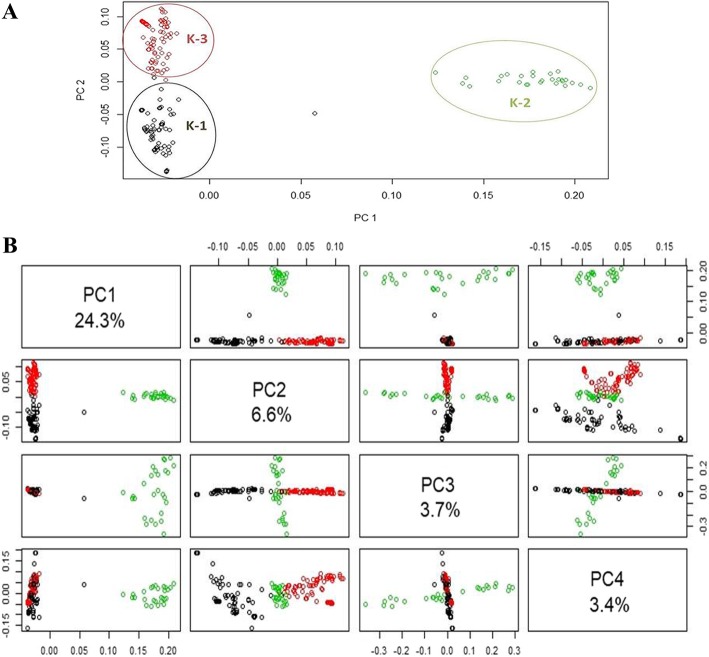
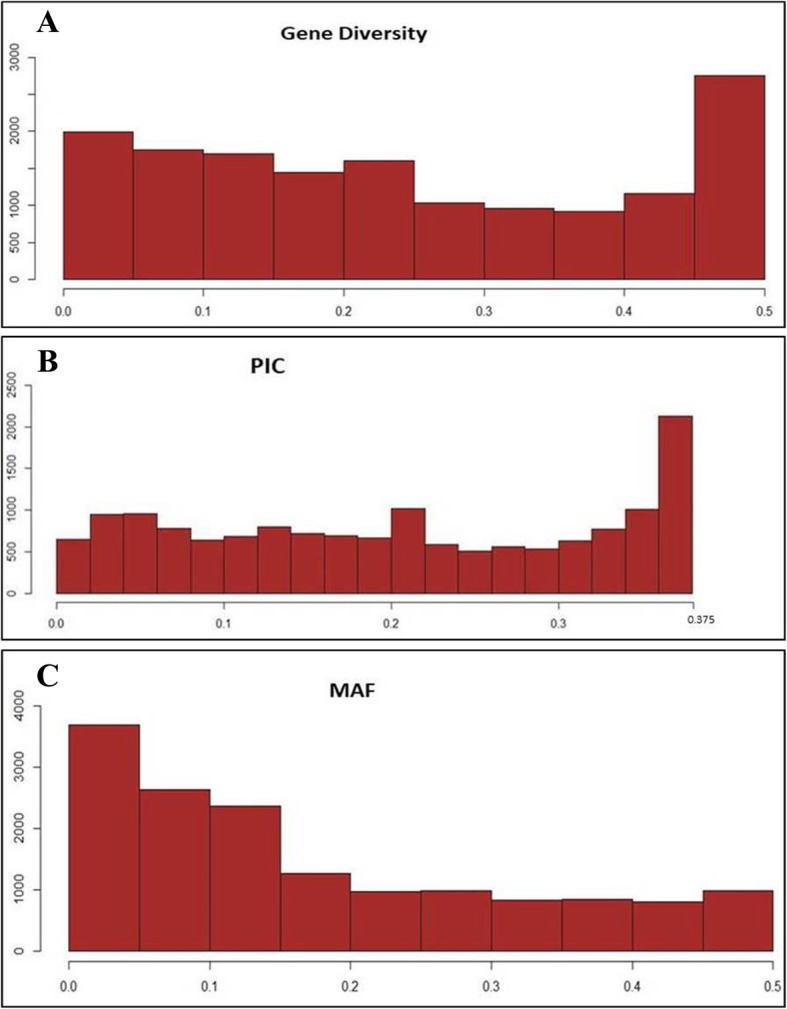
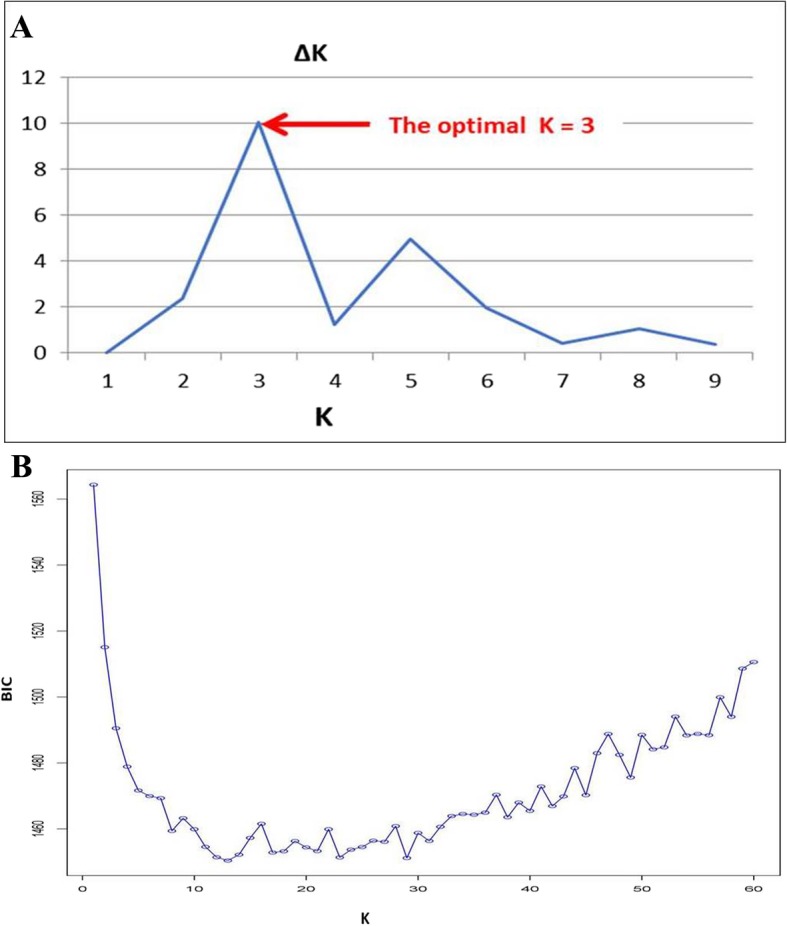
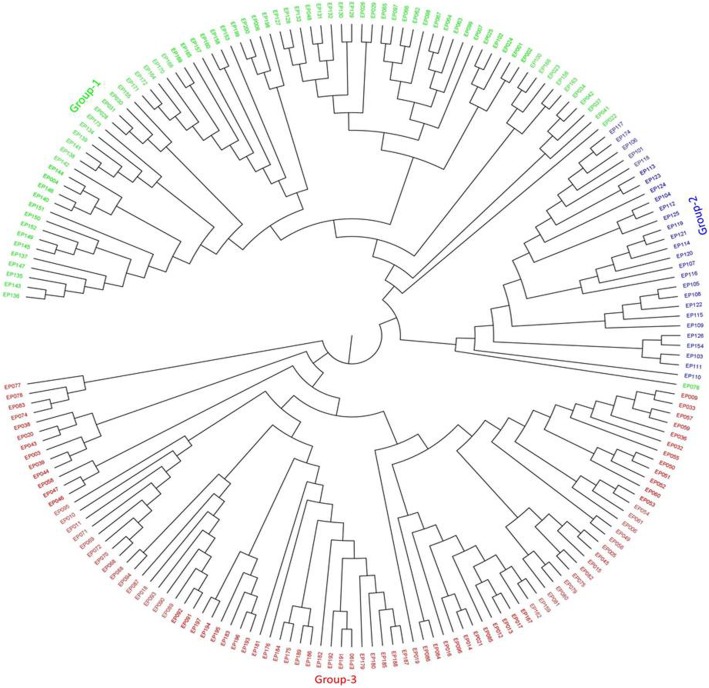
The panel was genotyped with a High-density 90 K wheat SNP array by Illumina and generated 15,338 polymorphic SNPs that were used to analyze the genetic diversity and to estimate the population structure. Varied values of genetic diversity indices were scored across chromosomes and genomes. Genome-wide mean values of Nei's gene diversity (0.246) and polymorphism information content (0.203) were recorded signifying the presence of high genetic diversity within this collection. Minor allele frequency of the genome varied with a range of 0.005 to 0.5 scoring a mean value of 0.175. Improved varieties clustered separately to landraces in population structure analysis resulted from STRUCTURE, PCA and neighbor joining tree. Landraces clustering was irrespective of their geographical origin signifying the presence of higher admixture that could arise due to the existence of historical exchanges of seeds through informal seed system involving regional and countrywide farming communities in Ethiopia.
Sustainable utilization and conservation of this rich Ethiopian durum wheat genetic resource is an irreplaceable means to cope up from the recurrent climate changes and biotic stresses happening widely and thereby able to keep meeting the demand of durum productivity for the ever-growing human population.
埃塞俄比亚被认为是多样性的中心,也是硬粒小麦可能的第二个驯化中心。对现有埃塞俄比亚硬粒小麦种质资源进行遗传多样性和群体结构分析,对于提高育种效率和可持续保护具有重要意义。因此,本研究汇集了 192 份埃塞俄比亚硬粒小麦材料,包括 167 份从该国主要小麦种植区收集的地方品种和 25 份 1994 年至 2010 年期间在德布雷策特和西纳纳农业研究中心发布的改良品种。
该小组通过 Illumina 的高密度 90K 小麦 SNP 阵列进行了基因分型,共生成了 15338 个多态性 SNP,用于分析遗传多样性并估计群体结构。染色体和基因组上的遗传多样性指数值各不相同。全基因组范围内 Nei 基因多样性(0.246)和多态性信息含量(0.203)的平均值表明该集合内存在高度遗传多样性。基因组范围内的次要等位基因频率变化范围为 0.005 至 0.5,平均值为 0.175。群体结构分析中,改良品种与地方品种聚类分离,结果来自 STRUCTURE、PCA 和邻接聚类树。地方品种聚类与地理位置无关,表明存在更高的混合,这可能是由于埃塞俄比亚地区和全国范围内的农业社区通过非正式种子系统进行种子的历史交流而导致的。
可持续利用和保护这种丰富的埃塞俄比亚硬粒小麦遗传资源是应对广泛发生的气候变化和生物胁迫的一种不可替代的手段,从而能够满足不断增长的人口对硬粒小麦生产力的需求。