Tulane University School of Medicine, New Orleans, LA, 70112, USA.
Department of Rheumatology and Immunology, Tongji Hospital, Tongji Medical College of Huazhong University of Science and Technology, 1095 Jiefang Ave, Wuhan, 430032, China.
Mil Med Res. 2022 Aug 20;9(1):45. doi: 10.1186/s40779-022-00410-2.
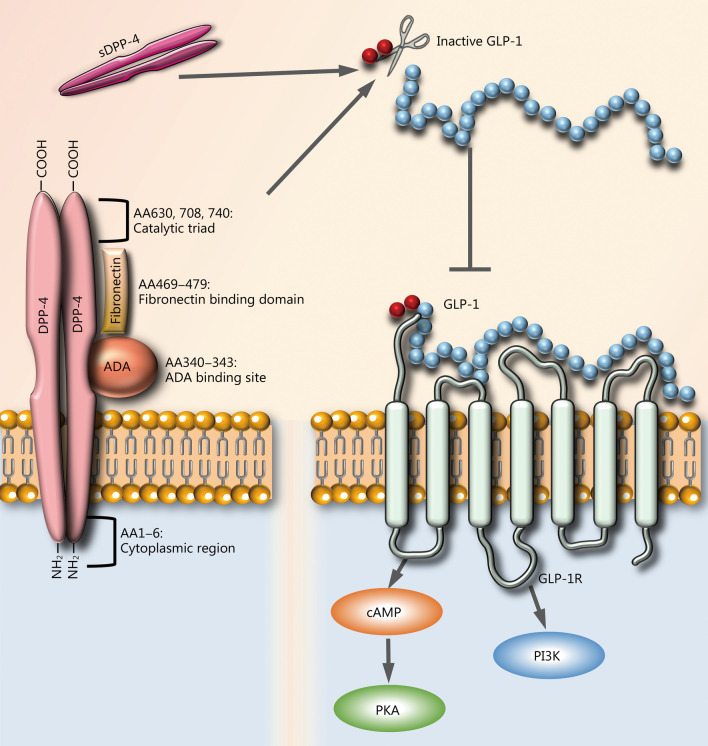
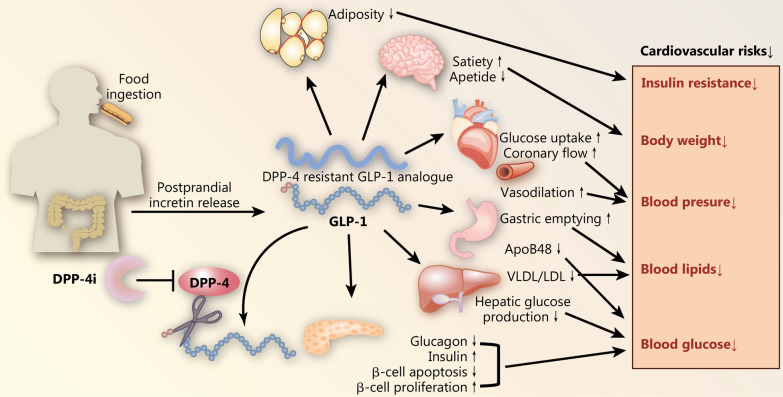
Glucagon-like peptide-1 receptor agonists and dipeptidyl peptidase-4 inhibitors are commonly used treatments for patients with type 2 diabetes mellitus (T2DM). Both anti-diabetic treatments function by playing key modulatory roles in the incretin system. Though these drugs have been deemed effective in treating T2DM, the Food and Drug Administration (FDA) and some members of the scientific community have questioned the safety of these therapeutics relative to important cardiovascular endpoints. As a result, since 2008, the FDA has required all new drugs for glycemic control in T2DM patients to demonstrate cardiovascular safety. The present review article strives to assess the safety and benefits of incretin-based therapy, a new class of antidiabetic drug, on the health of patient cardiovascular systems. In the process, this review will also provide a physiological overview of the incretin system and how key components function in T2DM.
胰高血糖素样肽-1 受体激动剂和二肽基肽酶-4 抑制剂是治疗 2 型糖尿病(T2DM)患者的常用方法。这两种抗糖尿病治疗方法都通过在肠促胰岛素系统中发挥关键调节作用来发挥作用。尽管这些药物已被证明对 T2DM 有效,但食品和药物管理局(FDA)和一些科学界成员对这些治疗方法相对于重要心血管终点的安全性提出了质疑。因此,自 2008 年以来,FDA 已要求所有用于治疗 T2DM 患者血糖控制的新药都要证明其具有心血管安全性。本文综述旨在评估基于肠促胰岛素的治疗方法(一种新型抗糖尿病药物)对患者心血管系统健康的安全性和益处。在这个过程中,本综述还将提供肠促胰岛素系统的生理学概述,以及关键成分在 T2DM 中的作用。