College of Veterinary Medicine, Northeast Agricultural University, Harbin, 150030, People's Republic of China.
Heilongjiang Key Laboratory for Laboratory Animals and Comparative Medicine, Harbin, People's Republic of China.
Stem Cell Res Ther. 2022 Aug 20;13(1):427. doi: 10.1186/s13287-022-03109-2.
The therapeutic effects of adipose-derived mesenchymal stromal cells (ADSCs) may be mainly mediated by their paracrine effects. The ADSC-secretome can ameliorate hepatic ischemia-reperfusion injury (IRI). We explored the therapeutic effect of the ADSC-secretome from the perspective of excessive hepatocyte autophagy induced by hepatic IRI.
We established a miniature pig model of hepatic ischemia-reperfusion (I/R) and hepatectomy using a laparoscopic technique and transplanted ADSCs and the ADSC-secretome into the liver parenchyma immediately after surgery. Liver injury and hepatocyte autophagy were evaluated by histopathological examination and assessment of relevant cytokines and other factors.
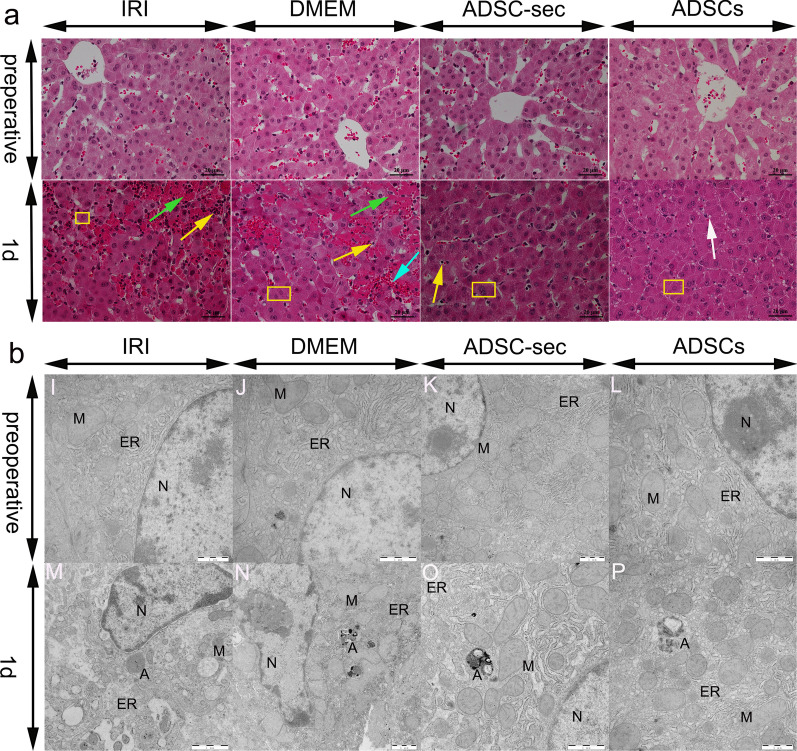
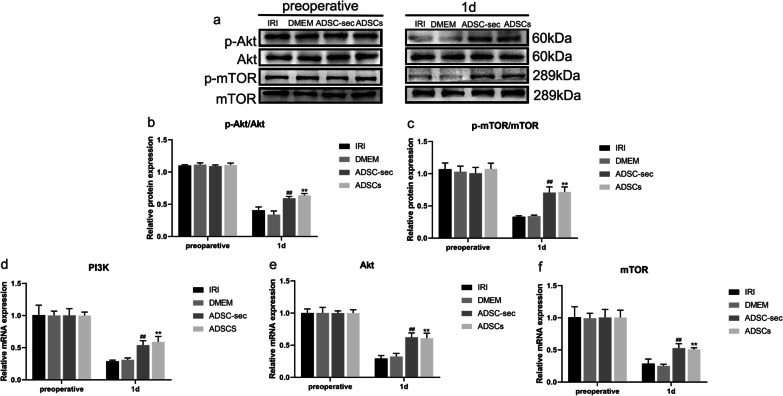
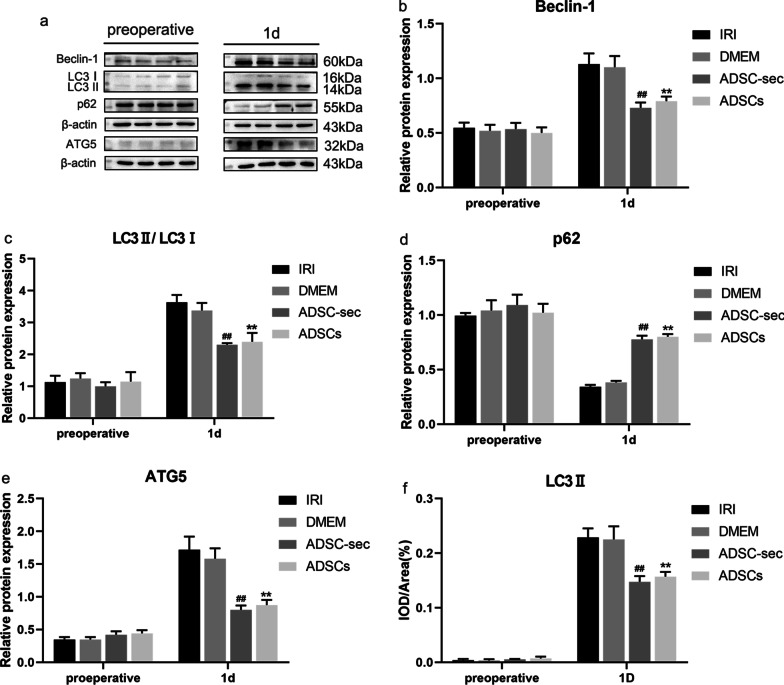
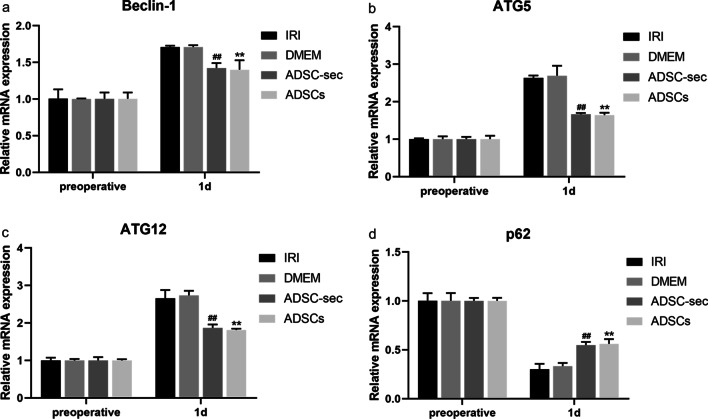
The results showed that the ADSC-secretome alleviated the pathological changes of liver tissue and the microstructural damage of hepatocytes after IRI. Moreover, the expression levels of autophagy-related markers including Beclin-1, ATG5, ATG12, and LC3II/LC3I decreased, whereas those of p62 increased during phagophore expansion. Furthermore, the expression levels of markers related to the autophagy inhibition pathway phosphatidylinositol-3-kinase/Akt/mammalian target of rapamycin (PI3K/Akt/mTOR), including PI3K, Akt, and mTOR, increased.
The ADSC-secretome attenuates hepatic I/R and hepatectomy-induced liver damage by inhibiting autophagy, which is possibly mediated by activation of the PI3K/Akt/mTOR signaling pathway. In addition, there was no significant difference between ADSCs and the ADSC-secretome in the regulation of hepatocyte autophagy. Therefore, ADSCs may improve the excessive autophagy-induced injury of hepatocytes in hepatic I/R and hepatectomy through paracrine effect. Our findings provide new insight into the therapeutic potential of cell-free products, which could replace cell therapy in liver diseases.
脂肪间充质基质细胞(ADSCs)的治疗效果可能主要通过其旁分泌作用介导。ADSC 分泌组可以改善肝缺血再灌注损伤(IRI)。我们从肝 IRI 引起的肝细胞过度自噬的角度探讨了 ADSC 分泌组的治疗作用。
我们使用腹腔镜技术建立了小型猪肝缺血再灌注(I/R)和肝切除术模型,并在手术后立即将 ADSC 和 ADSC 分泌组移植到肝实质中。通过组织病理学检查和评估相关细胞因子等因素来评估肝损伤和肝细胞自噬。
结果表明,ADSC 分泌组减轻了 IRI 后肝组织的病理变化和肝细胞的微观结构损伤。此外,自噬相关标志物包括 Beclin-1、ATG5、ATG12 和 LC3II/LC3I 的表达水平降低,而噬泡扩张时 p62 的表达水平升高。此外,PI3K/Akt/mTOR 信号通路相关的自噬抑制途径标志物,包括 PI3K、Akt 和 mTOR 的表达水平增加。
ADSC 分泌组通过抑制自噬减轻肝 I/R 和肝切除引起的肝损伤,这可能是通过激活 PI3K/Akt/mTOR 信号通路介导的。此外,ADSCs 和 ADSC 分泌组在调节肝细胞自噬方面没有显著差异。因此,ADSCs 可能通过旁分泌作用改善肝 I/R 和肝切除引起的肝细胞过度自噬损伤。我们的研究结果为无细胞产物的治疗潜力提供了新的见解,这可能取代肝疾病的细胞治疗。