Department of Biology, Indiana University, Bloomington, Indiana, USA.
Institute for Agriculture and Natural Resources, University of Nebraska-Lincoln, Lincoln, Nebraska, USA.
J Evol Biol. 2022 Oct;35(10):1319-1334. doi: 10.1111/jeb.14079. Epub 2022 Aug 21.
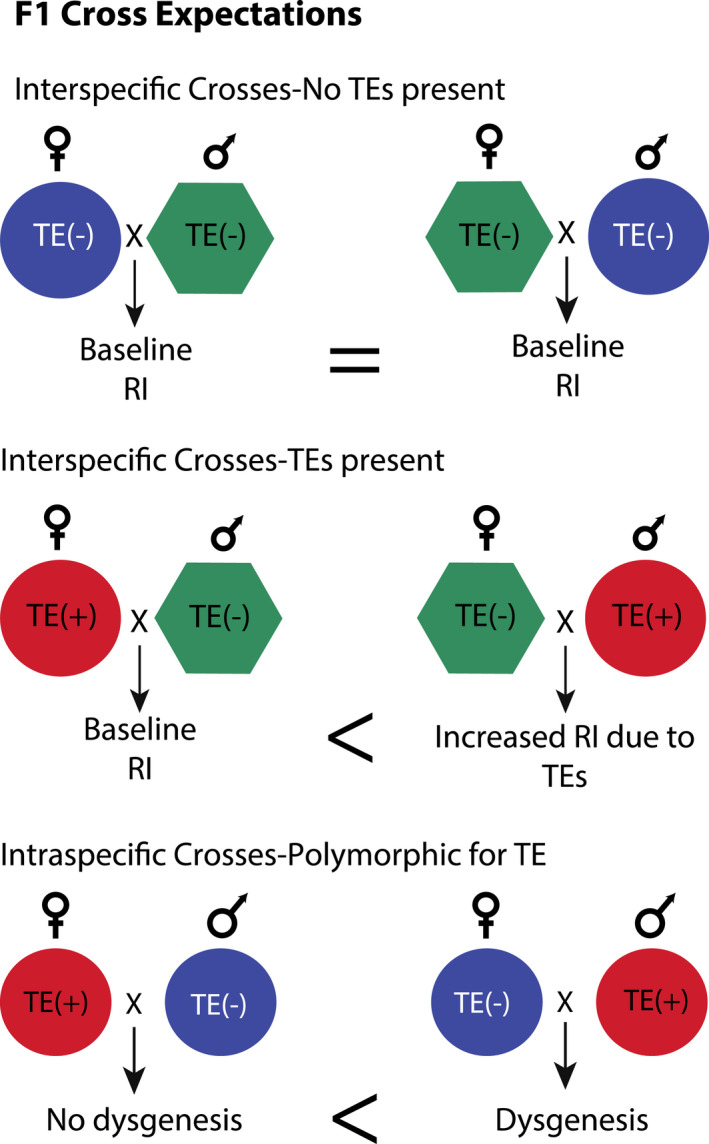
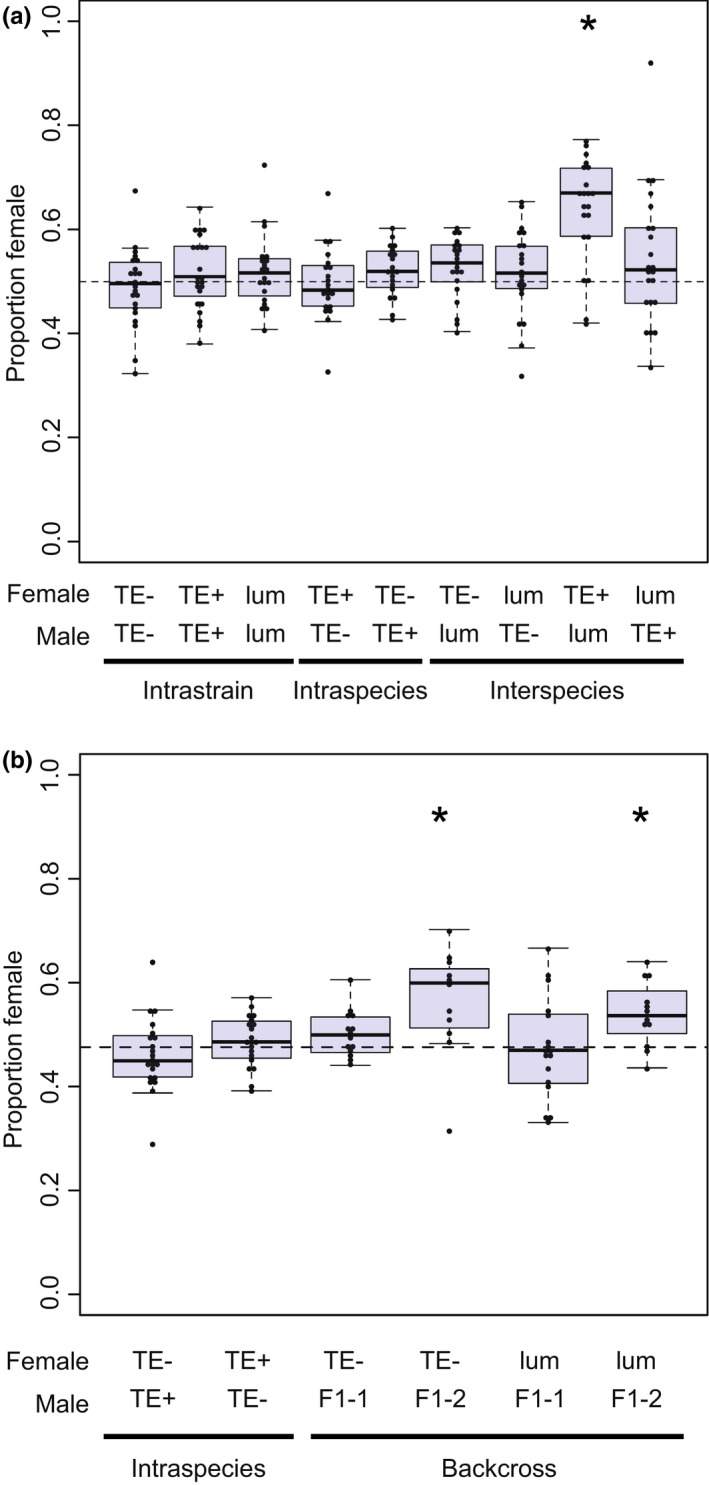
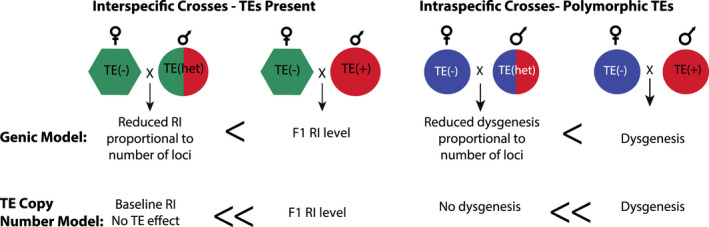
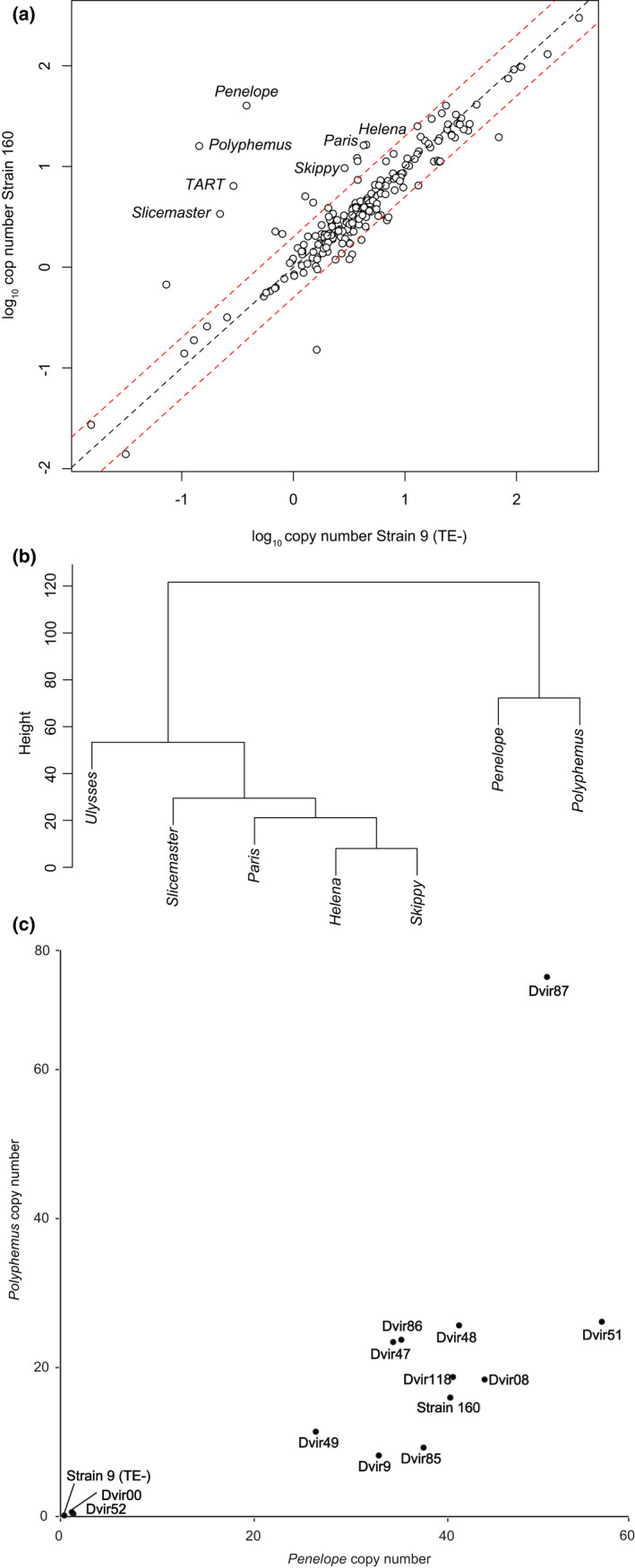
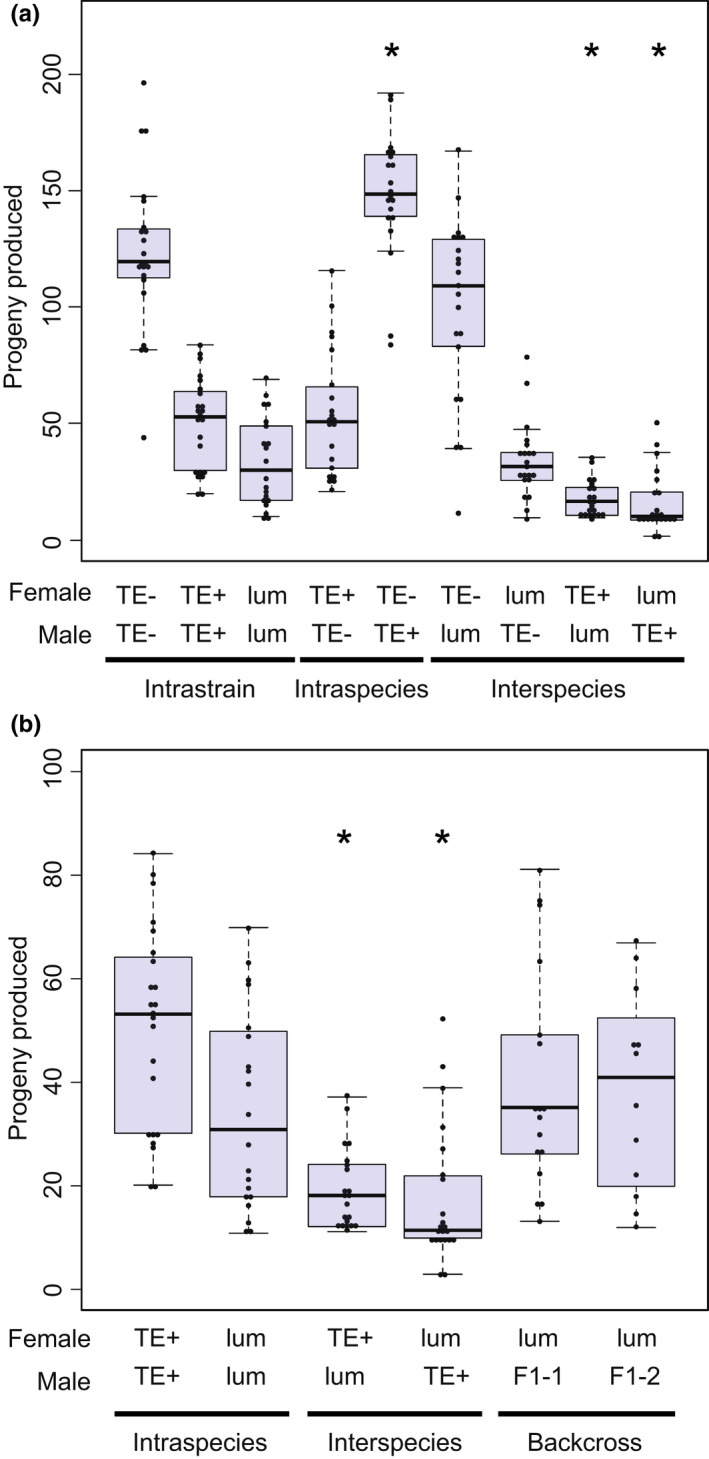
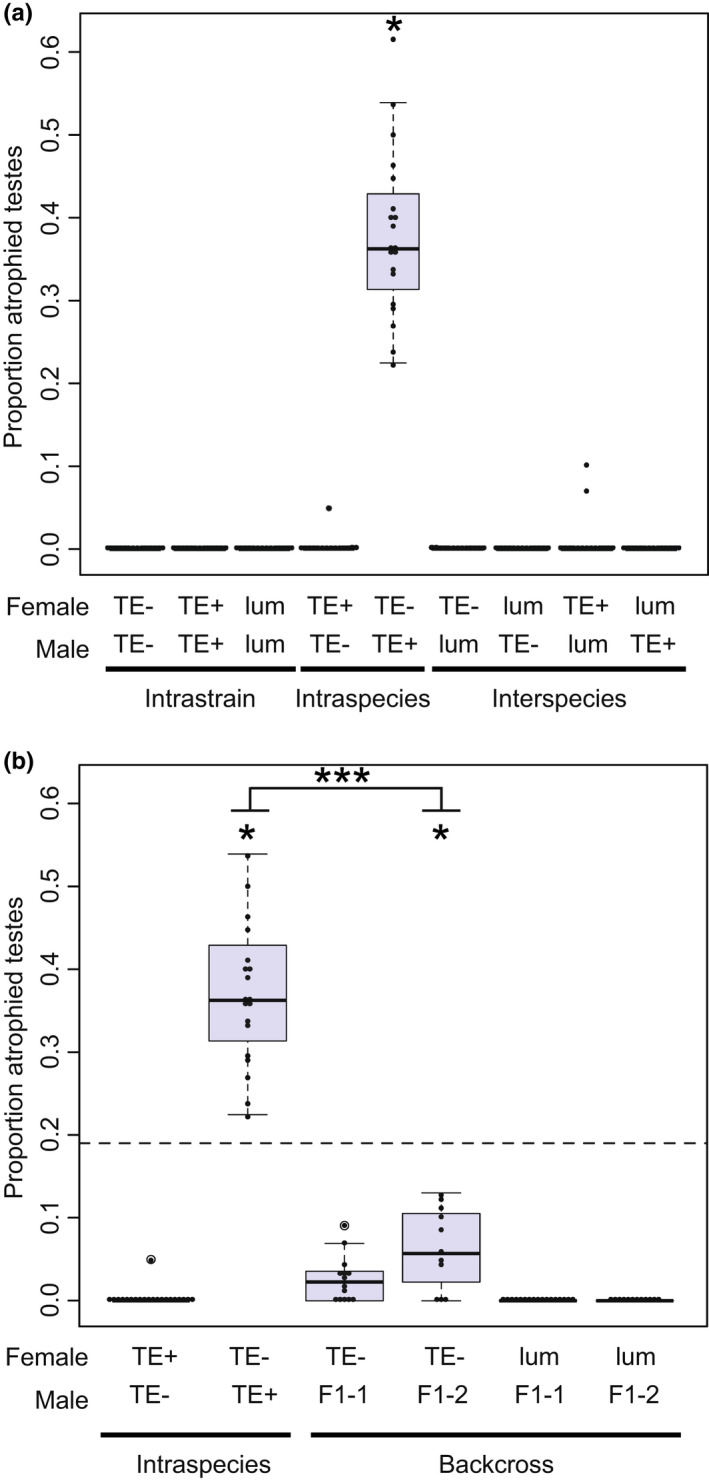
Mismatches between parental genomes in selfish elements are frequently hypothesized to underlie hybrid dysfunction and drive speciation. However, because the genetic basis of most hybrid incompatibilities is unknown, testing the contribution of selfish elements to reproductive isolation is difficult. Here, we evaluated the role of transposable elements (TEs) in hybrid incompatibilities between Drosophila virilis and D. lummei by experimentally comparing hybrid incompatibility in a cross where active TEs are present in D. virilis (TE+) and absent in D. lummei, to a cross where these TEs are absent from both D. virilis (TE-) and D. lummei genotypes. Using genomic data, we confirmed copy number differences in TEs between the D. virilis (TE+) strain and both the D. virilis (TE-) strain and D. lummei. We observed F1 postzygotic reproductive isolation exclusively in the interspecific cross involving TE+ D. virilis but not in crosses involving TE- D. virilis. This mirrors intraspecies dysgenesis where atrophied testes only occur when TE+ D. virilis is the paternal parent. A series of backcross experiments, that accounted for alternative models of hybrid incompatibility, showed that both F1 hybrid incompatibility and intrastrain dysgenesis are consistent with the action of TEs rather than genic interactions. Thus, our data suggest that this TE mechanism manifests as two different incompatibility phenotypes. A further Y-autosome interaction contributes to additional, sex-specific, inviability in one direction of this cross-combination. These experiments demonstrate that TEs that cause intraspecies dysgenesis can increase reproductive isolation between closely related lineages, thereby adding to the processes that consolidate speciation.
亲本体基因组之间的不匹配经常被假设为杂种功能障碍的基础,并推动物种形成。然而,由于大多数杂种不兼容性的遗传基础尚不清楚,因此测试自私元件对生殖隔离的贡献是困难的。在这里,我们通过实验比较了在存在活跃转座元件(TEs)的 D. virilis(TE+)和不存在 TEs 的 D. lummei 之间的杂交中,以及在 D. virilis(TE-)和 D. lummei 基因型中都不存在这些 TEs 的杂交中,杂种不兼容性,评估了转座元件(TEs)在 D. virilis 和 D. lummei 之间的杂种不兼容性中的作用。使用基因组数据,我们证实了 D. virilis(TE+)菌株与 D. virilis(TE-)菌株和 D. lummei 之间 TEs 的拷贝数差异。我们观察到,只有在涉及 TE+ D. virilis 的种间杂交中才会出现 F1 合子后生殖隔离,而在涉及 TE- D. virilis 的杂交中则不会出现。这与种内败育现象相吻合,只有当 TE+ D. virilis 是父本时,才会出现萎缩的睾丸。一系列回交实验,考虑了杂种不兼容性的替代模型,表明 F1 杂种不兼容性和种内败育都与 TEs 的作用一致,而不是与基因相互作用一致。因此,我们的数据表明,这种 TE 机制表现为两种不同的不兼容性表型。进一步的 Y-常染色体相互作用导致了这个杂交组合的一个方向的额外的、性别特异性的不育性。这些实验表明,导致种内败育的 TEs 可以增加密切相关谱系之间的生殖隔离,从而为巩固物种形成的过程增加了新的因素。