Wong Joshua Rui Yen, Toth Esme, Rajesparan Kannan, Rashid Abbas
University College London, Gower St, London, WC1E 6BT, United Kingdom.
Department of Trauma and Orthopaedic Surgery, University College London Hospitals NHS Foundation Trust, 235 Euston Rd, London, NW1 2BU, United Kingdom.
J Clin Orthop Trauma. 2022 Jul 31;32:101965. doi: 10.1016/j.jcot.2022.101965. eCollection 2022 Sep.
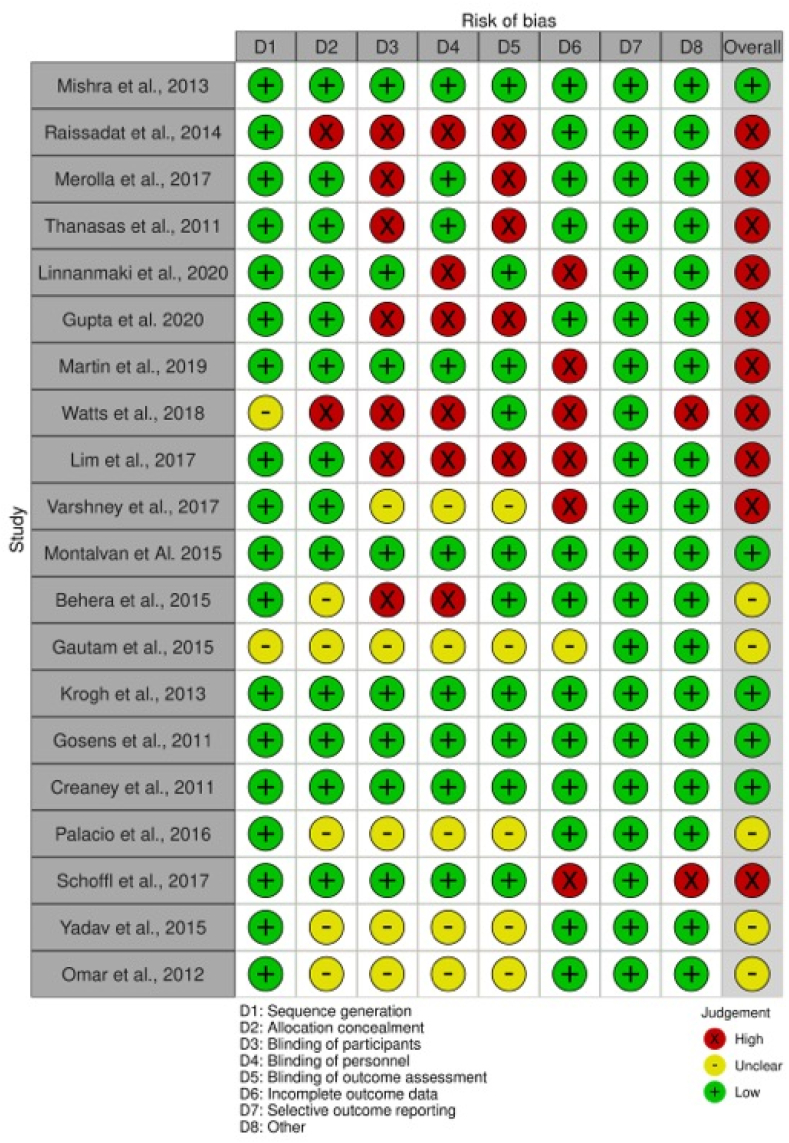
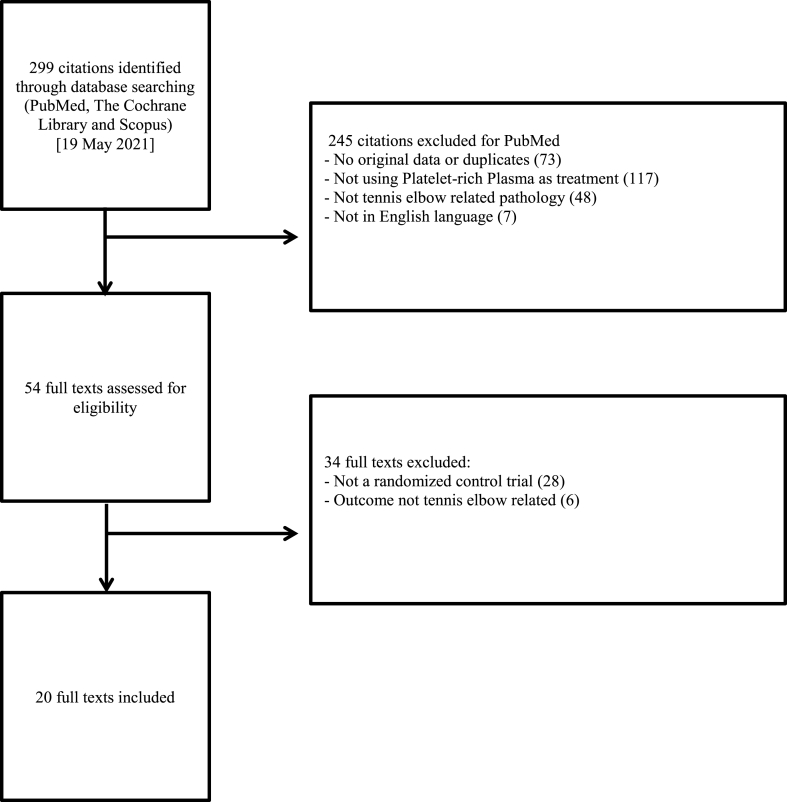
Tennis elbow (TE) is a painful and debilitating condition of the elbow. Recently, the use of orthobiologics, such as platelet-rich-plasma (PRP), has been proposed to promote tendon regeneration. Despite their popularity, there is a paucity of updated reviews on the use of PRP compared with other treatment modalities for treating TE. The aim of this review is to summarise high quality studies that compare the use of PRP therapy with other therapies for TE and to identify areas where further research is warranted. This systematic review was performed in accordance to the Preferred Reporting Items for Systematic Reviews and Meta-Analysis (PRISMA) guidelines. A comprehensive literature search of PubMed, Scopus and Cochrane Library databases was undertaken in May 2021. Articles were screened for the following criteria: randomised control trials (RCTs) involving PRP in at least one of the treatment arms for tennis elbow. The quality of the RCTs included were analysed for their risk of bias using the modified Cochrane Collaboration Risk of Bias Assessment Tool for randomised trials. A total of 20 RCTs of which 1520 TE patients were analysed. The RCTs included in this review compared PRP with various treatment modalities routinely used in clinical practice such as physiotherapy, steroid injections, Autologous Whole Blood (AWB) and surgical interventions. With regards to the quality of RCTs, collectively, selection bias was found to be low risk however, performance bias in terms of blinding of participants and personnel performed poorly. Of the 20 RCTs, only 5 studies were classified as low risk of bias. In these 5 studies, 2 RCTs compared PRP with steroids and reported contrasting results, 1 RCT compared PRP with AWB injections which reported both to be similarly efficacious, 3 RCTs included a placebo group and only 1 reported superior effects with PRP. There are 2 main types of PRP classified according to the number of pro-inflammatory leukocyte i.e. leukocyte-rich and leukocyte-poor PRP. However, only 8 studies documented the formulation of PRP used. While the heterogeneity of PRP formulations could in-part explain the reported differences in outcomes, overall there is limited robust evidence to recommend PRP therapy for TE. Further research is required to establish the optimal formulation and administration of PRP injections. Proper documentation of TE patients need to be standardised before concrete recommendations on the use of PRP therapy may be offered.
网球肘(TE)是一种会引起肘部疼痛且使人功能受限的病症。最近,有人提出使用诸如富血小板血浆(PRP)等骨科生物制剂来促进肌腱再生。尽管它们很受欢迎,但与其他治疗网球肘的方式相比,关于PRP使用的最新综述却很少。本综述的目的是总结高质量研究,这些研究比较了PRP疗法与其他治疗网球肘的疗法,并确定需要进一步研究的领域。本系统综述是按照系统评价和荟萃分析的首选报告项目(PRISMA)指南进行的。2021年5月对PubMed、Scopus和Cochrane图书馆数据库进行了全面的文献检索。根据以下标准筛选文章:随机对照试验(RCT),其中至少有一个治疗组涉及用于网球肘治疗的PRP。使用改良的Cochrane协作偏倚风险评估工具对随机试验来分析纳入的RCT的质量,以评估其偏倚风险。总共分析了20项RCT,涉及1520名网球肘患者。本综述纳入的RCT将PRP与临床实践中常规使用的各种治疗方式进行了比较,如物理治疗、类固醇注射、自体全血(AWB)和手术干预。关于RCT的质量,总体而言,发现选择偏倚风险较低,然而,在参与者和工作人员的盲法方面,实施偏倚表现较差。在这20项RCT中,只有5项研究被归类为低偏倚风险。在这5项研究中,2项RCT将PRP与类固醇进行了比较,结果相互矛盾;1项RCT将PRP与AWB注射进行了比较,结果表明两者同样有效;3项RCT纳入了安慰剂组,只有1项报告PRP有更好的效果。根据促炎白细胞的数量,PRP主要分为两种类型,即富白细胞PRP和贫白细胞PRP。然而,只有8项研究记录了所使用的PRP配方。虽然PRP配方的异质性可能部分解释了所报道的结果差异,但总体而言,推荐PRP疗法用于网球肘治疗的有力证据有限。需要进一步研究以确定PRP注射的最佳配方和给药方式。在可以就PRP疗法的使用提供具体建议之前,需要对网球肘患者的记录进行标准化。