Department of Orthopedic Surgery, Xinhua Hospital Affiliated to Shanghai Jiao Tong University School of Medicine, Shanghai, China.
Guangxi Collaborative Innovation Center for Biomedicine, Guangxi Medical University, Nanning, China.
Cartilage. 2022 Jul-Sep;13(3):19476035221118165. doi: 10.1177/19476035221118165.
Osteoarthritis (OA) is characterized by the chronic and progressive deterioration of articular cartilage. Chondrocyte senescence could lead to a shift in the balance between extracellular matrix (ECM) component synthesis and degradation. Small noncoding RNAs (sncRNAs), including microRNAs (miRNAs), P-element-induced wimpy testis-(PIWI-) interacting RNAs (piRNAs), small nucleolar RNAs (snoRNAs), small nuclear RNAs (snRNAs), and repeat-associated siRNAs (rasiRNAs), are a class of important epigenetic molecules. We aimed to gain insights into the changes and roles of sncRNA in chondrocyte senescence.
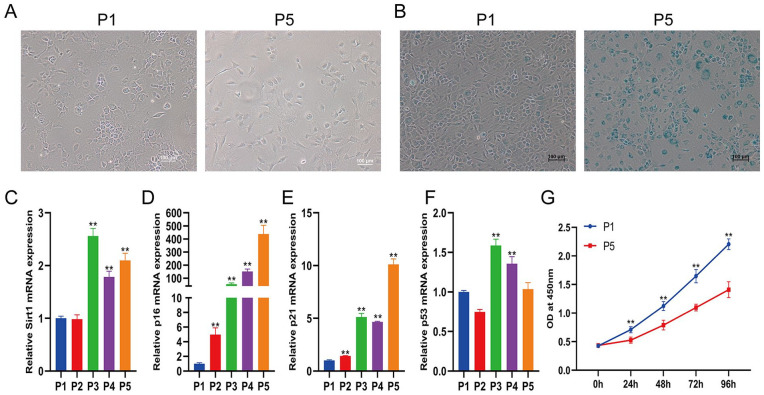
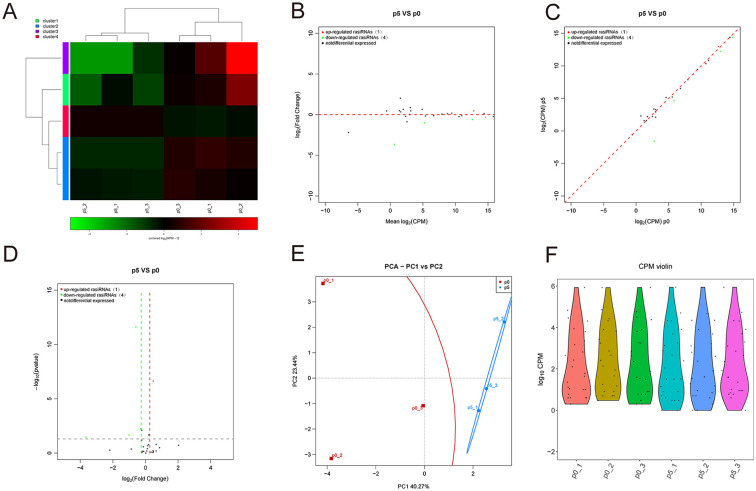
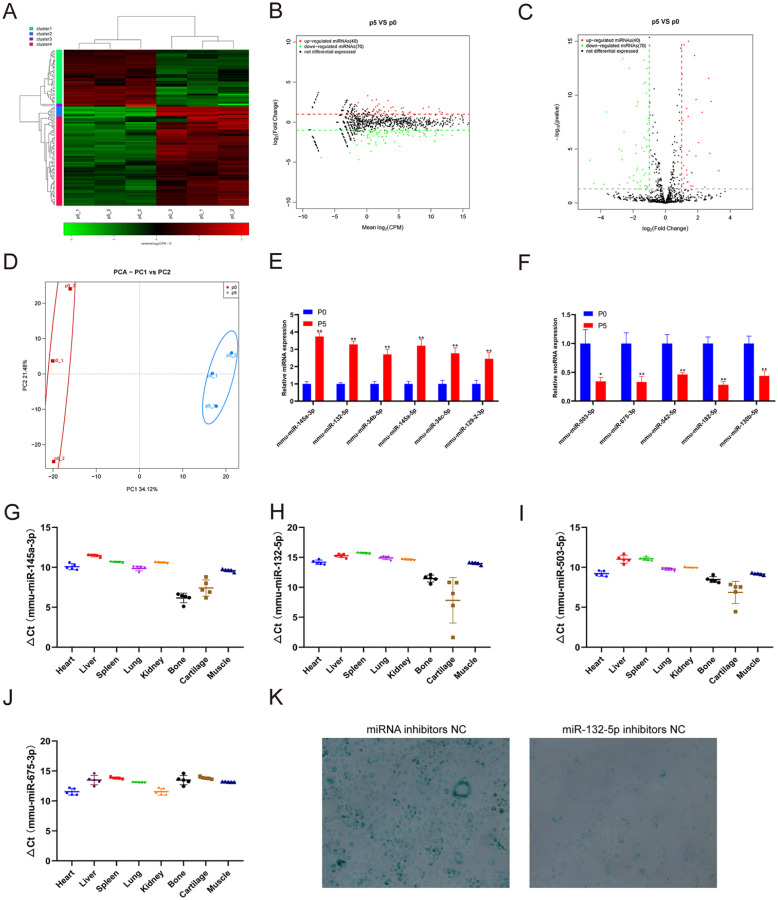
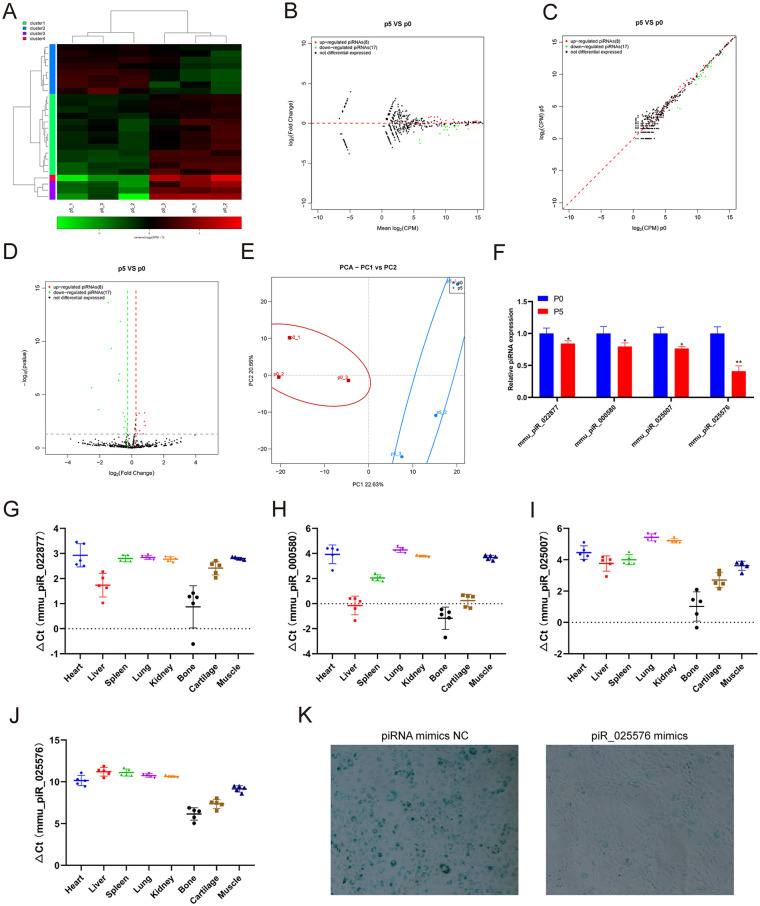
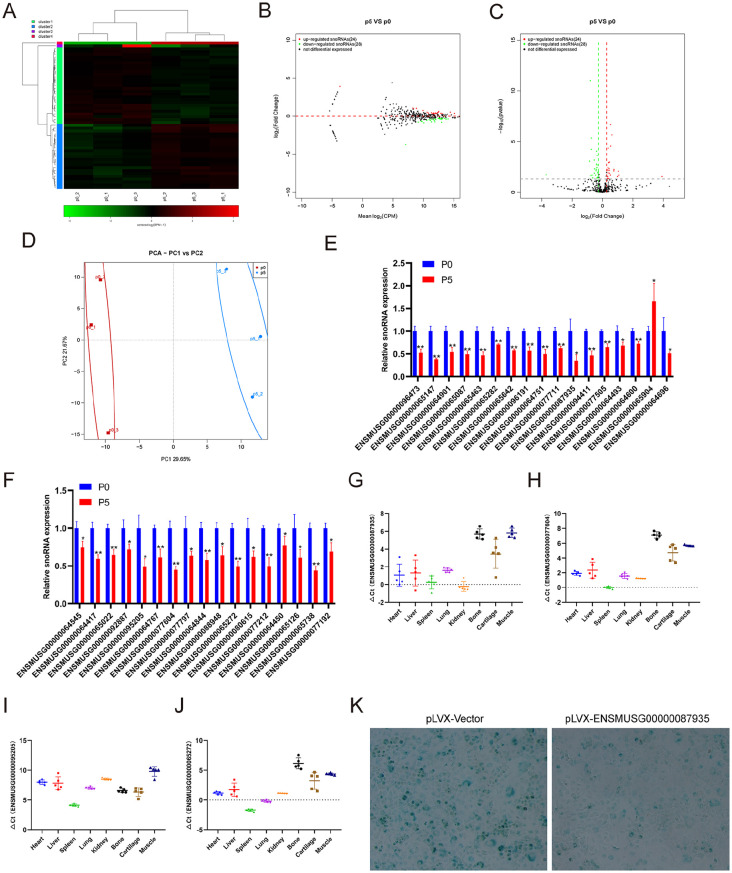
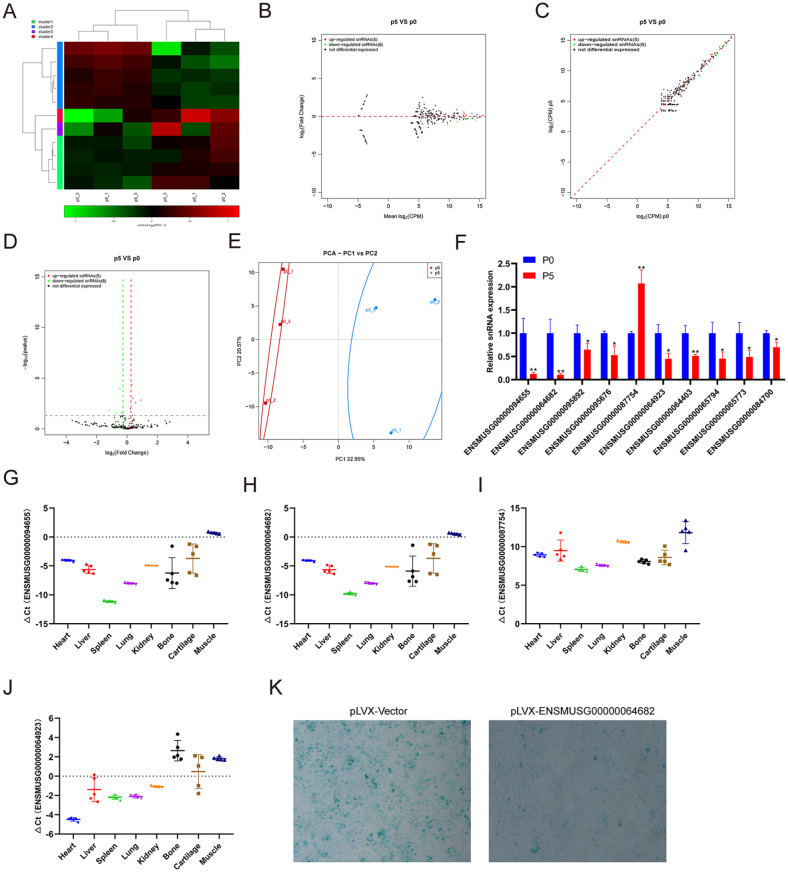
Healthy mouse postnatal chondrocytes were isolated, and a replicative aging model was constructed. We used small RNA sequencing (small RNA-seq) to generate extensive small RNA data. We identified differentially expressed sncRNAs and performed tissue-specific analysis using real-time quantitative polymerase chain reaction (qRT-PCR). β-galactosidase staining was used to detect chondrocyte senescence. The results showed that the expression profiles of sncRNA in passage 5 chondrocytes were significantly different from those in passage 0 chondrocytes. The expression of sncRNA was tissue specific. We found that 40 miRNAs were upregulated and 70 miRNAs were downregulated during chondrocyte senescence, and that miR-132-5p expression inhibition prevented chondrocyte senescence. We found that 8 piRNAs were upregulated and 17 piRNAs were downregulated during chondrocyte senescence, and that piRNA piR_025576 overexpression delayed chondrocyte senescence. We found that 24 snoRNAs were upregulated and 28 snoRNAs were downregulated during chondrocyte senescence, and that snoRNA ENSMUSG00000087935 overexpression delayed chondrocyte senescence. We found that 5 snRNAs were upregulated and 6 snRNAs were downregulated during chondrocyte senescence, and that snRNA ENSMUSG00000064682 overexpression delayed chondrocyte senescence. We found that 1 rasiRNA was upregulated and 4 rasiRNAs were downregulated during chondrocyte senescence.
These findings might provide novel insights into OA pathogenesis and contribute to the development of candidates for targeted therapeutics in OA.
骨关节炎(OA)的特征是关节软骨的慢性进行性恶化。软骨细胞衰老可导致细胞外基质(ECM)成分合成和降解之间的平衡发生转变。小非编码 RNA(sncRNA),包括 microRNA(miRNA)、P 元件诱导的软弱测试基因(PIWI)相互作用 RNA(piRNA)、小核仁 RNA(snoRNA)、小核 RNA(snRNA)和重复相关 siRNA(rasiRNA),是一类重要的表观遗传分子。我们旨在深入了解 sncRNA 在软骨细胞衰老中的变化和作用。
分离健康小鼠出生后软骨细胞,构建复制性衰老模型。我们使用小 RNA 测序(small RNA-seq)生成广泛的小 RNA 数据。我们鉴定了差异表达的 sncRNA,并使用实时定量聚合酶链反应(qRT-PCR)进行组织特异性分析。β-半乳糖苷酶染色用于检测软骨细胞衰老。结果表明,传代 5 代软骨细胞的 sncRNA 表达谱与传代 0 代软骨细胞明显不同。sncRNA 的表达具有组织特异性。我们发现,软骨细胞衰老过程中 40 个 miRNA 上调,70 个 miRNA 下调,miR-132-5p 表达抑制可防止软骨细胞衰老。我们发现,软骨细胞衰老过程中 8 个 piRNA 上调,17 个 piRNA 下调,piRNA piR_025576 过表达可延缓软骨细胞衰老。我们发现,软骨细胞衰老过程中 24 个 snoRNA 上调,28 个 snoRNA 下调,snoRNA ENSMUSG00000087935 过表达可延缓软骨细胞衰老。我们发现,软骨细胞衰老过程中 5 个 snRNA 上调,6 个 snRNA 下调,snRNA ENSMUSG00000064682 过表达可延缓软骨细胞衰老。我们发现,软骨细胞衰老过程中 1 个 rasiRNA 上调,4 个 rasiRNA 下调。
这些发现可能为 OA 发病机制提供新的见解,并有助于开发 OA 靶向治疗的候选药物。