Department of Clinical and Experimental Medicine, University of Foggia, Via Rovelli 50, 71122, Foggia, Italy.
Department of Biomedical and Surgical and Biomedical Sciences Naples University, Naples, Italy.
BMC Health Serv Res. 2022 Aug 22;22(1):1073. doi: 10.1186/s12913-022-08452-x.
Antibiotic prophylaxis during implant placement may improve implant short term survival. Nevertheless, use of antibiotics carries risks of adverse effects and antibiotic resistance. The aim of the present study is to compare the use of antibiotics in dental implant procedures in terms of costs and effectiveness.
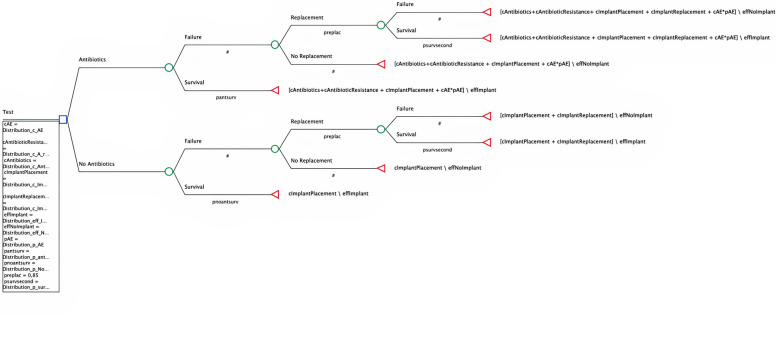
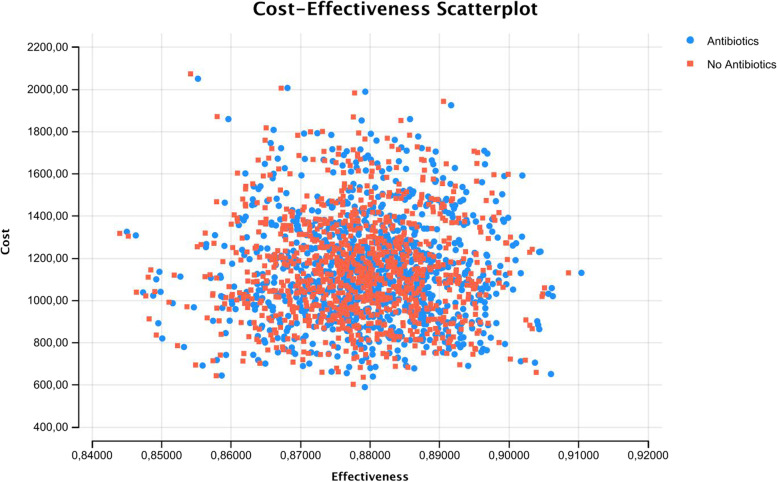
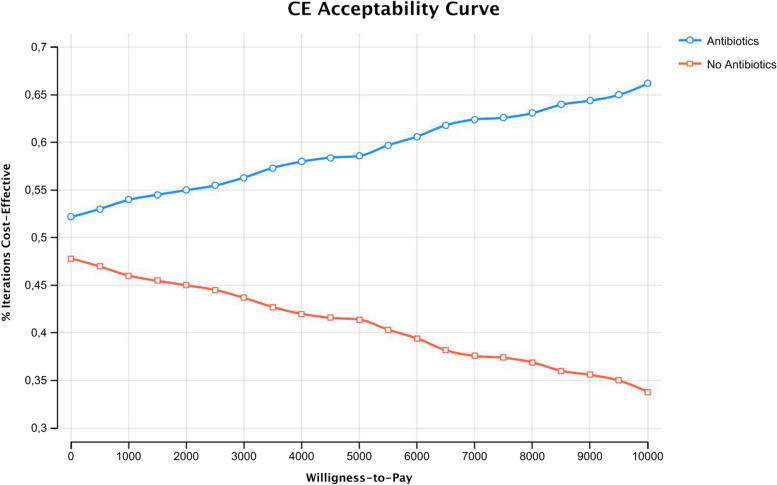
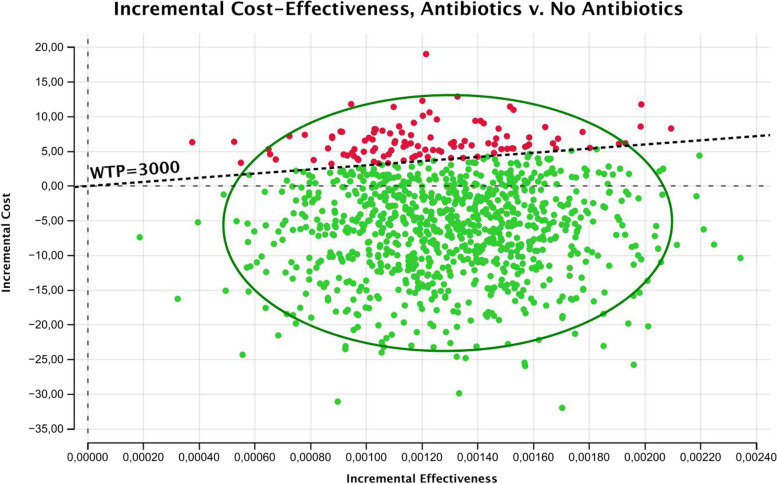
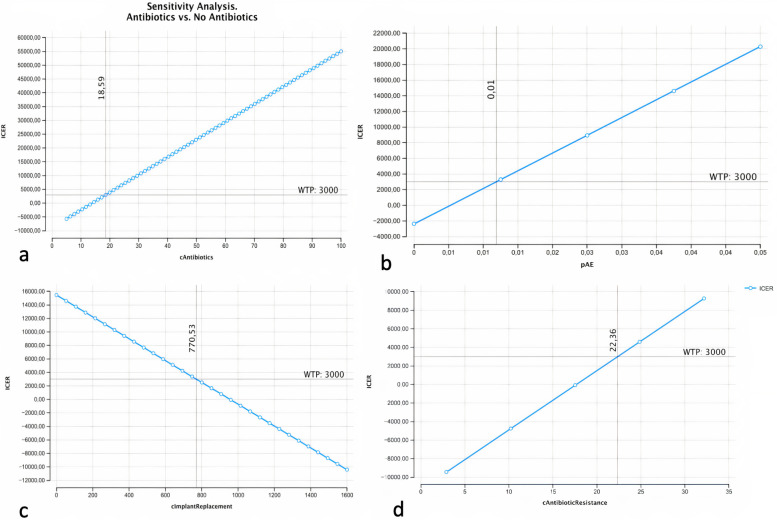
A decision-tree model was developed using TreeAge Pro Healthcare software. Two strategies were compared: Antibiotics and No antibiotics in implant placement procedures. The costs were calculated considering direct costs for implant placement, antibiotic costs, and costs for implant replacement in case of failure. Effectiveness was defined in terms of General Oral Health Assessment Index. Outcomes were evaluated as Incremental Cost Effectiveness Ratio (ICER). One-way sensitivity analysis and Probabilistic Sensitivity Analysis were performed for the most influential variables to test parameter uncertainty. Patient and healthcare perspectives were considered.
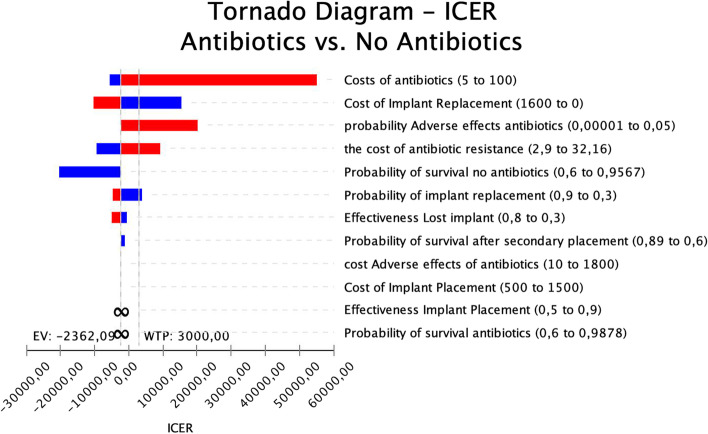
Antibiotic prophylaxis resulted to be cost-effective compared to no use of antibiotics (ICER = 14,692,64 and ICER = 3841,18, respectively for patient's and healthcare perspective). The cost of antibiotics, cost of implant replacement in case of failure and probability of adverse effects significantly influenced the results.
From an individual patient perspective, antibiotic strategy can be considered cost-effective, even when the cost of antibiotic therapy increases. We can conclude that the administration of antibiotics in association with implant placement is recommended in clinical practice, as it increases the success rate and makes the treatment more effective. However, attention should be placed when healthcare perspective is considered, particularly in terms of antibiotic resistance that may impact public health and associated costs.
在种植体植入过程中使用抗生素预防可能会提高种植体的短期存活率。然而,使用抗生素会带来不良反应和抗生素耐药性的风险。本研究旨在比较在牙科种植手术中使用抗生素的成本和效果。
使用 TreeAge Pro Healthcare 软件开发了决策树模型。比较了两种策略:种植体植入过程中使用抗生素和不使用抗生素。成本考虑了种植体植入的直接成本、抗生素成本以及失败时种植体更换的成本。效果用一般口腔健康评估指数来定义。结果用增量成本效果比(ICER)来评估。对最有影响的变量进行了单因素敏感性分析和概率敏感性分析,以检验参数的不确定性。同时考虑了患者和医疗保健的角度。
与不使用抗生素相比,抗生素预防具有成本效益(从患者和医疗保健的角度来看,ICER 分别为 14692.64 和 3841.18)。抗生素的成本、失败时种植体更换的成本以及不良反应的概率对结果有显著影响。
从个体患者的角度来看,即使抗生素治疗的成本增加,抗生素策略也可以被认为是具有成本效益的。我们可以得出结论,在临床实践中,建议在种植体植入时使用抗生素,因为它可以提高成功率,使治疗更有效。然而,在考虑医疗保健的角度时应注意,特别是在抗生素耐药性可能影响公共卫生和相关成本的情况下。