
描述蠕形住肠线虫(蛲虫)卵的抗原特性。
Characterization of antigens of Enterobius vermicularis (pinworm) eggs.
机构信息
Institute of Biochemistry, Molecular Biology and Biotechnology, University of Colombo, Colombo, Sri Lanka.
Department of Parasitology, Faculty of Medicine, University of Colombo, 25, Kynsey Road, Colombo 08, Sri Lanka.
出版信息
Sci Rep. 2022 Aug 24;12(1):14414. doi: 10.1038/s41598-022-18303-8.
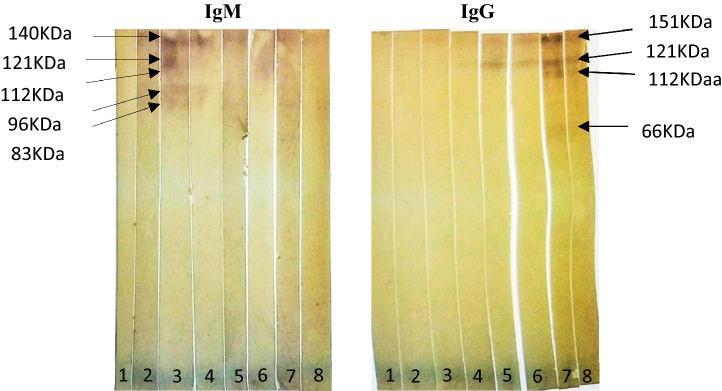
Enterobiasis (pinworm infection) caused by Enterobius vermicularis is a common parasitic infection prevalent worldwide especially in children. Infection is diagnosed by microscopic detection of E. vermicularis eggs on perianal swabs. This study aimed to characterize the antigens of E. vermicularis eggs as a preliminary step towards identifying diagnostic targets for detection in infected individuals. The study was conducted between October 2019 and February 2020, following approval from Ethics Review Committee of the Faculty of Medicine, University of Colombo (EC-19-034). E. vermicularis eggs were harvested from perianal swabs using acetone and purified with 1× PBS (pH 7.2). A portion of eggs was used for preparing antigen slides, while the rest were sonicated and vortexed with glass beads and inoculated subcutaneously (with weekly booster doses) into a Wistar rat for developing antibodies. Blood drawing from rat was done weekly for 5 weeks. Confirmation of the presence of antibodies was done by surface immunofluorescence against eggs on the antigen slides. Protein bands were determined using SDS-PAGE assay and immunogenic antigen bands were determined by reacting with antiserum after immunoblotting. The band sizes of the proteins were determined against corresponding bands of a protein ladder. Surface immunofluorescence was positive with serum obtained from day 14 post-inoculation from the Wistar rat as well as that obtained from a person with chronic enterobiasis. The most prominent and immunogenic protein bands identified from egg antigens were 21 kDa, 66 kDa, 83 kDa, 96 kDa, 112 kDa, 121 kDa, 140 kDa and 151 kDa. Methods used in this study were effective in obtaining E. vermicularis egg antigens which were immunogenic. Furthermore, surface antigens of intact eggs reacted with antibodies developed against crushed egg antigens. These findings may pave the way for the development of effective immunodiagnostics.
蛲虫病(蛲虫感染)由蠕形住肠线虫引起,是一种常见的寄生虫感染,在全世界特别是儿童中很普遍。感染通过在肛周拭子上显微镜检测蠕形住肠线虫卵来诊断。本研究旨在对蠕形住肠线虫卵的抗原进行特征分析,作为鉴定感染个体中检测目标的初步步骤。该研究于 2019 年 10 月至 2020 年 2 月进行,期间得到了科伦坡大学医学院伦理审查委员会的批准(EC-19-034)。使用丙酮从肛周拭子中提取蠕形住肠线虫卵,并用 1×PBS(pH 7.2)进行纯化。一部分卵用于制备抗原载玻片,其余部分用玻璃珠进行超声处理和涡旋,并接种到 Wistar 大鼠的皮下(每周加强剂量)以产生抗体。每周从大鼠采血 5 周。通过在抗原载玻片上对卵进行表面免疫荧光反应来确认抗体的存在。使用 SDS-PAGE 测定法测定蛋白条带,并通过免疫印迹后与抗血清反应来确定免疫原性抗原条带。根据相应的蛋白梯带确定蛋白条带的大小。从 Wistar 大鼠接种后第 14 天获得的血清以及从慢性蛲虫病患者获得的血清与抗原载玻片上的血清进行表面免疫荧光反应均为阳性。从卵抗原中鉴定出的最突出和免疫原性的蛋白条带分别为 21 kDa、66 kDa、83 kDa、96 kDa、112 kDa、121 kDa、140 kDa 和 151 kDa。本研究中使用的方法可有效获得免疫原性的蠕形住肠线虫卵抗原。此外,完整卵的表面抗原与针对压碎卵抗原产生的抗体反应。这些发现可能为开发有效的免疫诊断铺平道路。


 Zotero 插件