Institute of Precision Cancer Medicine and Pathology, School of Medicine, Jinan University, Guangzhou, China.
Department of General Surgery, The First Affiliated Hospital of Jinan University, Jinan University, Guangzhou, China.
Front Immunol. 2022 Aug 8;13:947841. doi: 10.3389/fimmu.2022.947841. eCollection 2022.
Poor immunogenicity and extensive immunosuppressive T-cell infiltration in the tumor immune microenvironment (TIME) have been identified as potential barriers to immunotherapy success in "immune-cold" breast cancers. Thus, it is crucial to identify biomarkers that can predict immunotherapy efficacy. Protein tyrosine phosphatase receptor type O (PTPRO) regulates multiple kinases and pathways and has been implied to play a regulatory role in immune cell infiltration in various cancers.
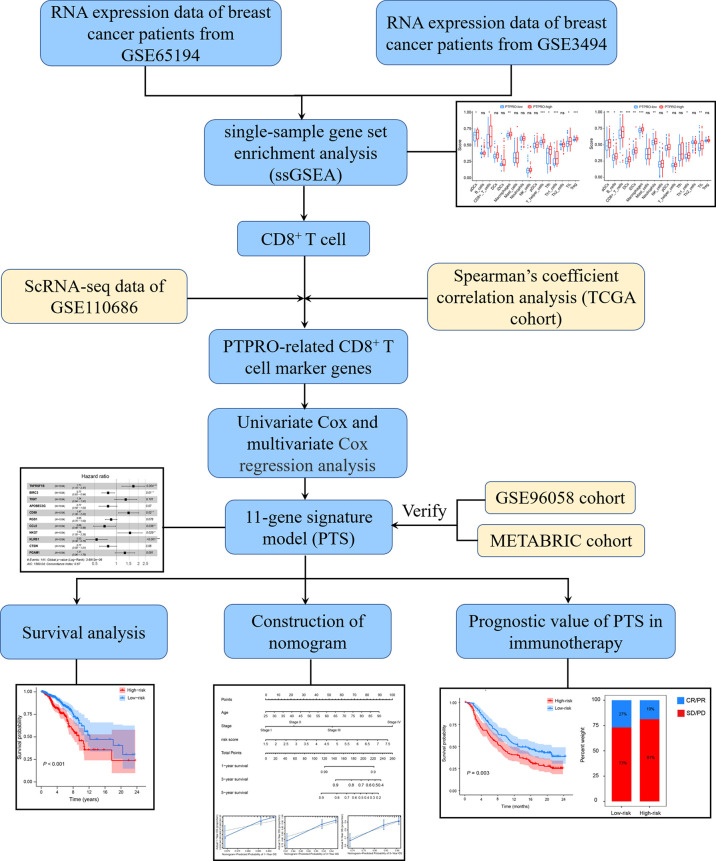
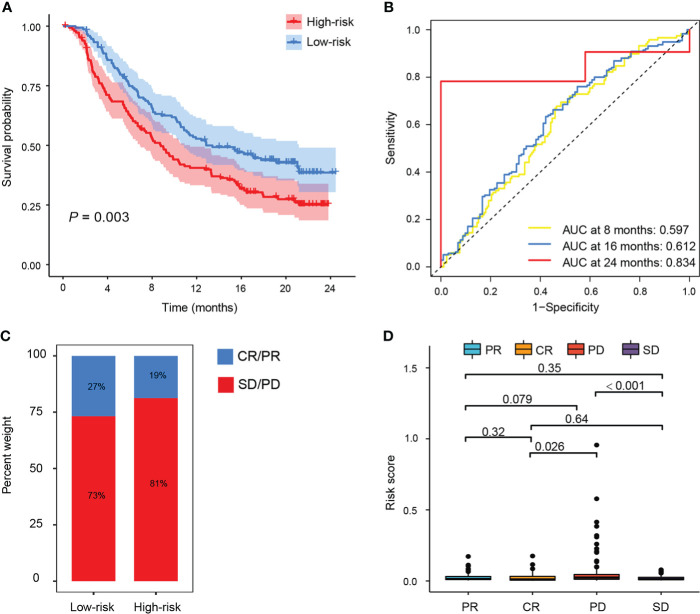
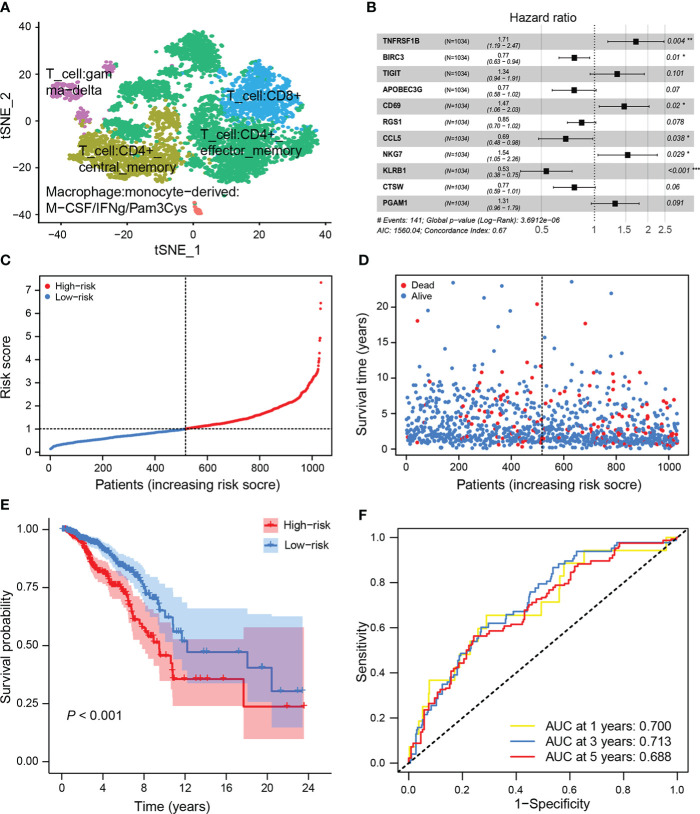
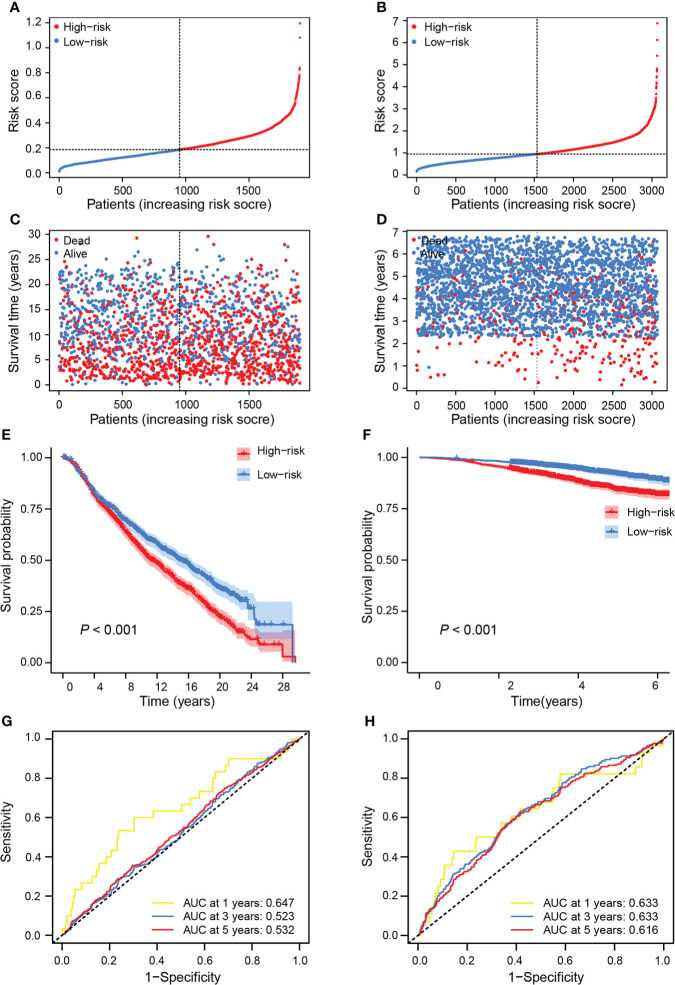
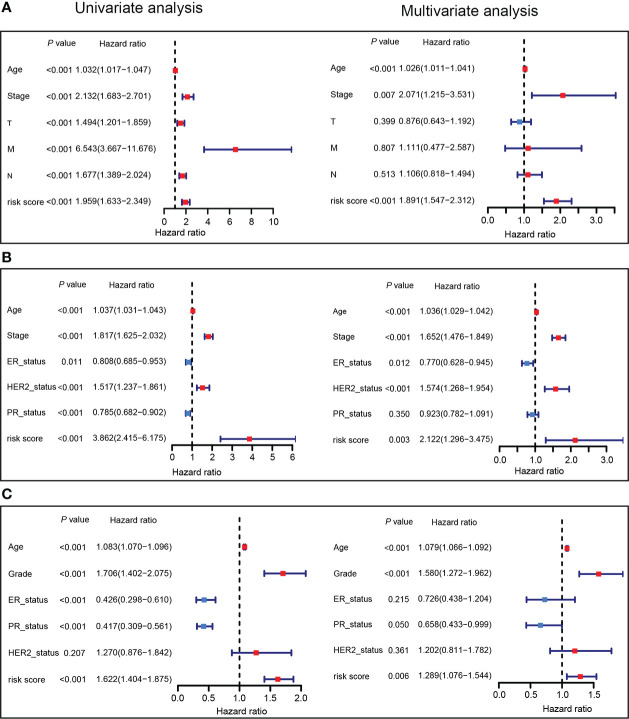
ESTIMATE and single-sample gene set enrichment analysis (ssGSEA) were performed to uncover the TIME landscape. The correlation analysis of PTPRO and immune infiltration was performed to characterize the immune features of PTPRO. Univariate and multivariate Cox analyses were applied to determine the prognostic value of various variables and construct the PTPRO-related CD8 T-cell signatures (PTSs). The Kaplan-Meier curve and the receiver operating characteristic (ROC) curve were used to estimate the performance of PTS in assessing prognosis and immunotherapy response in multiple validation datasets.
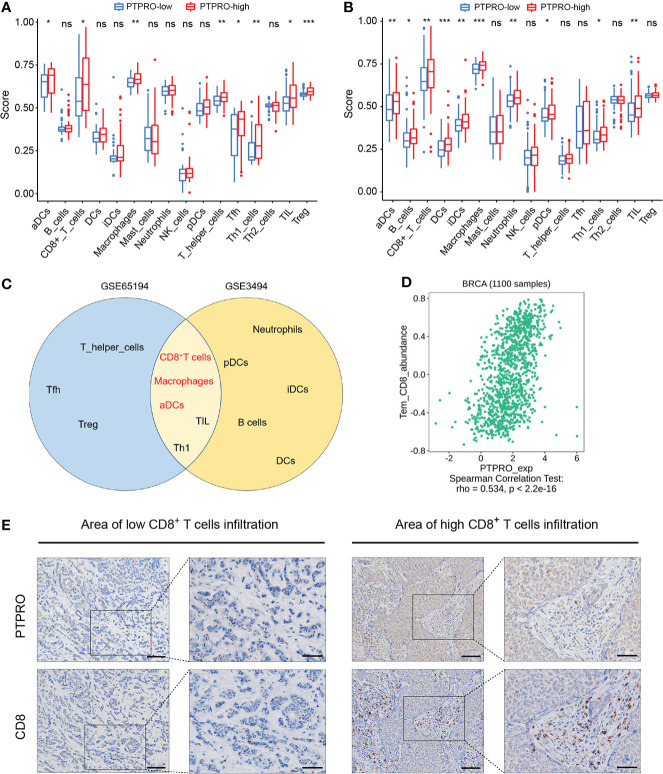
High PTPRO expression was related to high infiltration levels of CD8 T cells, as well as macrophages, activated dendritic cells (aDCs), tumor-infiltrating lymphocytes (TILs), and Th1 cells. Given the critical role of CD8 T cells in the TIME, we focused on the impact of PTPRO expression on CD8 T-cell infiltration. The prognostic PTS was then constructed using the TCGA training dataset. Further analysis showed that the PTS exhibited favorable prognostic performance in multiple validation datasets. Of note, the PTS could accurately predict the response to immune checkpoint inhibitors (ICIs).
PTPRO significantly impacts CD8 T-cell infiltration in breast cancer, suggesting a potential role of immunomodulation. PTPRO-based PTS provides a new immune cell paradigm for prognosis, which is valuable for immunotherapy decisions in cancer patients.
在肿瘤免疫微环境(TIME)中,免疫原性差和广泛的免疫抑制性 T 细胞浸润已被确定为免疫疗法在“免疫冷”乳腺癌中成功的潜在障碍。因此,确定能够预测免疫治疗效果的生物标志物至关重要。蛋白酪氨酸磷酸酶受体 O(PTPRO)调节多种激酶和途径,并且在各种癌症中的免疫细胞浸润中发挥调节作用。
使用 ESTIMATE 和单样本基因集富集分析(ssGSEA)来揭示 TIME 景观。进行 PTPRO 与免疫浸润的相关性分析,以描述 PTPRO 的免疫特征。应用单变量和多变量 Cox 分析确定各种变量的预后价值,并构建与 PTPRO 相关的 CD8 T 细胞特征(PTS)。Kaplan-Meier 曲线和接收器操作特征(ROC)曲线用于评估 PTS 在多个验证数据集中评估预后和免疫治疗反应的性能。
高 PTPRO 表达与 CD8 T 细胞、巨噬细胞、活化树突状细胞(aDC)、肿瘤浸润淋巴细胞(TIL)和 Th1 细胞的高浸润水平有关。鉴于 CD8 T 细胞在 TIME 中的关键作用,我们专注于 PTPRO 表达对 CD8 T 细胞浸润的影响。然后使用 TCGA 训练数据集构建预后 PTS。进一步分析表明,PTS 在多个验证数据集中具有良好的预后性能。值得注意的是,PTS 可以准确预测对免疫检查点抑制剂(ICIs)的反应。
PTPRO 显著影响乳腺癌中 CD8 T 细胞的浸润,提示其在免疫调节中的潜在作用。基于 PTPRO 的 PTS 为预后提供了新的免疫细胞范例,对癌症患者的免疫治疗决策具有重要价值。