Department of Neurosurgery, Radboud University Medical Center, Nijmegen, The Netherlands.
Pain Pract. 2022 Nov;22(8):746-752. doi: 10.1111/papr.13156. Epub 2022 Aug 30.
The prevalence of pain after treatment of a spinal intradural tumor is remarkably high, approximately up to 40% of the patients suffer from central neuropathic pain. Publications on spinal cord stimulation (SCS) and its effect on pain caused by intradural spinal tumors are rare. We discuss the case of a patient suffering from chronic pain after removal of a Th7 level meningioma who was successfully treated with SCS and give an overview of the literature.
MEDLINE database was searched for neuropathic pain and intradural tumors.
The initial search identified 35 articles, including hand-searched manuscripts. Six articles were included for analysis.
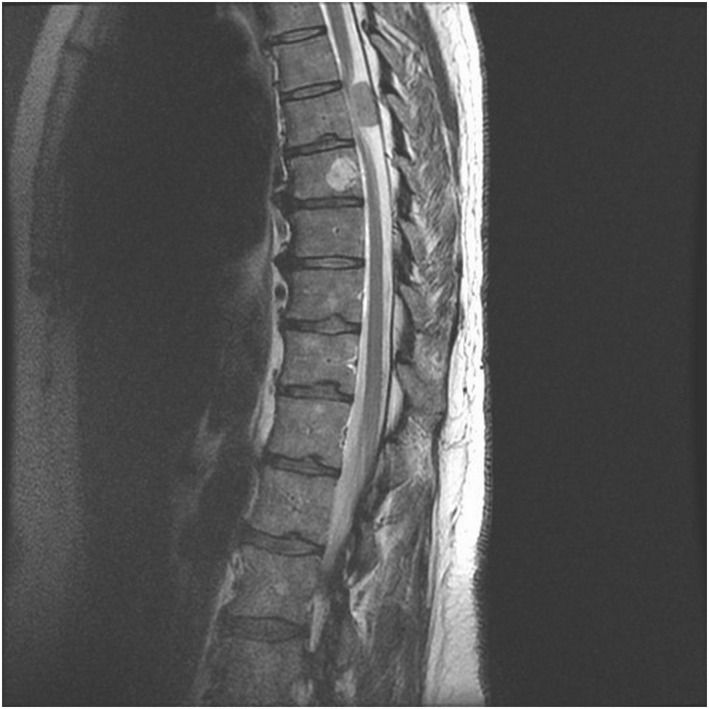
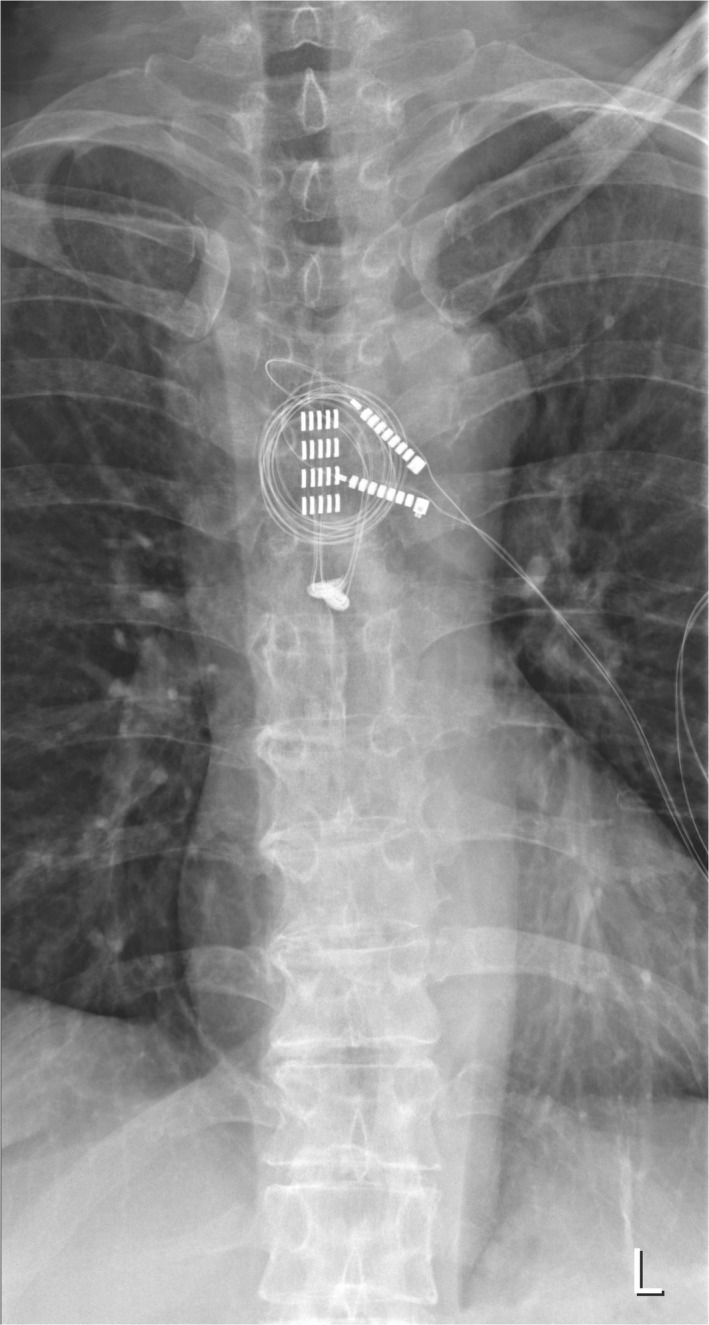
A 57-year-old female suffers from neuropathic pain in both legs after surgical removal of a Th7 level intradural meningioma. Postoperative magnetic resonance imaging shows no gross abnormalities, although she developed chronic pain in both legs. Pain in combination with side effects of analgesic intake are too disabling to have decent quality of life. A successful implantation of SCS is achieved at Th5 level as a treatment for the central neuropathic pain, and, at 36 months follow-up, there is significant pain relief and almost complete discontinuation of analgesics.
Central pain from spinal intradural tumors may have a different mechanism of origin than pain seen after an acute spinal cord injury (SCI). However, the basic principles of neuromodulation are the same in both etiologies, as for successful stimulation intact pathways in the spinal cord are necessary. The efficacy of SCS as treatment in intradural spinal tumors is rarely described as only a handful of case reports are published. Interestingly, the case reports show that stimulation both above and below the lesion can be effective. In patients with incomplete SCI or intradural tumor resection stimulation below the lesion could be considered and tried in a trial setting before definitive implantation.
治疗脊髓内肿瘤后疼痛的发生率相当高,约有 40%的患者患有中枢神经性疼痛。关于脊髓刺激(SCS)及其对脊髓内肿瘤引起疼痛的影响的出版物很少。我们讨论了一例因 Th7 水平脑膜瘤切除术后患有慢性疼痛的患者,该患者成功接受 SCS 治疗,并对文献进行了综述。
在 MEDLINE 数据库中搜索神经病理性疼痛和脊髓内肿瘤。
最初的搜索确定了 35 篇文章,包括手工搜索的手稿。有 6 篇文章被纳入分析。
一名 57 岁女性在 Th7 水平脊髓内脑膜瘤切除术后出现双腿神经性疼痛。术后磁共振成像显示无明显异常,但她出现双腿慢性疼痛。疼痛加上镇痛药的副作用使人致残,生活质量极差。在 Th5 水平成功植入 SCS 治疗中枢神经性疼痛,在 36 个月的随访中,疼痛明显缓解,几乎完全停止使用镇痛药。
脊髓内肿瘤引起的中枢性疼痛的发病机制可能与急性脊髓损伤(SCI)后引起的疼痛不同。然而,脊髓内肿瘤的神经调节基本原理与 SCI 相同,因为需要刺激脊髓内的完整通路才能达到成功刺激的效果。SCS 作为脊髓内肿瘤治疗的疗效很少被描述,因为只有少数病例报告发表。有趣的是,这些病例报告表明,刺激病灶上方和下方都可能有效。对于不完全性 SCI 或脊髓内肿瘤切除的患者,可以考虑在确定性植入前在试验性设置下尝试刺激病灶下方。