Kishimoto-Urata Megumi, Urata Shinji, Fujimoto Chisato, Yamasoba Tatsuya
Department of Otolaryngology, Graduate School of Medicine, The University of Tokyo, Tokyo 1138655, Japan.
Antioxidants (Basel). 2022 Jul 27;11(8):1469. doi: 10.3390/antiox11081469.
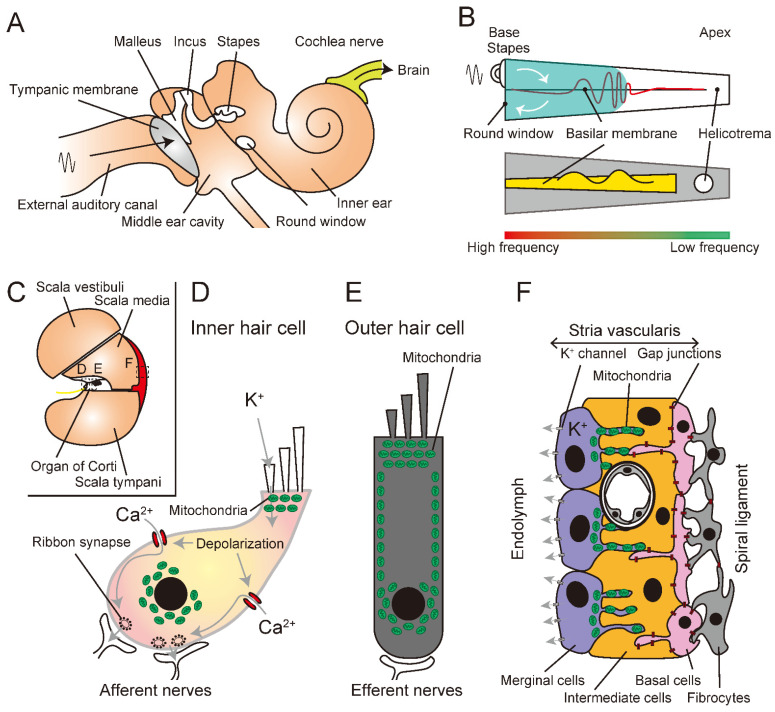
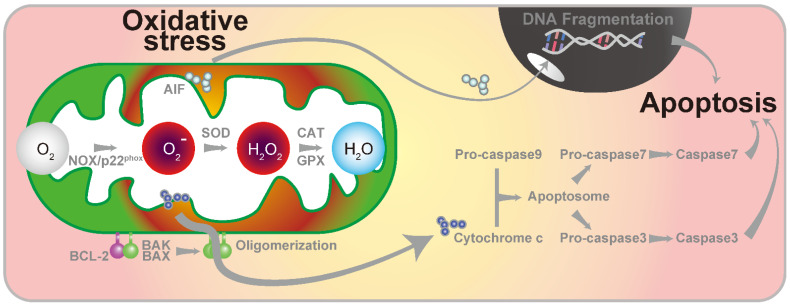
Oxygen metabolism in the mitochondria is essential for biological activity, and reactive oxygen species (ROS) are produced simultaneously in the cell. Once an imbalance between ROS production and degradation (oxidative stress) occurs, cells are damaged. Sensory organs, especially those for hearing, are constantly exposed during daily life. Therefore, almost all mammalian species are liable to hearing loss depending on their environment. In the auditory pathway, hair cells, spiral ganglion cells, and the stria vascularis, where mitochondria are abundant, are the main targets of ROS. Excessive generation of ROS in auditory sensory organs is widely known to cause sensorineural hearing loss, and mitochondria-targeted antioxidants are candidates for treatment. This review focuses on the relationship between acquired hearing loss and antioxidant use to provide an overview of novel antioxidants, namely medicines, supplemental nutrients, and natural foods, based on clinical, animal, and cultured-cell studies.
线粒体中的氧代谢对生物活性至关重要,同时细胞中会产生活性氧(ROS)。一旦ROS生成与降解之间出现失衡(氧化应激),细胞就会受损。感觉器官,尤其是听觉器官,在日常生活中持续暴露。因此,几乎所有哺乳动物物种都可能因其环境而出现听力损失。在听觉通路中,线粒体丰富的毛细胞、螺旋神经节细胞和血管纹是ROS的主要作用靶点。众所周知,听觉感觉器官中ROS的过度生成会导致感音神经性听力损失,而靶向线粒体的抗氧化剂是治疗的候选药物。本综述聚焦于获得性听力损失与抗氧化剂使用之间的关系,基于临床、动物和细胞培养研究,概述新型抗氧化剂,即药物、补充营养素和天然食物。