Huang Peizan, Liu Min, Zhang Jing, Zhong Xiang, Zhong Chunlong
Department of Neurosurgery, Shanghai East Hospital, School of Medicine, Tongji University, Shanghai 200120, China.
Department of Neurosurgery, The Fourth Affiliated Hospital of Nanjing Medical University, Nanjing 210031, China.
Antioxidants (Basel). 2022 Aug 4;11(8):1521. doi: 10.3390/antiox11081521.
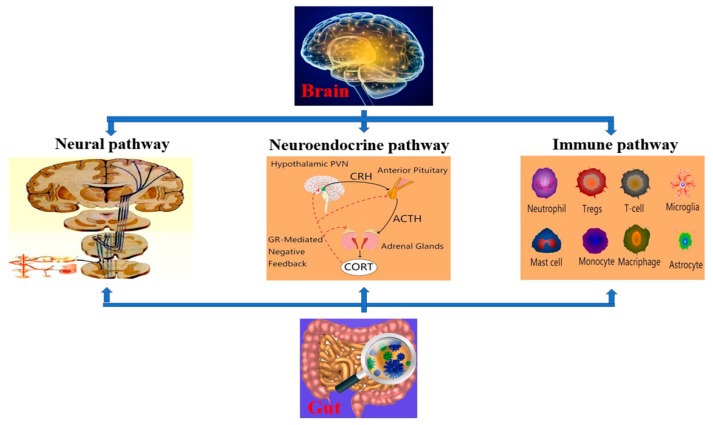
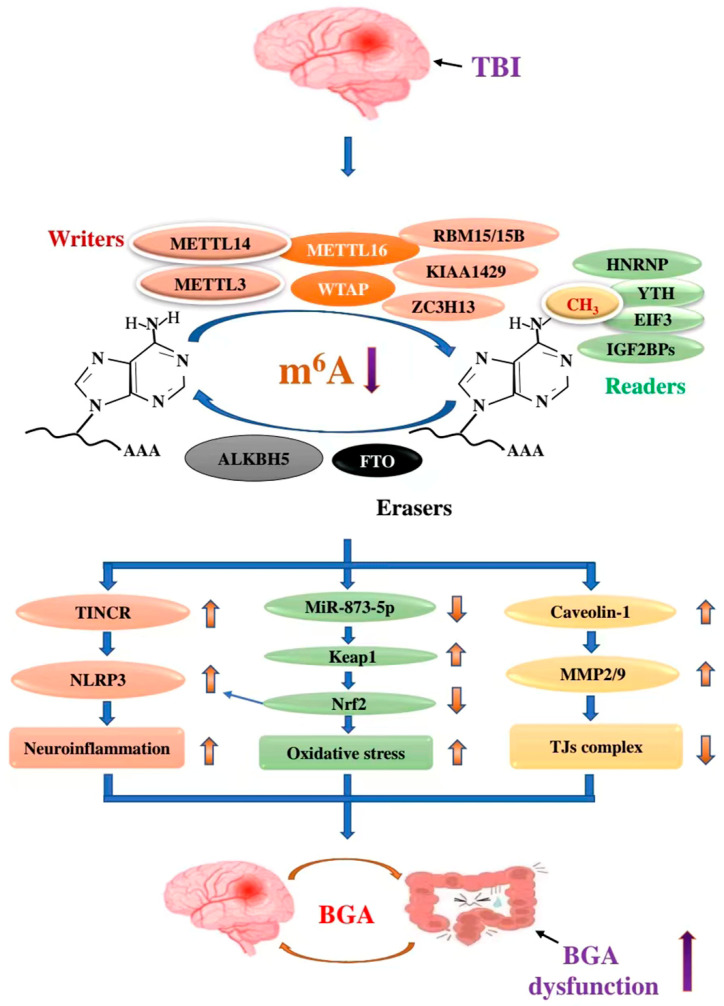
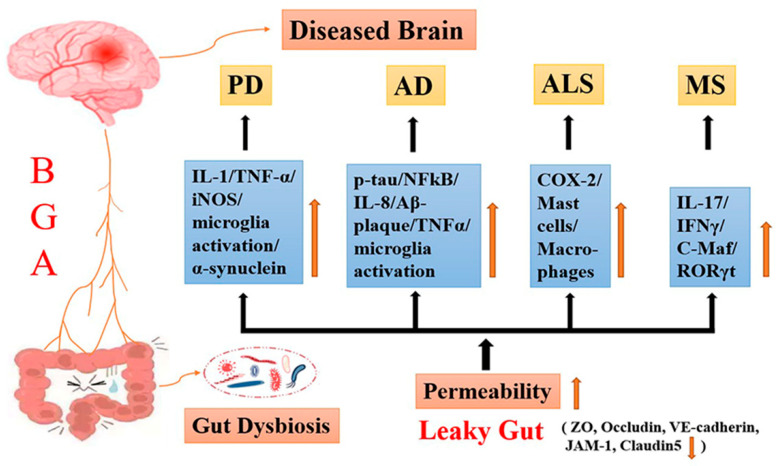
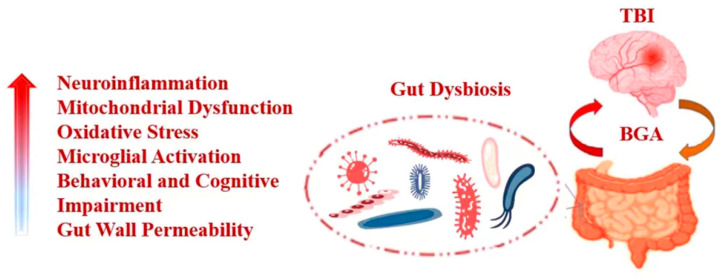
The brain-gut axis (BGA) is an important bidirectional communication pathway for the development, progress and interaction of many diseases between the brain and gut, but the mechanisms remain unclear, especially the post-transcriptional regulation of BGA after traumatic brain injury (TBI). RNA methylation is one of the most important modifications in post-transcriptional regulation. N6-methyladenosine (mA), as the most abundant post-transcriptional modification of mRNA in eukaryotes, has recently been identified and characterized in both the brain and gut. The purpose of this review is to describe the pathophysiological changes in BGA after TBI, and then investigate the post-transcriptional bidirectional regulation mechanisms of TBI-induced BGA dysfunction. Here, we mainly focus on the characteristics of mA RNA methylation in the post-TBI BGA, highlight the possible regulatory mechanisms of mA modification in TBI-induced BGA dysfunction, and finally discuss the outcome of considering mA as a therapeutic target to improve the recovery of the brain and gut dysfunction caused by TBI.
脑-肠轴(BGA)是大脑与肠道之间许多疾病发生、发展及相互作用的重要双向通信通路,但其机制仍不清楚,尤其是创伤性脑损伤(TBI)后脑-肠轴的转录后调控机制。RNA甲基化是转录后调控中最重要的修饰之一。N6-甲基腺苷(m6A)作为真核生物mRNA中最丰富的转录后修饰,最近已在大脑和肠道中得到鉴定和表征。本综述的目的是描述TBI后脑-肠轴的病理生理变化,进而研究TBI诱导的脑-肠轴功能障碍的转录后双向调控机制。在此,我们主要关注TBI后脑-肠轴中m6A RNA甲基化的特征,突出m6A修饰在TBI诱导的脑-肠轴功能障碍中的可能调控机制,最后讨论将m6A作为治疗靶点以改善TBI所致脑和肠道功能障碍恢复的前景。