Karlson Chou Khai Soong, Mohd Noor Siti Nurfadhlina, Khalid Norzulaani, Tan Boon Chin
Center for Research in Biotechnology for Agriculture (CEBAR), Universiti Malaya, Kuala Lumpur 50603, Malaysia.
Institute of Microengineering and Nanoelectronics (IMEN), Universiti Kebangsaan Malaysia, Bangi 43600, Malaysia.
Biology (Basel). 2022 Jul 27;11(8):1127. doi: 10.3390/biology11081127.
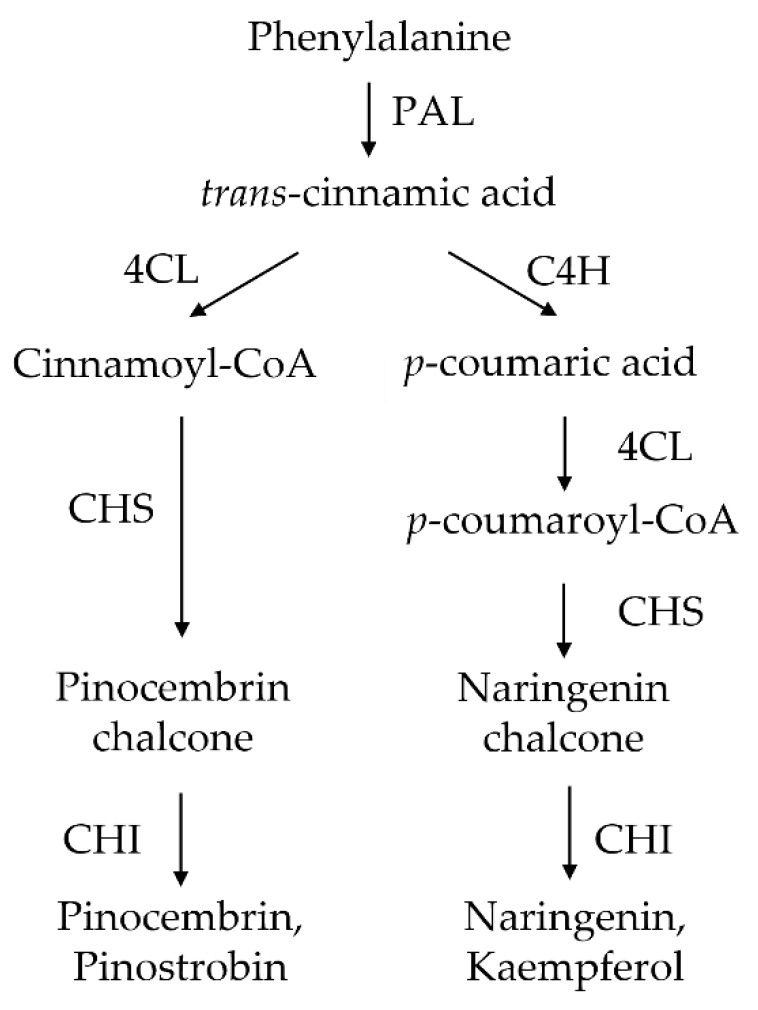
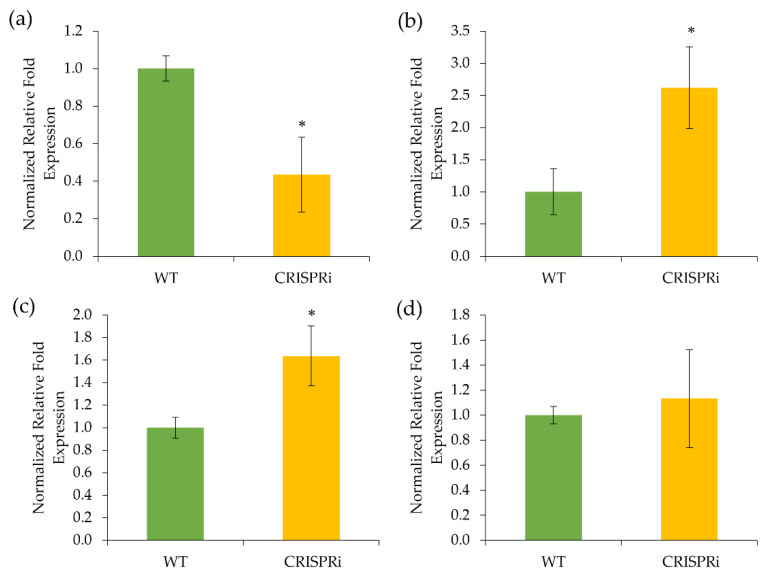
Flavonoids are an important class of natural compounds present in plants. However, despite various known biological activities and therapeutic potential, the low abundance of flavonoids in nature limits their development for industrial applications. In this study, we aimed to enhance flavonoid production by silencing cinnamate-4-hydroxylase (C4H), an enzyme involved in the branch point of the flavonoid biosynthetic pathway, using the clustered regularly interspaced short palindromic repeats interference (CRISPRi) approach. We designed three sgRNAs targeting the promoter region of and cloned them into a CRISPRi construct. After being introduced into cell suspension culture, the transformed cells were sampled for qPCR and liquid chromatography-mass spectrometry analyses. Sixteen of 21 cell lines showed PCR-positive, confirming the presence of the CRISPRi transgene. The transcript in the transgenic cells was 0.44-fold lower than in the wild-type. In contrast, the flavonoid-related genes in the other branching pathways, such as and , in the -silenced cells showed higher expression than wild-type. The upregulation of these genes increased their respective products, including pinostrobin, naringenin, and chlorogenic acid. This study provides valuable insight into the future development of CRISPRi-based metabolic engineering to suppress target genes in plants.
类黄酮是植物中存在的一类重要天然化合物。然而,尽管类黄酮具有多种已知的生物活性和治疗潜力,但自然界中类黄酮的低丰度限制了它们在工业应用中的开发。在本研究中,我们旨在通过使用成簇规律间隔短回文重复序列干扰(CRISPRi)方法沉默肉桂酸 - 4 - 羟化酶(C4H)来提高类黄酮产量,C4H是类黄酮生物合成途径分支点中涉及的一种酶。我们设计了三个靶向其启动子区域的sgRNA,并将它们克隆到一个CRISPRi构建体中。将构建体导入细胞悬浮培养物后,对转化细胞进行采样以进行qPCR和液相色谱 - 质谱分析。21个细胞系中有16个显示PCR阳性,证实了CRISPRi转基因的存在。转基因细胞中的转录本比野生型低0.44倍。相比之下,在C4H沉默的细胞中,其他分支途径中的类黄酮相关基因,如和,显示出比野生型更高的表达。这些基因的上调增加了它们各自的产物,包括松属素、柚皮素和绿原酸。本研究为基于CRISPRi的代谢工程在植物中抑制靶基因的未来发展提供了有价值的见解。