De Raeymaecker Karen, Dhar Monica
Collaborative Antwerp Psychiatric Research Institute (CAPRI), Faculty of Medicine and Health Sciences, University of Antwerp, Universiteitsplein 1, 2610 Wilrijk, Belgium.
ZNA University Centre for Child & Adolescent Psychiatry Antwerp, University of Antwerp, Lindendreef 1, 2020 Antwerp, Belgium.
Children (Basel). 2022 Aug 10;9(8):1200. doi: 10.3390/children9081200.
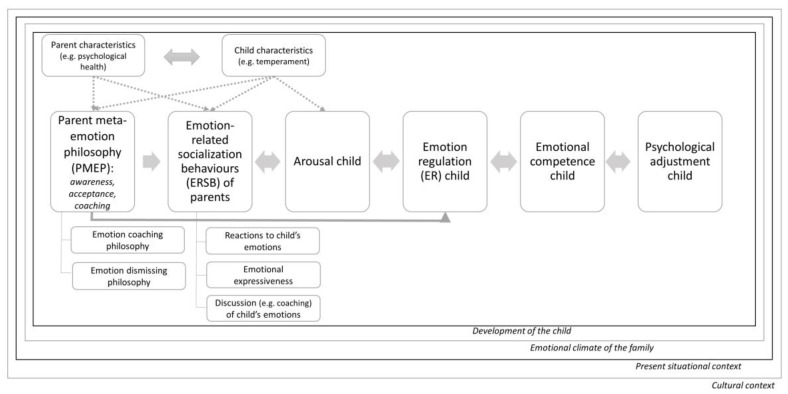
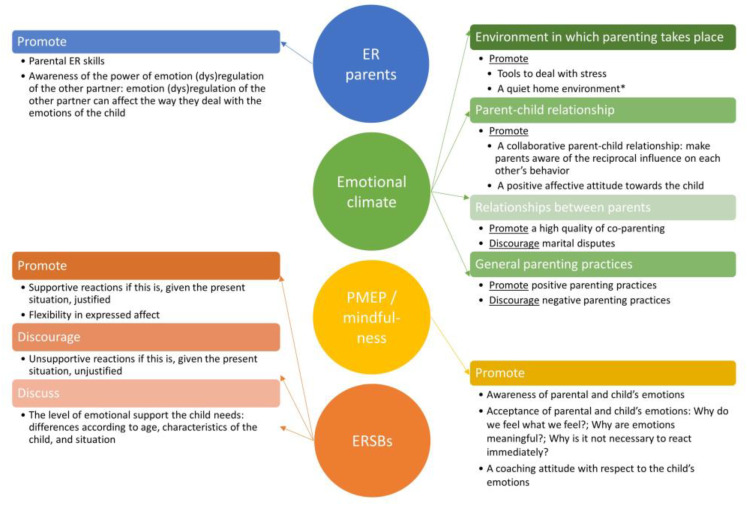
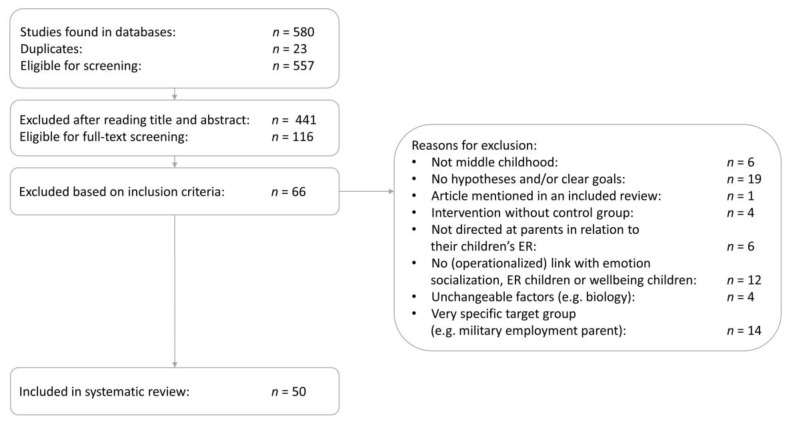
Emotion regulation (ER) has been identified as a transdiagnostic risk factor for psychopathology, making it an ideal target for prevention and treatment. This study explores how parents can nurture the development of child ER. In April 2022, a systematic review was executed focusing on malleable factors in the parental emotion-socialization process during middle childhood. Papers in PubMed, Web of Science and Medline were screened on content-related and methodological criteria. Their methodological quality was assessed. Knowledge was assembled using a summarizing framework encompassing four factors involved in emotion socialization. Fifty papers shed light on modifiable factors at the level of parental meta-emotion philosophy, emotion-related socialization behaviors, the ER skills of parents and the emotional climate of the family. Adaptive socialization appears to be context- and child-specific, thereby taxing parents' ER skills and their ability to put them into practice flexibly. The four changeable factors in the emotion-socialization process are highly intertwined, resulting in four possible entries for parent-directed interventions. Importantly, time should be devoted to the ER capacities of parents and their ability to attune to the situation and their child. Regarding the latter, replication studies are necessary. Recommendations for clinical interventions are provided.
情绪调节(ER)已被确定为精神病理学的一种跨诊断风险因素,使其成为预防和治疗的理想目标。本研究探讨了父母如何培养儿童情绪调节能力的发展。2022年4月,进行了一项系统综述,重点关注童年中期父母情绪社会化过程中的可塑因素。根据内容相关和方法学标准对PubMed、科学网和Medline上的论文进行筛选,并评估其方法学质量。利用一个包含情绪社会化所涉及的四个因素的总结框架来整合知识。五十篇论文揭示了父母元情绪理念、与情绪相关的社会化行为、父母的情绪调节技能以及家庭情绪氛围等层面的可改变因素。适应性社会化似乎因情境和孩子而异,从而考验着父母的情绪调节技能以及他们灵活运用这些技能的能力。情绪社会化过程中的四个可变因素高度交织,从而产生了针对父母的干预措施的四种可能切入点。重要的是,应该关注父母的情绪调节能力以及他们根据情况和孩子进行调整的能力。关于后者,重复研究是必要的。本文还提供了临床干预建议。