Tsurusawa Naoko, Iha Kanako, Sato Akane, Tsai Hsin-Yi, Sonoda Hikaru, Watabe Satoshi, Yoshimura Teruki, Wu Deng-Chyang, Lin Ming-Wei, Ito Etsuro
Department of Biology, Waseda University, Shinjuku, Tokyo 162-8480, Japan.
Department of Medical Research, E-Da Hospital/E-Da Cancer Hospital, Kaohsiung 82445, Taiwan.
Cancers (Basel). 2022 Aug 11;14(16):3887. doi: 10.3390/cancers14163887.
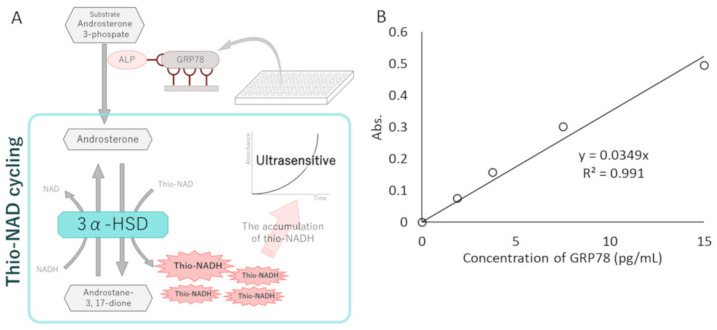
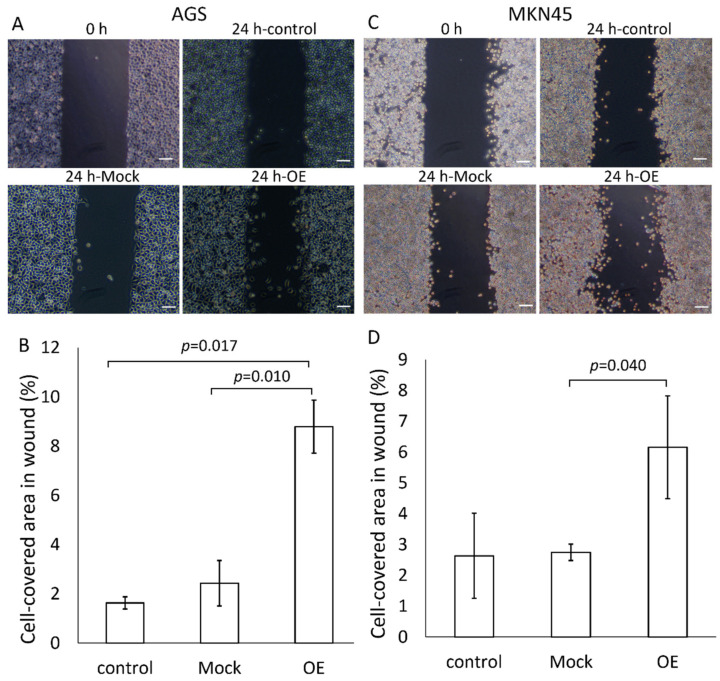
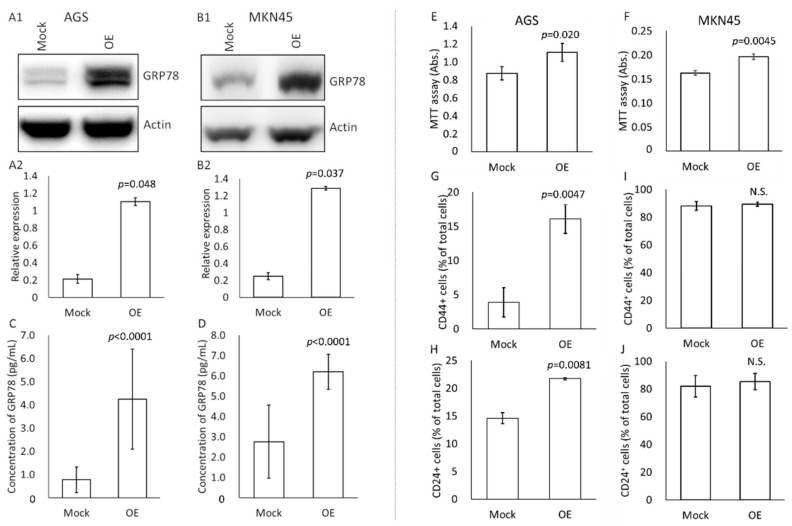
Cancer cells communicate with each other via exosomes in the tumor microenvironment. However, measuring trace amounts of proteins in exosomes is difficult, and thus the cancer stemness-promoting mechanisms of exosomal proteins have not been elucidated. In the present study, we attempted to quantify trace amounts of 78-kDa glucose-regulated protein (GRP78), which is involved in cancer progression, in exosomes released from cultured gastric cancer cells using an ultrasensitive ELISA combined with thio-NAD cycling. We also evaluated the cancer stemness-promoting effects by the application of high-GRP78-containing exosomes to cultured gastric cancer cells. The ultrasensitive ELISA enabled the detection of GRP78 at a limit of detection of 0.16 pg/mL. The stemness of cancer cultured cells incubated with high-GRP78-containing exosomes obtained from GRP78-overexpressed cells was increased on the basis of both an MTT assay and a wound healing assay. Our results demonstrated that the ultrasensitive ELISA has strong potential to measure trace amounts of proteins in exosomes. Further, exosomes with a high concentration of GRP78 promote the cancer stemness of surrounding cells. The technique for quantifying proteins in exosomes described here will advance our understanding of cancer stemness progression via exosomes.
癌细胞通过肿瘤微环境中的外泌体相互通讯。然而,测量外泌体中的痕量蛋白质很困难,因此外泌体蛋白质促进癌症干性的机制尚未阐明。在本研究中,我们尝试使用超灵敏酶联免疫吸附测定(ELISA)结合硫代烟酰胺腺嘌呤二核苷酸(thio-NAD)循环,对培养的胃癌细胞释放的外泌体中参与癌症进展的78-kDa葡萄糖调节蛋白(GRP78)的痕量进行定量。我们还通过将含高GRP78的外泌体应用于培养的胃癌细胞,评估了其促进癌症干性的作用。这种超灵敏ELISA能够检测到低至0.16 pg/mL的GRP78。基于MTT法和伤口愈合试验,与从GRP78过表达细胞获得的含高GRP78的外泌体共孵育的癌症培养细胞的干性增强。我们的结果表明,这种超灵敏ELISA在测量外泌体中的痕量蛋白质方面具有强大的潜力。此外,高浓度GRP78的外泌体可促进周围细胞的癌症干性。本文所述的外泌体蛋白质定量技术将推动我们对外泌体介导的癌症干性进展的理解。